Showing posts with label Basil / Manjericão.. Show all posts

21 September 2017

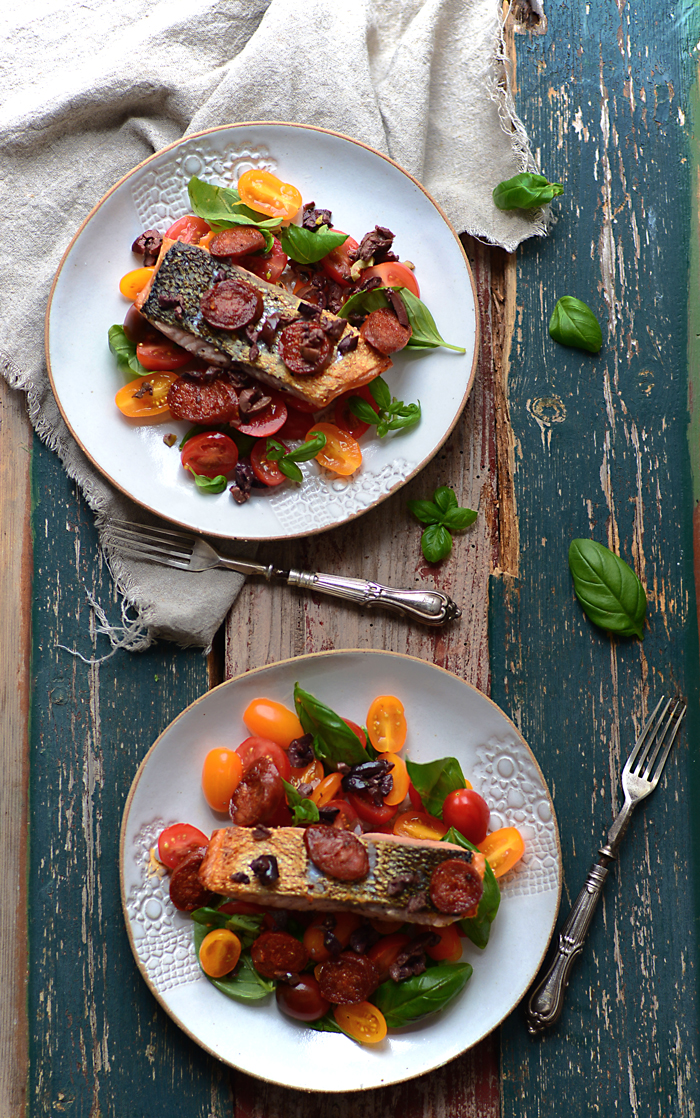
Smoky Chorizo Salmon / Salmão com Chouriço e Tomates.


So, Summer is officially over and as a good bye to this Summer homegrown sweet tomatoes, here is another recipe from Jamie Oliver "5 ingredients - Quick & Easy Food".
In this recipe, the tomatoes are combined with crispy skin salmon, smoky chorizo and olives. A fantastic combination, full of Mediterranean flavours.
If you still have some nice and sweet tomatoes left, give this recipe a try because it's truly delicious.

3 October 2016

Chargrilled asparagus, courgettes and halloumi / Salada de espargos, courgette e queijo halloumi grelhados.


First published in 2008 "Ottolenghi: The Cookbook" was now re-launched.
As I have all the other Ottolenghi books (Jerusalem, Plenty, Plenty More and Nopi) but didn't have this one, I thought it would be a great opportunity to get it and that's what I did.
The book covers everything from meat and fish, to salads and vegetables, cakes and breads.
This fabulous vegetarian salad was my first choice and it's a perfect meal for a meatless Monday so, give it a try and you'll not regret it.

29 July 2016

Cheat's pizza with mozzarella, chargrilled nectarine and prosciutto / Pizza fingida com mozzarella, nectarina grelhada e presunto.


The idea to make these "pizzas" was, not just because I had all the ingredients laying around here at home, but also because I wanted to prepare another suggestion for Marta.
As I told you here and here, Marta chose Peaches and/or Nectarines as the ingredient of JulyTherefore, here is my last suggestion. A savoury and sweet suggestion for Marta, that is very easy to prepare and makes an absolutely delicious Summer lunch.

22 July 2016

Bacon, nectarines and rocket sandwich / Sanduiche de bacon, nectarinas e rúcula.


Once again I confirm what I always say: "Everything inside or in between slices of bread is food from the Gods" and this sandwich is proof of this theory of mine.
First, when I read the recipe, I thought that the combination could be weird, but as I'm always keen to try different combinations even if they don't sound very classic, I decided to give it a try and after the first bite, I always 100% convinced.
It's a mouthful of saltiness from the bacon, sweetness from the nectarines, freshness from the basil mayonnaise and crunchiness from the toasted bread and from the bacon itself.
Pure Heaven believe me and that's this heavenly suggestion that is the first suggestion that I leave for Marta this month.

13 June 2016

Fig, nectarine, mozzarella and prosciutto salad with honey dressing / Salada de figos, nectarinas, mozzarella e presunto, com molho de mel.


Although the weather is not very Springy/Summery this week, I leave you with this fabulous, vibrant, refreshing and colourful salad to start the week in a good and positive mood.
The recipe is from Katie & Giancarlo Caldesi "Around the World in Salads" book.
Simplicity at its best, thats how I describe this salad.
ingredients (serves 6):
6 ripe figs, halved or quartered, depending on the size
2 nectarines, thinly sliced
6 x 125g whole mozzarella or burrata
12 slices prosciutto
200g cherry tomatoes, halved (I used heirloom)
12 large basil leaves
for the dressing:
1 tbsp raw mild honey
2 tbsp extra virgin olive oil
salt and freshly ground black pepper
method:
Mix all the ingredients for the dressing together in a small bowl and season to taste.
Arrange the salad ingredients on a serving platter and pour the dressing over the salad.

__________________

Embora, por aqui, o tempo esta semana esteja uma porcaria, deixo-vos esta saladinha linda, colorida, cheia de sabores de Verão e tão deliciosa e refrescante, que torna felizes e luminosos até os dias mais taciturnos e cinzentos.
A sugestão vem do livro da Katie e do Giancarlo Caldesi "Around the World in Salads".
Mais simples não existe!! Espero que apreciem!


ingredientes (para 6 pessoas):
6  figos maduros, cortados ao meio ou em quartos, dependendo do tamanho
2 nectarinas, cortadas em fatias finas
6 bolas de 125g (cada) de mozzarella ou burrata
12 fatias finas de presunto
200g tomates cereja (cherry), cortados ao meio (eu usei várias cores)
12 large basil leaves
para o molho:
1 colher sopa de mel cru, de sabor não muito forte
2 colheres sopa azeite extra virgem
sal e pimenta preta moída na altura
preparação:
Numa taça, misturar todos os ingredientes do molho. Reservar.
Dispôr os ingredientes da salada numa travessa ou prato de serviço e regar com o molho.

Recipe / Receita:

6 June 2016

Cauliflower bolognese / Bolonhesa de Couve flor.


Another vegetarian meal that I made roughly two weeks ago and that was a blast!
Both, either in flavour and/or texture, this recipe, from the fabulous Emilie Raffa "The Clever Cookbook", was a delight.
I already told you, many times before, how much I love this Emilie book and each recipe I cook form it, is a stunner.
ingredients (serves 4 to 6):
1 small head of cauliflower
2 tbsp unsalted butter
160g diced onions
1 garlic clove, grated
794g can(s) of whole plum tomatoes
96g red lentils
sea salt and freshly ground black pepper
454g spaghetti (I used wholewheat)
drizzle of olive oil
1 handful of fresh basil leaves
parmesan cheese, for grating
method:
Slice the cauliflower in half, removing the thick center core and cut into large chunks.
Put the cauliflower florets into a food processor (in batches) and pulse 1 or 2 times.
Dump the roughly chopped cauliflower into a large bowl and repeat with the remaining cauliflower.
Warm the butter in a large saucepan over low heat. Add the onions and sauté for 3 to 5 minutes, or until soft.
Add the cauliflower, increase the heat to medium and continue cooking, stirring occasionally, until the cauliflower begins to lose its shape and takes on a light golden colour (about 5 to 6 minutes).
Add the garlic and cook until fragrant (about 30 seconds).
Pour in the tomatoes and the red lentils and mix everything to combine.
Place the lid on top and bring the sauce to a gentle boil.
Reduce the heat to low and simmer (covered), for about 30 minutes.
Remove the lid and cook for an extra 15 minutes, or until the cauliflower is tender and the lentils are broken down. The sauce should look thickened.
Season with salt and pepper to taste.
Cook the pasta according to the packet instructions. When the pasta is cooked, drain and return to the pot. Drizzle with olive oil to coat.
Put the pasta onto a serving dish and top it with the cauliflower bolognese.
Scatter with the basil leaves and the grated parmesan cheese. Serve straightaway.

__________________

E continuam as publicações das receitas em atraso...
Deixo-vos mais um prato vegetariano e tão delicioso, que ninguém sentirá falta de carne ou peixe.
Já fiz a receita há, mais ou menos, 2 semanas, mas, mais uma vez, demorou a ser publicada...
Uma verdadeira delícia, quer em sabor, quer em textura.
A receita é, mais uma vez, do livro lindo da Emilie Raffa, de que já vos falei várias vezes, o "The Clever Cookbook".
Já vos disse também o quanto adoro este livro e não me vou repetir.
Adoro-o, pelo simples facto de, todas as receitas, serem de fácil execução, sem que com isso, comprometam em qualidade ou sabor.


ingredientes (para 4 a 6 pessoas):
1 couve flor pequena
2 colheres sopa de manteiga sem sal
160g cebola, picada
1 dente de alho, ralado
2 latas pequenas de tomate pelado
96g lentilhas vermelhas
sal e pimenta preta moída na altura
454g (1 pacote) de esparguete (eu usei esparguete integral)
azeite, para regar a massa
1 punhado de folhas de manjericão freso
queijo parmesão ralado, para polvilhar


preparação:
Cortar a couve flor ao meio, descartando o centro e depois, cortá-la em pedaços.
Colocar os pedaços de couve flor no robot de cozinha (em várias vezes) e pulsar, 1 ou 2 vezes, por forma a que obtenham pedaços maiores e outros mais pequenos.
Colocar a couve flor numa taça e repetir o processo com a couve flor restante.
Aquecer a manteiga num tacho sobre lume brando. Adicionar a cebola picada e saltear por 3 a 5 minutos, ou até esta estar macia.
Adicionar a couve flor, aumentar o lume para médio e cozinhar  mexendo de vez em quando,por cerca de 5 a 6 minutos, ou até a couve flor começar a ganhar cor.
Adicionar o alho e cozinhar por 30 segundos, ou até este libertar o seu aroma.
Adicionar as latas do tomate e as lentilhas e mexer tudo muito bem.
Tapar o tacho e quando a mistura começar a ferver, baixar o lume e cozinhar por cerca de 30 minutos (tacho sempre tapado).
Findo esse tempo, destapar o tacho e cozinhar por mais 15 minutos, ou até a couve flor e as lentilhas estarem macias. O molho deverá ficar espesso.
Temperar de sal e pimenta a gosto.
Entretanto, cozer a massa de acordo com as instruções do pacote.
Quando cozida a gosto, escorrer a massa e voltar a colocá-la na panela. Regar com um fio de azeite e envolver tudo muito bem.
Transferir a massa para um prato de serviço, cobri-la com a bolonhesa de couve flor e servir de imediato, polvilhada com as folhas de manjericão e o queijo ralado.

Recipe / Receita:

26 April 2016

Pea soup with squid and prawns / Sopa de ervilhas com lulas e camarão.


Another delicious soup that comes out of my kitchen and that goes directly to Marta's "ingredient of the month" table.
As I wrote here, Marta challenged us to cook with peas and as I love peas, I couldn't resist this fabulous initiative and I'm cooking with peas this April.
The combination of ingredients is amazing and the flavour is second to none.
The author suggests to discard the wings and tentacles of the squid but I used everything.

4 April 2016

Spring tortellini minestrone / Minestrone primaveril com tortellini.


Another fabulous recipe from Emilie Raffia (The Clever Carrot) gorgeous cookbook that I told you about in this post and a delightful, easy and very colourful meal.
That's the kind of meals that I love to make during the week and specially, when they're like that, simple to make, but a feast for the palate.
Honestly, I told you already and I can't help saying the same again:
I love this book!!
ingredients (serves 6):
1 tbsp olive oil
1 tbsp unsalted butter
80g onions, diced
65g carrots, diced
50g celery, diced
sea salt and freshly ground black pepper
1 clove garlic, grated
1 tbsp tomato paste
397g can of chopped tomatoes
1l chicken stock, preferably homemade
255g cheese tortellini (I used fresh pasta cheese tortellini)
135g fresh or frozen peas (I didn't have any so I used frozen and peeled baby broad beans)
2 to 3 large handfuls of baby spinach leaves, kale or other spring greens
1/4 cup fresh basil leaves, cut into ribbons
shaved parmesan cheese, to serve
method:
Heat the oil and butter over medium heat in a large pot or saucepan.
Add the onion, celery and carrots, and  sauté until soft and lightly golden (5 to 7 minutes).
Season with salt and pepper to taste, then add the garlic and tomato paste.
Stir well until the tomato paste is fully dissolved and the garlic is fragrant.
Pour in the chopped tomatoes and chicken stock.
Place the lid on top of the pan and bring to a gentle boil.
Reduce the heat to low and simmer (lid on) for about 10 minutes or until the vegetables are soft, stirring occasionally.
Increase the heat and bring the soup back to a gentle boil.
Add the tortellini, peas and greens.
Simmer uncovered for 3 minutes and then remove from the heat.
Ladle the soup into bowls and sprinkle with shaved parmesan cheese and the basil.

__________________

Mais uma receita super deliciosa do livro lindo da Emilie Raffia (The Clever Carrot), do qual já vos falei  neste post.
Este é o tipo de refeição que, durante a semana, além de ser super simples e rápida de preparar, é super deliciosa e agrada a todos.
O bom destas receitas é que, não é pelo facto de serem fáceis ou simples, que comprometem em termos de sabor, pois esse, está lá todo e super concentrado.
Já disse e não me canso de repetir: ADORO este livro!!


ingredientes (para 6 pessoas):
1 colher sopa de azeite
1 colher sopa de manteiga sem sal
80g cebola, picada
65g cenoura, cortada em cubos
50g aipo, cortado em cubos
sal e pimenta preta moída na altura, a gosto
1 dente de alho, ralado
1 colher sopa de concentrado de tomate
1 lata de 397g de tomate pelado e picado
1l caldo de galinha, de preferência caseiro
1 pacote de 255g de tortellini de queijo (eu usei tortellini de queijo de massa fresca)
135g ervilhas, frescas ou congeladas (eu não tinha na altura e usei favas bebé, congeladas e sem pele).
2 a 3 punhados de folhas de espinafres frescos, kale ou outro verde da estação
1/4 chávena de folhas de manjericão frescas, cortadas em tirinhas ou esfarripadas
lâminas de queijo Parmesão, para decorar


preparação:
Num tacho largo sobre lume médio, aquecer o azeite e a manteiga.
Adicionar a cebola, as cenouras e o aipo e cozinhar por cerca de 5 a 7 minutos, ou até os legumes estarem macios e ligeiramente corados.
Temperar de sal e pimenta preta moída na altura a gosto e adicionar o concentrado do tomate e o alho.
Mexer bem até o concentrado de tomate estar completamente dissolvido e o alho estar aromático.
Adicionar o caldo de galinha e o tomate picado.
Tapar o tacho e deixar levantar fervura.
Assim que levantar fervura, baixar o lume e cozinhar, coberto com a tampa, por cerca de 10 minutos, até que os legumes estejam completamente cozidos, mexendo de vez em quando.
Quando os legumes estiverem macios, aumentar o lume e deixar que levante fervura novamente.
Adicionar o tortellini, os espinafres e as ervilhas e cozinhar por cerca de 3 minutos (atenção que eu usei massa fresca).
Retirar o tacho do lume e servir a sopa em tigelas, polvilhada com as laminas de queijo Parmesão e as folhas de manjericão.

Recipe / Receita:

23 November 2015

Minestrone verde.


This minestrone is a very delicious and comforting wintery italian soup. It is a meal in itself and perfect for these cold days.
The recipe is from Theo Randall, a fabulous Chef that I truly adore.
ingredients (serves 4):
2 tbsp extra virgin olive oil
3 celery sticks, finely chopped
1 red onion, chopped
2 carrots, chopped
1 garlic clove, finely sliced
2 x 400g cans chopped tomatoes
1kg swiss chard (I used curly kale)
1 x 400g can or jar of borlotti beans, drained and rinsed
5 basil leaves
sea salt and freshly ground black pepper
fruity olive oil, to serve
method:
Heat the oil in a large saucepan.
Add the celery, onion, carrots and garlic and cook on a low heat for 20 minutes until soft, stirring from time to time.
Add in the tomatoes and stir, then cook for a further 20 minutes, stirring occasionally.
Meanwhile, remove the chard or kale leaves from the stalks. Leave the leaves whole and finely chop the stalks.
Blanch the leaves in a large pan of boiling salted water for about 3 minutes, or until tender.
Using tongs, remove the leaves from the water, drain them on a colander, chop them and set aside.
Add the chopped stalks to the water and cook for 3 minutes or until tender. Remove from the water, drain and set aside.
Reserve the blanching water.
Add the beans to the tomato mixture and cook for 10 minutes.
Add 400ml of the blanching reserved water to the mixture, bring to the boil and then simmer for 5 minutes.
Add the blanched leaves and stalks along with the basil leaves.
Season with salt and freshly ground black pepper and serve the soup topped with a good dash of fruity olive oil.


Note: I served my soup topped with a scatter of grated parmesan cheese.
__________________

Hoje deixo-vos com mais uma sopinha, o famoso minestrone italiano, do qual existem várias versões, sendo esta versão do Chef Theo Randall, uma versão bem deliciosa e perfeita para estes dias frios.
Uma sopa que pode ser (e foi), uma refeição por si só, pois é uma sopa robusta, com carácter e super reconfortante.


ingredientes (para 4 pessoas):
2 colheres sopa de azeite extra virgem
3 talos de aipo, cortados em rodelas fininhas
1 cebola roxa, picada
2 cenouras, cortadas em pequenos cubos
1 dente de alho, finamente fatiado
2 latas de 400g (cada) de tomate picado
1kg acelgas (eu usei couve frisada)
1 lata ou frasco de 400g de feijão borlotti, escorrido e passado por água
5 folhas de manjericão
sal e pimenta preta moída na altura
azeite frutado, para servir
preparação:
Aquecer o azeite numa panela grande.
Adicionar o aipo, a cebola, as cenouras e o alho e cozinhar sobre lume brando, por cerca de 20 minutos, ou até os legumes estarem macios, mexendo de vez em quando.
Adicionar o tomate, mexer e cozinhar por mais 20 minutos, mexendo regularmente.
Entretanto, separar as folhas das adelgas ou da couve dos talos, mantendo as folhas inteiras e picando os talos muito bem.
Numa panela de água a ferver com sal, escaldar as folhas por cerca de 3 minutos, ou até estarem macias.
Retirar as folhas da panela com a ajuda de pinças ou uma escumadeira e escorrê-las num coador.
Picar as folhas e reservá-las.
Na mesma água, escaldar os talos picados até estarem macios e escorrê-los e reservá-los, reservando também a água onde se escaldaram os verdes.
Adicionar o feijão à mistura do tomate e cozinhar por 10 minutos.
Adicionar 400ml da água de escaldar os verdes à mistura anterior. Deixar levantar fervura, baixar o lume e cozinhar por 5 minutos.
Adicionar as folhas e os talos escaldados à mistura anterior, assim como as folhas de manjericão.
Temperar a sopa a gosto, com sal e pimenta preta moída na altura.
Servir a sopa regada com um bom fio de azeite frutado.

Nota: Eu servi a sopa polvilhada com um bocadinho queijo parmesão ralado, pois acho que combina na perfeição com este tipo de sopas.

Recipe / Receita:

1 July 2015

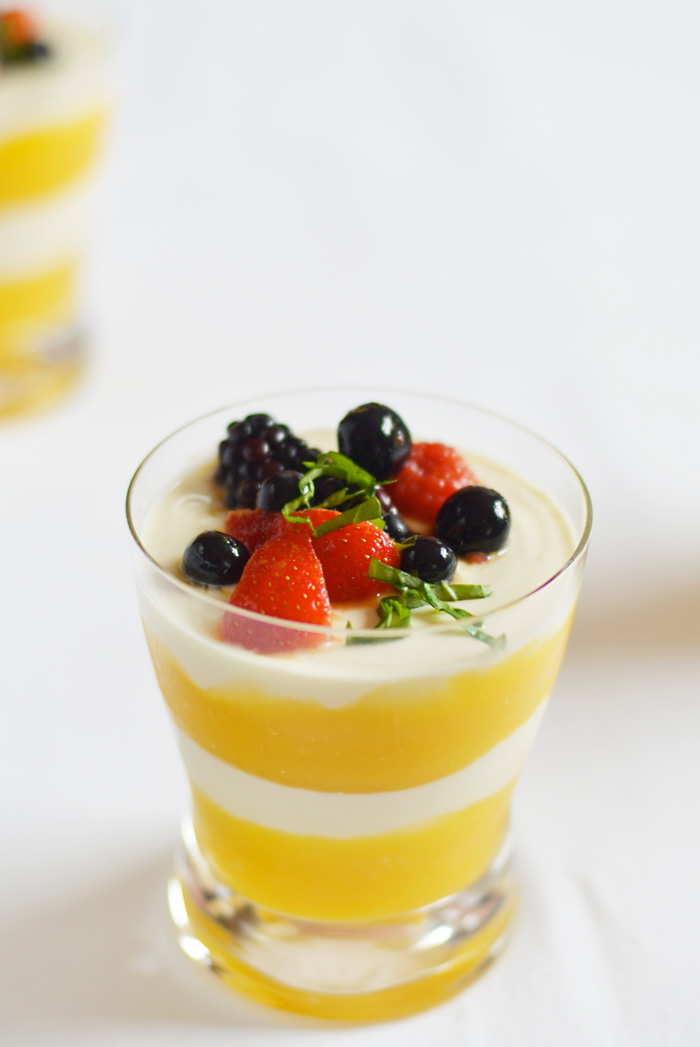
Mango parfaits with macerated berries / Parfaits de manga, com frutos vermelhos macerados.


This dessert is a Gordon Ramsay's very nice and easy take on parfaits, as it is made with yoghurt, it is so light, that you can have all the pleasure of the pudding without the guilty of the calories!

ingredients (serves 4):
1 ripe mango, peeled and de stoned
500ml natural yoghurt (I used vanilla yoghurt)
for the macerated berries:
200g mixed berries, hulled and quartered or halved
zest and juice of 1 small orange
1 tbsp icing sugar
small handful of basil leaves, finely shredded
method:
Place the berries, orange juice and zest, sugar and shredded basil in a bowl and mix well.
Cover with clingfilm and set aside for 1 to 2 hours.
Purée the mango in a blender until smooth.
Layer the mango purée and yoghurt in 4 serving glasses and chill until needed.
When ready to serve, top each glass with the macerated berries.
__________________


Este sobremesa do Gordon Ramsay é tão deliciosa e fácil de fazer que, para além de linda, ainda pode ser saboreada sem culpas, pois em vez das habituais natas e ovos que compõem um parfait, é feita com iogurte, o que a torna muito mais leve e super agradável e fresca.
ingredientes (para 4 pessoas):
1 manga madura, descascada e descaroçada
500ml de iogurte natural (eu usei iogurte grego com mel)
para a fruta macerada:
200g mistura de frutos vermelhos (naturais), arranjados e cortados em quartos ou metades, consoante o tamanho.
sumo e raspa de 1 laranja pequena
1 colher sopa de açúcar em pó
um punhado pequeno de folhas de manjericão, cortadas em juliana fininha
preparação:
Para preparar a fruta macerada, colocar todos os ingredientes numa taça, mexer bem e cobrir com película aderente. Reservar por cerca de 1 a 2 horas.
Colocar a manga num liquidificador ou no copo de um robot de cozinha e reduzi-la a puré.
Distribuir o puré de manga por 4 copos de vidro, cobrir o puré com o iogurte e refrigerar.
Na altura de servir, cobrir os parfaits com a fruta macerada.


Recipe / Receita:

15 June 2015

Goat's cheese, strawberry and cucumber millefeuilles / Mil folhas de queijo de cabra, morangos e pepino.


I love to go through my book shelves and randomly, pick up a book that is there, without being touched for a long time and start reading it again, like if it was the first time.
It happens so often and it's like finding little treasures as each time I do that, I find more and more interesting combinations and recipes that I didn't pay attention on previous readings.
Its happening now, with this Rachel Khoo cook book, that I bought long ago and that until a while ago, I have never tried a recipe from it.
And by a while ago, I mean, until I tried this cannelés recipe, this pork ribs recipe and now, this amazing, totally stunning and delicious millefeuilles that I served as a starter and that is, not just beautiful and gorgeous for the eyes, but it is also fabulous and a real pleasant surprise for the palate.
ingredients (makes 6):
6 tbsp butter
2 tbsp runny honey
4 sheets of filo pastry (48cm x 22cm)
250g goat's cheese log, crumbled
20 basil leaves
1 large cucumber
2 tbsp white balsamic vinegar
200g ripe and firm Gariguette strawberries (or other if you can't find Gariguette), sliced
method:
Preheat the oven to 160ºC.
Melt the butter and 1 tbsp of the honey in a saucepan.
Place 1 sheet of filo pastry on the work surface with the long side facing you.
Brush pastry sheet with the butter and honey mixture.
Sprinkle with 100g of the cheese and top with 10 basil leaves (the pastry will be cut in 10 rectangles, so make sure you have one basil leaf in each rectangle, making 2 rows with five leaves each).
Place the second sheet of pastry on top and brush with the butter and honey.
Cut the pastry sheets in half lengthways and then into 10 rectangles.
Place the rectangles on a baking sheet and repeat with the remaining filo sheets, reserving the remaining 50g of cheese.
Bake for 10 minutes, or until the pastry is slightly golden.
Using a peeler to peel long cucumber ribbons (avoiding the soggy centre with the seeds).
Mix together the remaining honey with the balsamic vinegar and toss to coat the cucumber ribbons, strawberries and the remaining crumbled cheese.
Place a pastry rectangle on each plate and top with some of the salad.
Top with another layer of the pastry, more of the saldas and a final layer of the pastry.
Repeat to make another 5 portions.
You will be left with 2 extra rectangles, that you can eat as a snack.

__________________

Adoro quando pego em livros que já tenho há algum tempo e os começo a reler, como se da primeira vez se tratasse.
Acontece-me tantas vezes, livros que comprei e dos quais nunca tinha experimentado nenhuma receita e quando os releio, acabo sempre, invariavelmente, por descobrir verdadeiros tesouros, ou seja, receitas e combinações, ás quais não tinha prestado atenção da primeira vez que as vi e que agora, ao relê-las, ganham toda uma nova dimensão e interesse.
Assim foi com este livro da Rachel (entre tantos outros), que tenho desde o dia em que foi publicado e que li na altura, mas sem grande interesse por nenhuma receita em particular e foi posto na prateleira.
Voltou a sair das prateleiras há umas semanas atrás, na sequência das minhas aventuras no mundo dos cannelés e desde então, já experimentei a receita de cannelés que o fez sair da prateleira, esta de entrecosto e couscous de favas e esta que hoje vos apresento e que foi servida como entrada e que é absolutamente linda e sublime em termos de sabor. 


ingredientes (para 6):
6 colheres sopa de manteiga
2 colheres sopa de mel líquido
4 folhas de massa filo (com cerca de 48cm x 22cm cada)
250g queijo de cabra, desfeito em pedaços pequenos
20 folhas de manjericão
1 pepino grande
2 colheres sopa de vinagre balsâmico branco
200g morangos maduros mas firmes (de preferência da variedade Gariguette, ou outra se não encontrar esta variedade), fatiados
preparação:
Aquecer o forno a 160ºC.
Num tachinho, derreter a manteiga com 1 colher sopa do mel.
Por forma a ficar de frente para um dos lados mais longos da massa, colocar uma folha de massa filo sobre a bancada da cozinha. Pincelar uniformemente com a mistura de manteiga e mel, polvilhar com 100g do queijo e cobrir com 10 folhas de manjericão.
Atenção que a massa vai ser cortada em 10 rectângulos e convêm que cada rectângulo tenha uma folha de manjericão, por isso, espalhar as folhas em 2 linhas uniformes de 5 folhas de manjericão por linha.
Colocar a segunda folha de massa filo sobre o preparado anterior e voltar a pincelar com a mistura da manteiga e do mel.
Cortar esta composição de massa ao meio longitudinalmente e depois em 10 rectângulos.
Repetir o processo com as outras duas folhas de massa filo, reservando os 50g de queijo que sobram.
Colocar os rectângulos num tabuleiro e levar ao forno por 10 minutos, até estarem douradinhos.
Com um descascados de cenouras, cortar longas e finas fatias de pepino, descartando as do meio com as sementes.
Numa taça, misturar a restante colher de soap de mel, com o vinagre balsâmico.
Colocar as fatias de pepino no molho anterior, juntamente com os morangos fatiados e o restante queijo e envolver tudo muito bem.
No momento de servir, colocar um dos rectângulos de massa num prato de serviço. Cobrir com um pouco da salada de pepino, queijo e morangos, cobrir com uma segunda camada de massa, seguida de outra de salada, finalizando com um terceiro rectângulo de massa.
Repetir os passos anteriores para os restantes 5 pratos.
Sobrar-lhe-ão 2 rectângulos de massa, que podem ser comidos como snack e que são uma maravilha.

Recipe / Receita:

1 October 2014

Tomato and basil oil focaccia / Focaccia com tomates e azeite de manjericão.


When I saw this recipe I thought that it wouldn't work as the tomatoes would make the bred soggy but I was totally wrong and it was a delight for the palate and a fabulous combination of ingredients.
ingredients:
225g strong white flour
1/2 tsp salt
1 tsp caster sugar
1 tsp dried yeast
1 tbsp olive oil, plus extra for greasing
140ml lukewarm water
400g cherry tomatoes, attached to their stalks
large handful basil leaves
100ml extra virgin olive oil, plus extra for shaping
large pinch sea salt flakes


method:
Reserve 5 basil leaves and put the remaining ones in the food processor with the 100ml of olive oil. Process until you have a rough paste and reserve.
To make the focaccia, place the flour, salt, sugar and yeast in a large bowl.
Add 1 tbsp of olive oil and the water and mix in order to form a soft dough.
Turn out the dough and knead for 10 minutes until smooth and elastic.
Put the dough in an lightly oiled bowl, cover with oiled clingfilm and leave to rise for 15 minutes or until doubled in size.
Lightly grease a rectangular tin with olive oil and with oiled hands, gently pull the dough into a rectangle to fit the size of the tin.
Press the dough down to the base of the tin in order to create dimples all over.
Push the cherry tomatoes into some of the holes, cover with clingfilm and leave to rise for 30 minutes.
Heat the oven to 200ºC, strain the basil oil and pour it over the surface of the dough, allowing it to pool in the dimples.
Scatter with the reserved basil leaves, turning them in the oil.
Sprinkle with salt and bake for 20 to 25 minutes or until golden and risen.
Leave to cool for 10 minutes.
__________________


Quando vi esta receita, pensei que não iria resultar, pois achava que os tomates iriam rebentar e encharcar o pão e que seria um completo desastre.
Pois bem, estava erradíssima, pois funcionou na perfeição e tanto o sabor, como a textura e a combinação de sabores, são absolutamente fabulosas!
ingredientes:
225g farinha branca para pão
1/2 colher chá de sal
1 colher chá de açúcar branco refinado
1 colher chá de fermento biológico seco
1 colher sopa de azeite + extra para untar
140ml água morna
400g tomates cereja, de preferência no pé
um bom punhado de folhas de manjericão
100ml azeite extra virgem + extra para as mãos
uma boa pitada de flor ou flocos de sal
preparação:
Reservar 5 folhas de manjericão e colocar as restantes no copo do robot de cozinha, juntamente com os 100ml de azeite. Processar bem e reservar.
Para fazer a focaccia, colocar a farinha, o sal, o açúcar e o fermento numa taça larga e misturar tudo muito bem.
Adicionar 1 colher de sopa de azeite e a água e mexer até obter uma massa mole.
Colocar a massa em cima da bancada e amassar por 10 minutos, ou até que a mesma esteja macia e elástica.
Colocar a massa na taça ligeiramente untada com azeite, cobrir com película aderente untada com azeite e deixar levedar por 15 minutos, ou até duplicar de tamanho.
Untar ligeiramente com azeite, uma forma rectangular com lados altos (tipo tabuleiro de brownie).
Esticar a massa com as mãos, até ter um rectângulo do tamanho da forma.
Com os dedos, pressionar a masa no fundo da forma, por forma a formar poças na massa.
Colocar os tomates em cima da massa, enterrando-os ligeiramente nas poças, cobrir a forma com a película aderente untada e deixar levedar por mais 30 minutos.
Aquecer o forno a 200ºC, coar o azeite de manjericão e espalhá-lo por cima da focaccia, deixando que forme "piscinas" nas irregularidades da superfície da massa.
Polvilhar com as folhas de manjericão reservadas, envolvendo-as no azeite e polvilhar com os flocos ou flor de sal.
Levar ao forno por 20 a 25 minutos, ou até a focaccia ter crescido e estar douradinha.
Deixar arrefecer por 10 minutos.

Recipe / Receita: Woman & Home (Eating Smart) - Summer 2014.