Showing posts with label Parsley / Salsa.. Show all posts

8 January 2018

Spring Pea Soup with Roasted Radishes and Sweet and Salty Cashews / Sopa de Ervilhas com Rabanetes assados e Cajus agri-doces.


Around Christmas time, Kyle Books threw a "Advent Cookbook Quiz" on Instagram and I was the lucky winner.
I had to choose 3, from 7 available books and one of the books I chose was Rita Serano's "Vegan in 7".
A delightful book, full of delicious vegan recipes and very straightforward and unpretentious.
Recipes using only 7 or less ingredients, beautiful gorgeous photos and simple, but delightful, recipe introductions.
You all know I'm not vegan or even vegetarian, but you all also know that I love to have and make vegan and vegetarian meals whenever I want and that's one of the reasons I chose this book as one of the 3 books I had to choose from.
Honestly, I have a handful of vegan and vegetarian books but this one, is truly adorable and my favourite so far!
If you want to know more and win one copy of this gorgeous book, have a look at Kimberly's, The Little Plantation blog as, she is not just offering a copy of the book but, she's also sharing another delightful recipe from the book.
I've marked down several recipes to cook and share from the book but, as a soup lover, this soup had to be the first recipe to cook and share.
Try it and feel healthy and green!


Note: Rita suggests to serve the soup with an optional swirl of Cashew Cream, but I opted for a scatter of the sweet and salty cashews, for crunchiness.

25 June 2017

Pomegranate glazed Pork Skewers with Burhan’s Onion and Parsley Salad / Espetadas de Porco marinadas em Melaço de Romã e Salada de Cebola Roxa e Salsa.


This is the recipe Deborah chose as the second recipe challenge of the month for the Rainydaybites Cookbook Club.
Shame that I had no time to participate in the first recipe challenge of the month, which was a super gorgeous walnut roll cake but, for this second one, I made sure I wouldn't miss it.
As I told you here, this month we're cooking from Paula Wolfert books.
This recipe is from a book that I don't have, "Unforgettable: The Bold Flavors of Paula Wolfert’s Renegade Life" but Deborah told me that I could find the recipe here at the Food and Wine website and I'm very glad I made it because it's truly delicious and the contrasting flavours are absolutely incredible.

22 May 2017

Carrot Keftedes / Keftedes de Cenoura.


Although, usually, keftedes are made with minced meat, this vegetarian option is a great and super delicious solution for those that are avoiding meat.
Served with a simple salad, Skordalia and/or Tabbouleh, these are just perfect warm or cold.
The recipe is from Chef Maria Elia "Smashing Plates" cookbook and it's another fabulous suggestion that I'm leaving for Marta and her May "Carrot - the ingredient of the month"!

22 April 2017

Risi & Bisi (Rice and Peas) / Risi & Bisi (Arroz e Ervilhas).


Risi & Bisi, the italian for Rice and Peas, is a simple but delicious Venetian combination of flavours.
There's another version of this dish here but, as this month Marta asked us to cook with rice, I couldn't help but making this Tessa Kiros version.
Tessa Kiros is the author of the most beautiful books I have on my shelves and believe me, I have all Tessa Kiros books and each single one is more gorgeous than the previous one.
This recipe is from Tessa Kiros "Venezia" cook book.
A spectacular book that, more than a recipe book, is a book full of gorgeous food photos and Venetian life style shots, snaps and introductions.

5 October 2016

Baked risotto with beef meatballs and curly kale / Risotto no forno, com almôndegas e couve kale.


This fabulous risotto was inspired by this Emilie Raffa recipe.
I've already made the original recipe once, with the chicken sausage, and I posted the photo  here on my instagram account.
The thing is, if I made it again, it's not difficult for you to guess how fantastic and delicious it is, right?
This baked risotto is so tasteful and simple to make, that I think that I'll never be making risotto in the traditional (stirring) way again...
As I wrote above, the first time, I made it with the sausages like it is described by Emilie. This time, I had some meatballs in the fridge and I didn't want to make them with pasta so, looking at a bag of leftover curly kale that needed to be used, I straightaway thought of making Emilie's baked risotto again but, using those two ingredients.
My opinion? Honestly?
The result couldn't be more delightful and the combination, absolutely delicious!!


27 June 2016

Brown butter and Gorgonzola pumpkin pasta / Noodles de abóbora (butternut), com beurre noisette e Gorgonzola.


Absolutely divine vegetarian meal. Full of flavour and a great combination of ingredients but, being a Donna Hay recipe, it's not a surprise right?
ingredients (serves 2):
1kg butternut squash, peeled and spiralised
1 tbsp extra virgin olive oil
sea salt and cracked black pepper
100g unsalted butter
150g Gorgonzola, sliced
1/2 cup curly parsley leaves, finely chopped
20g grated parmesan
method:
Preheat the oven to 220ºC.
Place the pumpkin, oil, sal and pepper on a large baking tray lined with baking paper and toss to combine.
Cook for 5 minutes or until the pumpkin has just softened.
Meanwhile, place the butter in a small frying pan over high heat.
Cook for 4 to 5 minutes, or until the butter is foamy and nutty brown.
Divide the pumpkin noodles and Gorgonzola between plates.
Spoon over the browned butter and sprinkle with the parsley and the grated parmesan.

__________________

Deixo-vos hoje mais uma maravilhosa refeição vegetariana, que combina ingredientes e sabores, absolutamente magníficos.
Sendo esta, uma receita da Donna Hay, não será surpresa nenhuma, o quão maravilhosa será a combinação, certo?


ingredientes (para 2 pessoas):
1kg abóbora (butternut squash), descascada e cortada em noodles (espiralizada)
1 colher sopa de azeite extra virgem
sal e pimenta preta moída na altura, a gosto
100g manteiga sem sal
150g queijo Gorgonzola, cortado em fatias
1/2 chávena (cup) de salsa frisada, picada
20g quimo parmesão ralado
preparação:
Aquecer o forno a 220ºC.
Num tabuleiro grande, forrado com papel vegetal, colocar a abóbora, o azeite, sal e pimenta e envolver tudo muito bem.
Levar ao forno por 5 minutos, ou até a abóbora estar macia mas não muito mole.
Entretanto, colocar a manteiga numa frigideira sobre lume alto e cozinhar por 4 ou 5 minutos, ou até esta, estar com cor e aroma de de avelã. Cuidado para não queimar a manteiga.
Dividir a abóbora e o queijo Gorgonzola pelos pratos.
Regar com a manteiga e polvilhar com a salsa picada e o queijo parmesão ralado e servir.


Recipe / Receita: Donna Hay magazine (April/May 2016).

26 April 2016

Pea soup with squid and prawns / Sopa de ervilhas com lulas e camarão.


Another delicious soup that comes out of my kitchen and that goes directly to Marta's "ingredient of the month" table.
As I wrote here, Marta challenged us to cook with peas and as I love peas, I couldn't resist this fabulous initiative and I'm cooking with peas this April.
The combination of ingredients is amazing and the flavour is second to none.
The author suggests to discard the wings and tentacles of the squid but I used everything.

15 February 2016

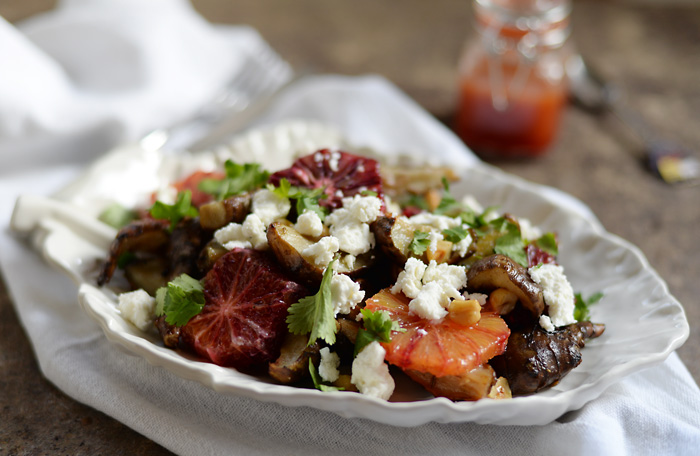
Warm jerusalem artichoke, blood orange and feta salad / Salada morna de girassol batateiro, laranja sanguínea e queijo feta.


After so many parties, celebrations and sweets, a simple salad really goes down a treat!
This delicious wintery salad combines two of my favourite ingredients and as soon as I saw this fabulous suggestion I didn't think twice to make it.
The combination is fantastic and the sweet and sour flavours alongside all the different textures, are truly amazing.
I served it as a mail meal and it was more than enough for 3 adults.
ingredients (serves 4 to 6 as a side dish):
750g of jerusalem artichokes, scrubbed and quartered
2 tbsp olive oil
4 blood oranges, plus juice of 1 (about 2 1/2 tbsp)
2 tsp Sherry vinegar
1 tbsp extra virgin olive oil
1/2 tsp clear honey
50g blanched hazelnuts, very roughly chopped
1 tsp cumin seeds, lightly crushed
100g feta, crumbled
25g pack flat leaf parsley, roughly chopped
method:
Heat the oven to 200ºC.
Toss the artichokes, olive oil and half the orange juice in a large roasting tin.
Season well and roast for 45 minutes, turning halfway through, until tender and turning golden.
Meanwhile, peel and segment or slice the remaining oranges.
Put the vinegar, remaining orange juice, extra virgin olive oil and the honey in a jug and whisk to combine. Season to taste.
Scatter the cumin and and the hazelnuts over the artichokes and roast for another 5 minutes.
Remove from the oven and cool slightly.
Gently fold in the oranges, feta, parsley and the dressing and serve.
__________________


Depois de tantos festejos, comemorações e doces, o que sabe mesmo bem é uma saladinha!
Esta salada de Inverno, combina ingredientes que adoro e é uma verdadeira delícia, tanto em termos de sabores como de texturas.
Eu servi-a como refeição principal e foi mais que suficiente para 3 adultos.
ingredientes (para 4 a 6 pessoas, como acompanhamento):
750g girassol batateiro, lavado, esfregado e cortado em quartos
2 colheres sopa de azeite
4 laranjas sanguíneas + o sumo de 1 (cerca de 2 1/2 colheres sopa de sumo)
2 colheres chá de vinagre de xerez
1 colher sopa de azeite extra virgem
1/2 colher chá de mel claro
50g avelãs sem pele, picadas grosseiramente
1 colher chá de sementes de cominho, esmagadas ligeiramente
100g queijo feta, desfeito
25g salsa, picada grosseiramente
preparação:
Aquecer o forno a 200ºC.
Num tabuleiro de ir ao forno, combinar o girassol batateiro com as duas colheres de sopa de azeite  e metade do sumo da laranja.
Temperar de sal e pimenta preta moída na altura e levar ao forno por cerca de 45 minutos, mexendo ao fim de 20 a 25 minutos.
Entretanto, descascar as 4 laranjas e segmentá-las, ou cortá-las em rodelas.
Num frasquinho, colocar o vinagre, o restante sumo de laranja, o azeite extra virgem e o mel. Temperar de sal e pimenta a gosto e misturar tudo muito bem.
Quando o girassol batateiro estiver macio, colocar as sementes de cominho e as avelãs no tabuleiro e cozinhar por mais 5 minutos.
Retirar o tabuleiro do forno e deixar arrefecer ligeiramente.
Muito delicadamente, juntar as laranjas, o queijo feta, a salsa e o molho, ao girassol batateiro. Envolver tudo muito bem e servir.


Recipe / Receita: BBC GoodFood magazine - February 2016.

13 November 2015

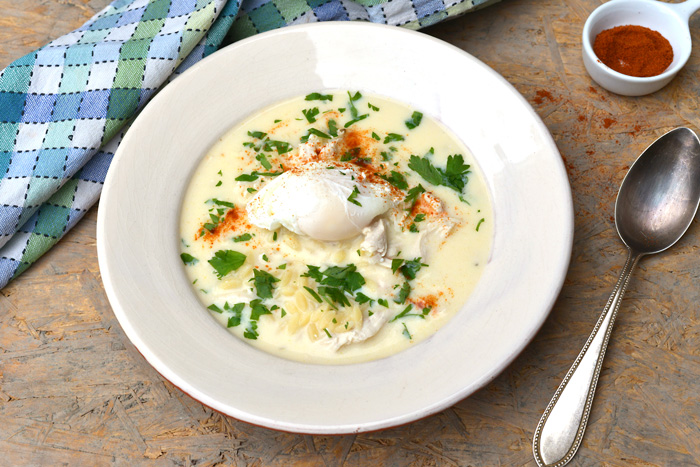
Avgolemono soup.


Rick Stein's new cook book, where he features the most delightful recipes discovered while he traveled from Venice to Istanbul is one of the most beautiful books I bought lately.
Rick starts his journey in Venice and takes us on a fabulous culinary trip to Croatia, Albania, Greece and Turkey where his focus goes to the fantastic city of Istanbul.
Both, the series about his fabulous journey (that I am watching now on TV) and the book, are an absolute delight!!
Avgolemono is the Greek for "eggs and lemon".
The mixture can be used as a sauce in different Greek dishes but is also the name of this famous chicken soup.
The soup starts with a chicken broth that at the end is thickened with a mixture of eggs and lemon juice.
It is one or even The BEST chicken soup I ever had!!
ingredients (serves 4):
8 eggs
1,5l chicken stock
1 tsp salt
1 chicken breast (about 170g), skinless
100g orzo pasta
3 tbsp lemon juice
30g butter
small handful parsley, chopped
cayenne pepper
method:
Poach 4 of the eggs in simmering water for 3 to 4 minutes, then remove to a bowl of cold water to arrest the cooking. Refresh in hot water just before serving.
Heat the stock to a gentle simmer, add the salt and then poach the chicken breast for 20 minutes. Remove from the stock and allow to cool.
Bring the stock to the boil. Add the orzo pasta then reduce to a simmer and cook for 7 minutes.
When the chicken breast is cool enough to handle,  cut it into strips and set aside.
Whisk the remaining 4 eggs with die lemon juice in a bowl.
Pour half the hot stock over the egg and lemon mixture, whisking all the time, then put the egg, lemon and stock back into the pan.
Return to the heat and stir till the eggs thicken (at about 70 to 80ºC). Don't cook any further.
Remove from the heat and whisk in the butter and parsley.
Add the chicken strips to the soup and ladle into individual bowls.
Top with a reheated poached egg and sprinkle with a pinch of cayenne pepper.


__________________

Há livros e livros. Uns fantásticos, outros mais ou menos e outros absolutas desgraças e desperdício de dinheiro.
Este último livro do Rick Stein, one ele nos leva numa maravilhosa aventura culinária que começa em Veneza, passando pela Croácia, Albânia, Grécia e Turquia, onde dá destaque à fabulosa cidade de Istambul, é dos livros mais lindos que comprei nos últimos tempos.
Cada página é um deleite e uma verdadeira romaria de aromas, combinações e sabores.
As histórias que acompanham cada prato e cada viagem, são apaixonantes e eu, que estou a acompanhar a série televisiva ao mesmo tempo que vou explorando o livro, confesso que estou completamente fascinada com a culinária destas regiões.
Já fiz várias receitas do livro, mas começo por vos deixar esta, que fez as delícias de todos cá em casa.
Avgolemono é a palavra grega para a combinação de ovos e limão. Esta combinação é muito utilizada como molho em vários pratos gregos, mas é também o nome desta sopa que não é mais que uma canja de galinha enriquecida com esta fabulosa mistura de ovos e sumo de limão.
Para os amantes de canja de galinha, experimentem esta receita e vão ver que a simples canja de galinha nunca mais será a mesma!!


ingredientes (para 4 pessoas):
8 ovos
1,5l de caldo de galinha
1 colher chá de sal
1 peito de frango (com cerca de 170g), sem pele
100g orzo ou pevide
3 colheres sopa de sumo de limão
30g manteiga
um punhado pequeno de salsa, picada
pimenta de Caiena, para polvilhar
preparação:
Comece por escalfar 4 dos ovos por 3 ou 4 minutos, em água a ferver.
Arrefecer os ovos em água fria a fim de parar a cozedura e reservá-los. Os ovos podem ser re-aquecidos em água quente na hora de servir a sopa.
Aquecer o caldo de galinha numa panela.
Quando o caldo levantar fervura, baixar um bocadinho o lume, adicionar o sal e o peito de frango e cozer por cerca de 20 minutos.
Retirar o frango da panela e reservá-lo.
Levantar o lume e quando o caldo voltar a ferver, adicionar a massa.
Baixar o lume e cozer a massa por cerca de 7 minutos.
Entretanto, desfiar o peito de frango.
Numa taça, bater os 4 ovos restantes com o sumo do limão.
Adicionar umas conchas do caldo quente à mistura dos ovos, mexendo sempre com a vara de arames, para que os ovos não cozam.
Deitar a mistura de volta na panela e cozinhar sobre lume brando, mexendo sempre, até atingir uma temperatura de 70 a 80ºC (altura em que os ovos estarão cozidos).
Atenção para não deixar a mistura subir mais que a temperatura recomendada.
Retirar a panela do lume, e adicionar a manteiga e a salsa picada, mexendo tudo muito bem.
Adicionar o frango desfiado e dividir a sopa por 4 pratos.
Colocar um ovo escalfado e aquecido em cima de cada prato de sopa e polvilhar com uma pitada de pimenta de Caiena.


Recipe / Receita:

15 May 2015

Parsley, bacon and broad bean risotto / Risotto de salsa, bacon e favas.


With this recipe I closed the Winter season risottos and with today's one, I'm opening the Spring season risottos.
The combinations in this dish are just amazing and the addition of the broad beans, a very springy ingredient, makes it extraordinary.
ingredients (serves 4 as a starter or 2 as a main course):
150g shelled fresh or frozen broad beans
50g spinach leaves
60g flat leaf parsley leaves
3 tbsp olive oil, plus extra for frying
10g butter
4 slices smoked streaky bacon, cut into lardons
1 onion, finely chopped
salt
freshly ground black pepper
1 spring thyme, leaves picked
1 large garlic clove, finely chopped
150g arborio rice
75ml dry white wine
750ml warm chicken stock
20g grated parmesan
1 tbsp lemon juice, freshly squeezed
method:
Blanch the broad beans in a pan of boiling salted water until al dente.
Remove with a slotted spoon to a bowl of iced water and peel them if the skins are too tough.
Using the same boiling water, blanch the spinach and parsley leaves until wilted.
Remove from the pan with a slotted spoon, leave to cool and squeeze out the excess water.
Put the spinach and parsley in a food processor with 2 tbsp of the olive oil and 1 tsp of water and blitz to a fine purée. Set aside.
Heat the remaining oil and half of the butter in a large frying pan and fry the bacon until it starts crisping up.
Remove the bacon with a slotted spoon and drain over kitchen paper.
Add the onion to the same pan with a good grind of black pepper and the thyme and cook over a medium heat until soften but not coloured.
Add the garlic and stir.
Add more olive oil if necessary and then add the rice, stirring to coat it in the oil and cook for a couple of minutes, until it turns translucent.
Pour in the white wine, stir to incorporate and cook for 2 minutes or until it has evaporated.
Start adding the stock, one ladleful at a time, stirring well between each addition, adding the next ladleful only when the previous one has been absorbed.
Continue this process until the rice is cooked but still a little al dente.
Take the pan off the heat and stir in the parmesan and remaining butter.
Add the spinach and parsley purée, stirring throughly to incorporate it well with the rice.
Stir through the bacon, broad beans and lemon juice and season to taste.
Serve immediately.
__________________


Se com esta receita dei por encerrada a época dos risottos de Inverno, com a que hoje vos trago, considero aberta a época dos risottos de Primavera.
A combinação de ingredientes é genialmente deliciosa e a adição das favas, um ingrediente primaveril, eleva-o de banal a extraordinário.
ingredientes (para 4 pessoas como entrada, ou para 2 pessoas como prato principal):
150g favas, frescas ou congeladas, descascadas
50g folhas de espinafre
60g folhas de salsa
3 colheres sopa de azeite
10g manteiga
4 fatias de bacon fumado, em lardons
1 cebola, picada finamente
sal e pimenta preta moída na altura
folhas de 1 haste de tomilho fresco
1dente de alho grande, picado finamente
150g arroz para risotto
75ml vinho branco seco
750ml caldo de galinha, mantido quente
20g parmesão ralado
1 colher sopa de sumo de limão
preparação:
Numa panela de água a ferver com sal, escaldar as favas até estas estarem al dente.
Retirar as favas da panela com uma escumadeira e refrescá-las em água gelada.
Se a pele das favas for muito rijas, retirar-lhes a pele.
Na mesma água a ferver, escaldar os espinafres e a salsa, até estes murcharem. Retirar da água com a escumadeira, deixar arrefecer um pouco e espremer bem a fim de lhes retirar o excesso de água.
Colocar os espinafres e a salsa no copo de um robot de cozinha, juntamente com 2 colheres sopa de azeite e 1 colher chá de água e reduzir a puré. Reservar.
Aquecer o restante azeite e metade da manteiga num tacho largo ou frigideira e fritar o bacon até este estar crocante. Retirar com uma escumadeira e escorrer em cima de papel absorvente de cozinha.
No mesmo tacho e à mesma gordura onde fritou o bacon, adicionar a cebola, as folhas de tomilho e uma boa pitada de pimenta preta e cozinhar até a cebola estar macia mas sem cor.
Adicionar o alho e mexer. Se necessário, adicionar mais um bocadinho de azeite.
Adicionar o arroz e mexer bem, envolvendo o arroz na gordura, até este estar opaco.
Deitar o vinho banco no tacho e deixar evaporar, mexendo sempre.
Adicionar o caldo, uma concha de cada vez, mexendo sempre e só adicionando a concha de caldo seguinte, quando a anterior tiver sido completamente absorvida.
Quando o arroz estiver cozido, mas al dente, desligar o lume, adicionar o parmesão e a manteiga restante e misturar bem.
Adicionar o puré de espinafres e salsa e mexer bem, para que fique bem incorporado.
Adicionar o bacon, as favas, o sumo do limão e rectificar de sal e pimenta.
Servir de imediato.

Recipe / Receita:

8 May 2015

Baked chicken with lemon, potato and green olives / Frango no forno com limão, batatas e azeitonas verdes.


Bill Granger is one of the Chefs that, when I moved to the UK, was responsible for bringing out of me the passion for food and cooking that I have now.
Each time I was watching one of his programmes on TV, I just wanted to go shopping straightaway, get into the kitchen and prepare the delicious food I watched him preparing in each of the programmes I've watched.
His style is honest, clean and uncomplicated and his suggestions are always mouthwatering.
This recipe, even for a midweek supper, is a roasted meal suggestion that is easy and quick to put together and totally delicious.
ingredients (serves 4):
1kg roasting potatoes, washed and cut into chunks
1 red onion, peeled and cut into wedges
75g green olives, pitted
1 lemon, sliced
50g pancetta, cut into strips
2 bay leaves
1 tbsp tomato paste
1 tbsp balsamic vinegar
120ml chicken stock
1.7kg chicken, jointed
1 tbsp extra virgin olive oil
sea salt and freshly ground black pepper
chopped parsley, to sprinkle
method:
Preheat the oven to 180ºC.
Place the potatoes in a roasting tin. Scatter over the onion, olives, lemon, pancetta and bay leaves.
Stir the tomato paste, balsamic vinegar and stock together and pour over the potatoes.
Lay the chicken pieces on top, drizzle with the olive oil and sprinkle with salt and pepper.
Roast for 50 minutes or until the chicken is golden.
Transfer the chicken to a warm plate, cover with foil and set aside.
Increase the oven to 220ºC and return the roasting tin to the oven for 10 minutes or until the potatoes, onion and lemon slices are well coloured.
Place the chicken back on top of the potatoes, scatter with chopped parsley and serve.

__________________

O Bill Granger é um dos Chefs responsável pela minha paixão/obsessão pela cozinha.
Quando mudei aqui para o Reino Unido e comecei a ver os programas dele, sempre que um programa dele terminava, só me apetecia ir a correr ás compras e ir para a cozinha recriar todas as delícias que ele tinha preparado.
Gosto do estilo dele, pois a comida dele é o que se chama de comida honesta, fresca e descomplicada e embora eu adore desafios complicados na cozinha, há dias em que o (des)complicado e delicioso são a pareceria e os aliados perfeitos.
Este assado é fantástico, mesmo para um jantar durante a semana, pois é rápido, fácil e agrada a todos, tanto miúdos como adultos.


ingredientes (para 4 pessoas):
1kg batatas para assar, lavadas e cortadas em pedaços
1 cebola vermelha, descascada e cortada em meias luas
75g azeitonas verdes, descaroçadas
1 limão, fatiado
50g pancetta, cortada em lardons
2 folhas de louro
1 colher sopa de concentrado de tomate
1colher sopa de vinagre balsâmico
120ml caldo de galinha
1.7kg frango, de preferência caseiro, cortado em bocados
1 colher sopa de azeite extra virgem
sal e pimenta preta moída na altura
salsa picada, para decorar
preparação:
Aquecer o forno a 180ºC.
Colocar as batatas num tabuleiro de ir ao forno. Polvilhá-las com a cebola, as azeitonas, as rodelas de limão, a pancetta e as folhas de louro.
À parte, misturar o caldo de galinha, com a pasta de tomate e o vinagre balsâmico e regar as batatas com esta mistura.
Dispôr os pedaços de frango no tabuleiro, em cima do preparado anterior. Regar com o azeite e polvilhar com sal e pimenta a gosto.
Levar o tabuleiro ao forno por 50 minutos, ou até o frango estar coradinho.
Retirar o frango do tabuleiro, colocá-lo num prato, tapar com folha de alumínio e reservar.
Aumentar a temperatura do forno para 220ºC e colocar o tabuleiro de novo no forno por mais 10 minutos, ou até que as batatas, o limão e a cebola, tenham ganhado cor e estejam bem douradinhos.
Voltar a colocar o frango em cima das batatas, polvilhar com salsa picada e servir.

Recipe / Receita:

17 April 2015

Chicken, morcilla and sherry / Frango com morcela e xerez.


The new Diana Henry book is amazing and it's all about the chicken. A bird that, here at home, we all love and eat very often.
A book full of fabulous recipes that make your mouth water and this one, amongst lots of them that I marked to try, was the first one that I tried.
I chose this recipe to try first as I went to a fantastic Spanish deli in Edinburgh and I bought a proper Spanish morcilla that was enough for this recipe and for another one that I'll publish later.
The recipe serves 2 but I doubled it to serve 4.
ingredients (serves 2):
1 tbsp olive oil
salt
freshly ground black pepper
4 skin on bone in chicken thighs (I used thighs and drumsticks)
8 slices of morcilla or black pudding
1/2 large onion, cut into slim crescent moon shaped wedges
200ml dry sherry
3 1/2 tbsp double cream
1 tbsp toasted pine nuts
1 tbsp chopped parsley leaves
method:
Preheat the oven to 180ºC.
Heat the oil in a ovenproof frying pan that can fit the chicken and morcilla snugly in a single layer.
Season the chicken and brown on both sides just for colour.
Take out of the pan and set aside.
Add the morcilla to the pan and cook it lightly on both sides, then remove it from the pan and set aside with the chicken.
Add the onion to the pan and colour it lightly.
Deglaze the pan with the sherry, scrapping the base with a wooden spoon to remove all the flavoursome scraps.
Return the chicken and morcilla to the pan and bake in the oven for 40 minutes or until the chicken is cooked through.
Take the pan out of the oven and put it over medium heat. If theres no liquid left, you can add another 3 1/2 tbsp of sherry and stir it in.
Pour in the cream, heating it until it bubbles.
Sprinkle with the pine nuts and parsley and serve immediately.
__________________


O novo livro da Diana Henry é fantástico!
Um livro recheado de receitas só de frango. Uma carne muito apreciada cá em casa e que comemos com alguma frequência e as receitas são tão magníficas que apetece testar todas!
Esta foi a primeira receita a ser testada, já que há uns dias atrás, fui a uma delicatessen espanhola em Edimburgo e comprei uma morcela espanhola fabulosa que foi suficiente para esta receita e para uma outra que vos apresentarei muito em breve.
A receita apresentada é para 2 pessoas, mas eu dobrei-a para 4.
ingredientes (para 2 pessoas):
1 colher sopa de azeite
sal
pimenta preta moída na altura
4 sobrecoxas de frango com a pele e o osso (eu usei sobrecoxas e coxas)
8 rodelas de morcela
1/2 cebola grande, cortada em meias luas fininhas
200ml xerez seco
3 1/2 colheres sopa de natas para culinária
1 colher sopa de pinhões, tostados
1 colher sopa de salsa picada
preparação:
Aquecer o forno a 180ºC.
Aquecer o azeite numa frigideira que possa ir ao forno e que seja grande o suficiente para que o frango e a morcela possam ficar numa camada única.
Temperar o frango de sal e pimenta e selar no azeite, a fim de a corar de ambos os lados.
Retirar o frango da frigideira e reservar.
Colocar as rodelas de morcela na frigideira e fritar ligeiramente dos dois lados. Retirar a morcela e reservar juntamente com o frango.
Colocar a cebola na frigideira e fritar até que esta ganhe cor. Não é preciso que fique macia.
Adicionar o xerez e raspar o fundo da frigideira com uma colher de pau, a fim de soltar todos os sedimentos que tenham ficados agarrados ao fundo.
Colocar o frango e a morcela na frigideira e levar ao forno por 40 minutos, ou até que o frango esteja cozido.
Retirar a frigideira do forno e colocá-la sobre lume médio. Em princípio haverá líquido suficiente na frigideira, mas caso não haja, adicionem mais 3 1/2 colheres sopa de xerez e mexam.
Adicionar as natas e aquecer até que as natas comecem a ferver.
Polvilhar com os pinhões tostados e a salsa picada e servir de imediato.

Recipe / Receita: