Showing posts with label Orange / Laranja.. Show all posts

15 October 2018

Pumpkin, Saffron and Orange Soup for the Virtual Pumpkin Party / Sopa de Abóbora, Açafrão e Laranja, para a Festa Virtual da Abóbora.


It's Virtual Pumpkin Party Day 2018 and, I so love to cook with pumpkin, that I couldn't miss this day for anything in the world!
It's my 3rd year participating in this fabulous initiative and, here and here, you can check my previous contributions for this fabulous event.
This year, I've decided to make this amazing Ottolenghi soup. A recipe from his brand new, and absolutely FANTASTIC book "Simple".
This is a recipe for soup lovers and to be enjoyed now, that the days are getting cooler and cooler. Full of warmth and autumnal flavours, this soup is a must try!
Just in case you want to have a look and check all the fabulous bloggers that are celebrating this virtual day and all the fantastic delights they've cooked, check Sara's blog and enjoy the pumpkin feast.

20 September 2018

Fig Pavlova for the 32nd edition of the Sweet World / Pavlova de Figos para a 32ª edição do Sweet World.


After a wee Summer break, the Sweet World challenge is back for its 32nd edition and the theme for this edition is my most beloved Pavlova!

Pavlova, as you know, is something that I truly adore and if you look under the "Pavlova label", you'll find 14 Pavlova recipes for this dessert so, you're spoiled for choices...

22 January 2018

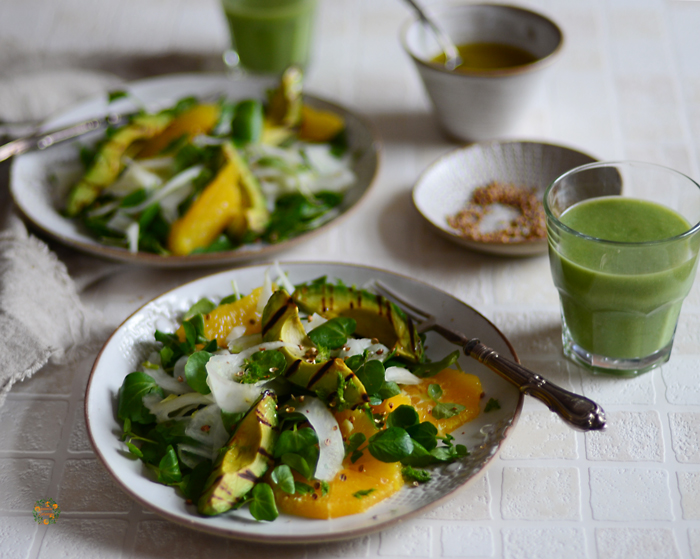
Fennel, Watercress, Orange & Avocado Salad / Salada de Funcho, Agrião, Laranja e Pêra Abacate.


Remember about the fabulous Rita Serano book "Vegan in 7", I talked about in this post?
Here it is, another fabulous recipe from this amazing book.
Honestly, I'm loving cooking from this book so much, that I could become a vegan before you notice it (lol).
No! I love food in general so, I couldn't choose a way of eating that easily but, again, saying that, I'm more and more in love with vegan or even vegetarian food! Specially after trying Rita's recipes!
I made this salad twice last week and we all loved it here at home so, as Marta's ingredient of the month is oranges, I decided to post this recipe to be part of Marta's January round up.
It's such a simple, yet, super delicious and fulfilling salad that, I couldn't help but share it!

17 January 2018

Orange and Clove roast Chicken with Pears and Butternut Squash / Frango assado no forno, com Laranja, Cravinho, Pêras e Abóbora (butternut).


This recipe is an aromatic combination of flavours and textures.
A one pan meal that it's super easy to prepare but when you bring it to the table, your family or guests will think you spent hours in the kitchen.

The recipe is from Marte Marie Forsberg and her truly, truly amazing debut cook book "The Cottage Kitchen".

Of course I don't feel the need to introduce Marte Marie as, every blogger and/or foodie raves about her work. Both, as a passionate cook, a blogger and a very talented photographer.
The book is divided by "seasons" and every chapter features recipes with the best seasonal ingredients of course. All the recipes, descriptions and, of course, photos are incredibly mouthwatering and you just want to be in the kitchen and cook everything from the book. Well, at least, that's how I feel about it...!!
I have lots of recipes marked down in the book to be tried and I've already made two of Marte Marie's no knead breads and this chicken recipe that I'm posting today.
I chose to share this recipe first, because it features orange and oranges are Marta's ingredient of the month.
I've made this recipe before Marta announced the ingredient of the month so, good thing that I didn't post it here before, because now, it can go straight to Marta's January table.
Hope you try it and enjoy it because it's so aromatic, full of flavour and delicious that you'll only be able to describe it if you taste it!


11 January 2018

Blackberry, Orange and Orange Blossom Clafoutis / Clafoutis de Amoras, Laranja e Extracto de Flor de Laranjeira.


You know I can't resist anything "citrus" right?
As soon as Marta announced that this month's "ingredient of the month" are Oranges, I knew I'd be making a few orangy recipes for Marta and this one is just the first one.
A fabulous Clafoutis, very orangy and with blackberries, another of my favourite ingredients in the world!
Now, as a "citrus lover", how could I ever resist a book called "Citrus"? No way right?
I've got this book long time ago and, although I've already made lots of recipes from it, this one is the first one I'm sharing with you all and a very appropriate one for Marta's challenge.
The book, Citrus - from Catherine Phipps, is a delight book.
Full of great (savoury and sweet) recipes and very helpful information about citrus, the book includes descriptions of varieties and how to slice, dry, freeze, and properly handle different kinds of citrus. A must have, I'd say!
This specific recipe calls for dried orange zest and there's a recipe for it in the book but, it happened that, the day I was going to make this Clafoutis, I got a surprise gift in my mail box.
A big thank you to Manuela for the amazing gift and a big round of applause and congratulations to "Um Grama" for the exceptional products and for the care and beauty of the packaging and presentation.
Outstanding and beautifully Portuguese!
Although the dried orange and rosemary mix is suggested to serve in starters, salads or with cheese, I thought that it would work perfectly with this Clafoutis and G!!! I was so right!! It worked perfectly and the hint of the rosemary just made this Clafoutis even better!
Give it a go and be impressed!

11 October 2017

Burrata with burnt Oranges, Pistachios, Mint and Pomegranate / Burrata com Laranjas queimadas, Menta e Romã.


Delicious little sharing "salad" type plate, from Sabrina Ghayour new book "Feasts" and one that fits perfectly into this month's "Marta's ingredient of the month" which is, pomegranate!!
I truly adore Sabrina's books and this last one, "Feasts" is a real delight.
Full of colorful and delightful recipes and the type of book that makes you go to the kitchen and cook the book off!
This salad was the first recipe I prepared form the book. Not just because I'm mad about Burrata, but also because all the ingredients and colours combination was screaming "PREPARE ME"!!
This plate is not, just easy and quick to prepare, but it's also a great combination of flavours and textures.
As soon as I saw that Marta chose pomegranate as the ingredient of the month, I knew that this gorgeous plate would be a winner at her monthly table and here it is!


24 September 2017

Babka with Chocolate filling / Babka com recheio de Chocolate.


Second recipe challenge of the month and Deborah asked us to make a Babka for her fabulous Rainydaybites Cook Book Club.
I love Babka, simple and enriched doughs and everything related to kneading and shaping doughs so, to be able to make this recipe was a real pleasure.
The only difficulty was the choice for the filling as there's a few options to choose from but, to make the "chocolate lovers" of the house happy, of course, I had to choose the chocolate filling.
The recipe, is another one from the gorgeous Brian Hart Hoffman "Bake from Scratch" book and it worked perfectly well and without any hiccups.
This Babka, with a soft and delightful dough, drenched with a simple syrup and oozing (literally oozing) with melted chocolate, was a hit and the requests to make it again are more than many.
I'm leaving you the complete recipe in case you want to make the two loaves, instead of making only one and regretting it after, like I did.

24 May 2017

Carrot and Coconut Cake / Bolo de Cenoura e Coco.


A sweet and delightful carrot cake for Marta and her "ingredient of the month".
Almost everybody (and I certainly do), loves carrot cake, specially if it's a moist and flavoursome one.
This Rachel Khoo recipe, from the "Little French Kitchen" is moist, is delicious and a joy to eat for (like me), carrot cake and coconut lovers.

31 March 2017

Croquembouche with Cardomon and Orange filling & Salty Caramel / Croquembouche com Creme Pasteleiro de Cardamomo e Laranja e Caramelo Salgado.


31st of March!! My day! My Birthday!! well, mine and my sister's so, happy Birthday to me and to my much beloved sister that I love as much as I love my own self!
And, I think, celebrating my birthday with a croquembouche it's a pretty way to celebrate it right?!
Have I ever made choux pastry until today? No! Never!!
Have I ever made a croquembouche or profiteroles or eclairs until today? Never!!!
This was my very first time making choux pastry. Actually, not the first! Second, because I attempted this a few weeks ago and burned my caramel (and a few fingers too...) so, my croquembouche was a failure. Well, actually, not a total failure, because it taught me that making choux pastry is way, way easier than I ever thought it would be and therefore, after burning my caramel, I was not scared to attempt a second Croquembouche.
This one!
I think it's not perfect but, it's quite pretty and certainly, very delicious!
The cardamom and orange filling is to die for and all together, it's a very satisfying dessert.
The recipe is another triumph from Yvette van Boven "Home Baked" book and it is the second and last recipe challenge of the month. 
As I wrote here, every month Deborah asks us to make and publish, on a certain day, two recipes from the chosen book of the month. March wise, this Pie was the first recipe challenge and this Croquembouche is the second and last recipe challenge of the month.
You can find all the recipes I made for the Rainydaybites Cook Book Club under the label with the same name and you can read more about this online Cook Book Club, in this post.

28 November 2016

Orange Jaffa Cakes / Jaffa Cakes de Laranja.


For November and "Our Great Bake Off", Ana challenged us to make Jaffa Cakes.
Here at home, my husband and kids are totally nuts about Jaffa Cakes and there is no time that my husband goes shopping that he doesn't bring a big box of Jaffa Cakes with him.
I confess, I have never made Jaffa Cakes at home before and so, this was a great opportunity to try this Kate Doran recipe that happens to be the cover of her fabulous Homemade Memories book.
The experience went very well and the photos doesn't pay justice to the fabulous flavour of these Jaffa Cakes as my PC broke and I don't have my Photoshop to edit the photos and I'm working and trying to post on a total strange environment which is my husband laptop...
Well, problems apart, here they are, my first ever homemade Jaffa Cakes.
Note: I made my recipe using financier molds and so they are rectangular but I'm leaving you the original recipe, which means, round cakes made in a muffin tin.

31 July 2015

Mackerel ceviche / Ceviche de cavala.


Here at home, salads and fish meals are the choice for this time of the year. With the weather getting a bit warmer, these are the most wanted and appreciated kind of meals.
We all, kids and adults, love all sorts of fish. Cooked, raw, cured or smoked, it is always welcomed and enjoyed with lots of pleasure.
This ceviche, not being a traditional one, is a very delicious and easy one.
ingredients (serves 4):
4 mackerel fillets (100g each), deboned
grated zest and juice of 1 orange, 1 lemon and 1 lime
2 medium red chillies, thinly sliced
100g mixed salad leaves
a small bunch of fresh coriander, finely chopped
lemon and lime wedges, for serving
method:
Put the mackerel in a large dish.
Put the lemon, lime and orange zest and juice over the mackerel and add the chillies.
Spread the ingredients over the fish, cover and set in the fridge for at least 30 minutes or up to 2 hours.
To prepare the salad, mix the salad leaves with the coriander.
Divide the salad between 4 serving plates. Remove the mackerel from the liquor and place on top of the salad.
Serve with the lime and lemon wedges.


__________________

Nesta altura do ano, as refeições cá em casa têm sido à base de peixe e saladas. São as escolhidas e as mais apreciadas por todos.
Todos cá em casa, adultos e crianças, adoramos peixe. Seja ele cru, cozinhado, curado ou fumado, todos o adoram e em todas as formas especificadas.
Esta ceviche, não sendo uma ceviche tradicional, é facílima de preparar e super deliciosa, além de que, o peixe escolhido, é um dos mais ricos em propriedades benéficas à saúde.


ingredientes (para 4 pessoas):
4 filetes de cavala (cerca de 100g cada), sem espinhas
raspa e sumo de 1 laranja, 1 limão e 1 lima
2 malaguetas vermelhas, em rodelas muito fininhas
100g mistura de folhas de salada
um molho pequeno de coentros, picados muito finamente
gomos de limão e lima, para servir
preparação:
Colocar a cavala num tabuleiro.
Colocar a raspa e o sumo dos citrinos sobre o peixe e adicionar as rodelas de malagueta.
Misturar muito bem todos os ingredientes, cobrir o tabuleiro com película aderente e refrigerar por 30 minutos a 2 horas.
Entretanto, misturar a salada com os coentros picados e dividir por 4 pratos.
Retirar o peixe do líquido da cura, colocá-lo em cima da salada e servir com gomos de lima e limão.

Recipe / Receita:

1 July 2015

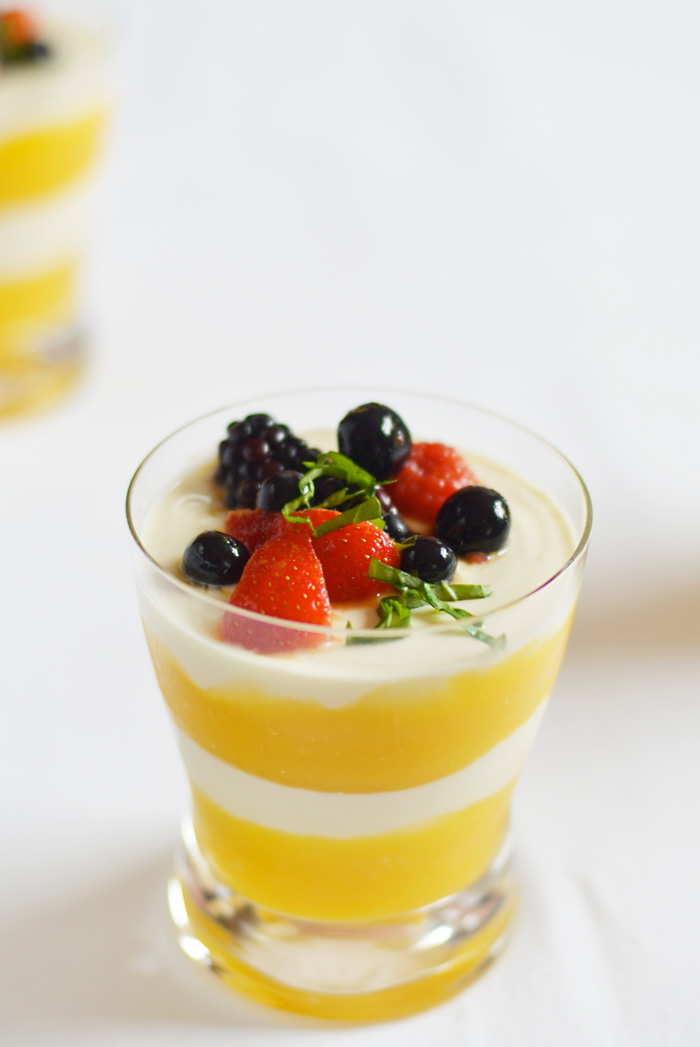
Mango parfaits with macerated berries / Parfaits de manga, com frutos vermelhos macerados.


This dessert is a Gordon Ramsay's very nice and easy take on parfaits, as it is made with yoghurt, it is so light, that you can have all the pleasure of the pudding without the guilty of the calories!

ingredients (serves 4):
1 ripe mango, peeled and de stoned
500ml natural yoghurt (I used vanilla yoghurt)
for the macerated berries:
200g mixed berries, hulled and quartered or halved
zest and juice of 1 small orange
1 tbsp icing sugar
small handful of basil leaves, finely shredded
method:
Place the berries, orange juice and zest, sugar and shredded basil in a bowl and mix well.
Cover with clingfilm and set aside for 1 to 2 hours.
Purée the mango in a blender until smooth.
Layer the mango purée and yoghurt in 4 serving glasses and chill until needed.
When ready to serve, top each glass with the macerated berries.
__________________


Este sobremesa do Gordon Ramsay é tão deliciosa e fácil de fazer que, para além de linda, ainda pode ser saboreada sem culpas, pois em vez das habituais natas e ovos que compõem um parfait, é feita com iogurte, o que a torna muito mais leve e super agradável e fresca.
ingredientes (para 4 pessoas):
1 manga madura, descascada e descaroçada
500ml de iogurte natural (eu usei iogurte grego com mel)
para a fruta macerada:
200g mistura de frutos vermelhos (naturais), arranjados e cortados em quartos ou metades, consoante o tamanho.
sumo e raspa de 1 laranja pequena
1 colher sopa de açúcar em pó
um punhado pequeno de folhas de manjericão, cortadas em juliana fininha
preparação:
Para preparar a fruta macerada, colocar todos os ingredientes numa taça, mexer bem e cobrir com película aderente. Reservar por cerca de 1 a 2 horas.
Colocar a manga num liquidificador ou no copo de um robot de cozinha e reduzi-la a puré.
Distribuir o puré de manga por 4 copos de vidro, cobrir o puré com o iogurte e refrigerar.
Na altura de servir, cobrir os parfaits com a fruta macerada.


Recipe / Receita:

1 April 2015

Chocolate and spice hot cross buns / Hot cross buns com chocolate e especiarias.


Easter is not complete without hot cross buns right?
Well, maybe in some places it is, but here, in the UK it is not so, as soon as I saw this recipe in the March issue of the Good Food magazine, I marked it immediately to celebrate this Easter and the result, honestly, couldn't be better.
ingredients (makes 12 buns):
zest and juice of 1 large orange
sunflower oil, for greasing
for the dough and crosses:
225ml semi skimmed milk
50g unsalted butter, melted and cooled, plus extra for greasing
1 large egg, lightly beaten
450g strong white bread flour, plus extra for dusting
2 tsp fast action yeast
50g golden caster sugar
for the flavouring and glaze:
140g raisins
100g dark chocolate, 70% cocoa solids
1 tsp ground cinnamon
4 tbsp golden caster sugar
100g plain flour
method:
Combine the flour, yeast, half of the orange zest, 1 tsp salt and the sugar in a bowl.
Make a well in the centre, then add the milk, egg and butter. Stir well to combine.
Turn the dough onto a lightly floured surface and knead for 5 to 10 minutes or until smooth and elastic.
Place in an oiled bowl, cover with clingfilm or a clean tea towel and set aside to prove in a warm place for 1 hour or until doubled in size.
Put the raisins and half the orange juice in a small pan and simmer for a few minutes. Cool completely.
Put the chocolate, cinnamon and 2 tbsp of sugar into a food processor and pulse until very finely chopped. Mix in the rest of the zest.
Turn the dough, onto a lightly floured surface and press it out to a large rectangle, a little bigger than A4 paper.
Scatter it evenly with the chocolate mix and the raisins that should have absorbed all the juices. Drain them if not.
Roll the dough up around the filling, then knead it well for a few minutes until everything is incorporated.
Grease and line a baking sheet with baking paper.
Divide the dough into 12 portions and form into smooth balls.
Put the buns in the prepared sheet, leaving room for rising.
Cover with clingfilm or a clean tea towel and set aside to prove in a warm place for 30 to 45 minutes or until doubled in size.
Preheat the oven to 190ºC.
To make the paste for the crosses, gradually stir 6 to 7 tbsp of water into the flour to make a smooth, thick paste. Put it in a pastry bag and pipe the crosses over the buns.
Bake for 20 to 25 minutes or until the buns are risen and dark golden brown.
Mix the rest of the orange juice with the remaining sugar and let it dissolve.
Brush the syrup over the buns while they are hot, then leave to cool.
Eat on the day of baking or toast the next day.
__________________


Hot cross buns são uma tradição de Páscoa aqui no reino Unido e Páscoa não estará completa, se não houver uns hot cross buns quartinhos e deliciosos.
Assim que vi esta receita na revista Good Food de Março, marquei-a logo para fazer, pois ao ler os ingredientes, pareceu-me que seriam uma delícia e não me enganei nada.
ingredientes (para 12 buns):
sumo e raspa de 1 laranja grande
óleo de girassol, para untar 
para os buns e cruzes:
225ml leite meio gordo
50g manteiga, derretida e arrefecida + extra para untar
1 ovo grande, batido ligeiramente
450g farinha para pão + extra para a bancada
2 colheres chá de fermento de padeiro seco
50g açúcar refinado amarelo
para o recheio e glaze:
140g passas
100g chocolate preto, 70% cacau
1 colher chá de canela moída
4 colheres copa de açúcar refinado amarelo
100g farinha de trigo branca
preparação:
Numa taça, combinar a farinha, o fermento, metade da raspa da laranja, 1 colher chá de sal e o açúcar.
Adicionar os ingredientes líquidos (leite, manteiga e ovo) e combinar tudo muito bem.
Deitar a massa sobre uma bancada ligeiramente enfarinhada e amassar por cerca de 5 a 10 minutos, ou até obter uma massa macia e elástica.
Colocar a massa numa taça untada com o óleo, cobrir com película aderente ou um pano de cozinha limpo e deixar repousar em local aquecido, por cerca de 1 hora, ou até que a massa tenha duplicado de tamanho.
Colocar as passas num tacho com metade do sumo da laranja e ferver por uns minutos. Reservar até a mistura estar completamente fria.
Colocar o chocolate, a canela e 2 colheres sopa de açúcar no copo do robot de cozinha e pulsar até o chocolate estar muito bem picadinho. Envolver o resto da raspa da laranja com o chocolate.
Colocar a massa repousada sobre uma superfície ligeiramente enfarinhada e, com as mãos, pressioná-la em forma de rectângulo, até que esteja um bocadinho maior que uma folha de papel A4.
Polvilhar a massa com a mistura do chocolate e as passas que, por esta altura, já terão absorvido todo o líquido (caso não tenham, escorrê-las primeiro).
Enrolar a massa sobre o recheio e amassar, por forma a que todos os ingredientes fiquem bem distribuídos na massa.
Untar e forrar com papel vegetal um tabuleiro de ir ao forno.
Dividir a massa em 12 porções e formar bolas macias com cada uma das porções.
Colocar as bolas de massa, achatando-as ligeiramente, no tabuleiro preparado, deixando espaço para crescerem entre si.
Cobrir com película aderente ou um pano de cozinha limpo e deixar repousar em local aquecido, por cerca de 30 a 45 minutos, ou até que a massa tenha duplicado de tamanho.
Aquecer o forno a 190ºC.
Para fazer fazer o preparado para as cruzes, gradualmente misturar 6 a 7 colheres sopa de água com a farinha de trigo branca, até obter uma pasta macia e espessa.
Colocar esta pasta num saco de pasteleiro e com um bico fininho, desenhar as cruzes sobre os buns.
Levar ao forno por cerca de 20 a 25 minutos ou até os buns terem crescido e estarem bem douradinhos.
Entretanto, misturar o restante sumo da laranja com as restantes 2 colheres sopa do açúcar e mexer até o açúcar dissolver.
Pincelar os buns ainda quentes com este xarope de laranja e depois deixar os buns arrefecer completamente.
Comer os buns frescos no próprio dia, ou em torrados nos dias seguintes.

Recipe / Receita: Good Food magazine - March 2015.

25 March 2015

Duck ragù with crisp porridge wedges / Ragù de pato com quadrados de aveia crocante.


There's only three things, until today, that I can firmly say that I don't like and they are porridge, canned tuna and black eyed beans.
Saying that, when I saw this recipe, I passed the page without being interested.
The second time I picked the book, I took a little time to read the recipe properly and all of a sudden I was totally interested and very curious about it. Savoury porridge?
The only thing I can tell is that: Try it if you want to be amazed!!
ingredients for the orange duck ragù (serves 4):
3 duck legs
salt and freshly ground black pepper
1 tbsp sunflower oil
4 garlic cloves, peeled and finely chopped
2 tinned anchovy fillets, drained and chopped
1 onion, finely chopped
2 carrots, peeled and roughly chopped
1 stick of celery, roughly chopped
150ml red wine
400g tin of cherry tomatoes
1 large spring of rosemary
zest of 1 orange, removed in strips
for the porridge wedges:
200g rolled oats
250ml milk
350ml hot chicken stock
3 tbsp finely chopped chives
60g parmesan cheese, finely grated
2 tbsp butter
method:
Season the duck with plenty of salt and pepper.
Heat the oil in a large pan over a medium heat and when hot, place the duck in the pan, skin side down. Fry for 3 minutes or until the skin is golden and crisp.
Turn over and cook for 2 minutes. Remove the duck from the heat and place on a plate.
Lower the heat and add the garlic, anchovies, onion, carrots and celery. Fry for about 5 minutes or until the anchovies have disintegrated. Add the wine and simmer for 2 minutes. Add the tomatoes, rosemary and orange zest.
Bring back to a simmer, add the duck, cover and cook on a low heat for about 1 1/2 hours, or until the duck is tender and falling off the bone.
Discard the orange zest and rosemary. Transfer the duck legs to a plate and using 2 forks, shred the meat, discarding the skin and bones.
Stir the duck meat back into the sauce and taste for seasoning.
Line a 20cm x 20cm baking tin with clingfilm.
Meanwhile, place the oats in a medium saucepan with the milk and stock. Leave to soak for 10 minutes and then place on a medium low heat and bring to a simmer, stirring constantly with a wooden spoon.
When the porridge is thick and unctuous, take off the heat.
Stir in most of the chives, the parmesan and some salt and pepper and stir well to combine.
Pour the porridge into the lined tray and spread evenly across the base. Refrigerate for a minimum of 30 minutes.
Put 1 tablespoon of butter into a large frying pan on a high heat.
Cut the porridge into 4 slices and place them in the hot pan. Fry each slice on both sides for about 6 to 7 minutes in total, until golden.
Place a porridge slice on each serving plate and top with the ragù and a sprinkle of chives.
__________________


Até ao dia de hoje, há apenas 3 coisas - tirando as que nunca provei claro - que posso afirmar com segurança que não gosto e são elas, feijão frade, atum enlatado e papas de aveia.
Quando estava a folhear este livro pela primeira vez e li o título da receita, passei a página sem que me despertasse interesse, pois li "porridge".
A segunda vez que peguei no livro e dediquei algum tempo à leitura da receita, mudei imediatamente de ideias e fiquei bastante curiosa em relação a esta combinação, o que me fez marcar a receita para testar e testá-la.
Papas de aveia salgadas e da maneira que são feitas, foi algo que me levou a dar uma segunda oportunidade à receita e o resultado final, bom, só uma palavra: Experimentem!!
ingredientes para o ragù de pato (para 4 pessoas):
3 pernas de pato
sal e pimenta preta moída na altura
1 colher sopa de óleo de girassol
4 dentes de alho, descascados e finamente picados
2 anchovas em óleo, escorridas e picadas
1 cebola, finamente picada
2 cenouras, descascadas e picadas grosseiramente
1 talo de aipo, picado grosseiramente
150ml vinho tinto
1 lata de 400g de tomate cereja
1haste grande de alecrim
casca de uma laranja, cortada em tiras
para os quadrados de aveia:
200g flocos de aveia
250ml leite
350ml caldo de galinha, quente
3 colheres sopa de cebolinho, picado finamente
60g queijo parmesão, ralado
2 colheres sopa de manteiga
preparação:
Temperar o pato com bastante sal e pimenta.
Aquecer o óleo numa frigideira ou tacho largo, sobre lume médio e quando bem quente, fritar o pato, com o lado da pele virado para baixo, durante 3 minutos, ou até a pele estar douradinha e estaladiça.
Virar e fritar do outro lado, por mais 2 minutos. Retirar o pato da frigideira e reservar num prato.
Baixar o lume e colocar o alho, as anchovas, a cebola, as cenouras e o aipo na frigideira.
Fritar por cerca de 5 minutos, ou até as anchovas se terem desfeito completamente.
Adicionar o vinho tinto e deixar cozer por 2 minutos.
Adicionar as cascas da laranja, o alecrim e os tomates.
Deixar levantar fervura e colocar o pato de volta na frigideira. Tapar e cozinhar por cerca de 1 1/5 horas, ou até o pato estar tenro e a soltar-se do osso.
Descartar as cascas da laranja e o alecrim e colocar as pernas do pato num prato ou tábua.
Desfiar o pato com a ajuda de 2 garfos e descartar os ossos e a pele.
Colocar a carne desfiada no molho, provar e, se necessário, rectificar os temperos.
para a aveia:
Forrar um tabuleiro de 20cm x 20cm com película aderente.
Colocar a aveia num tacho com o leite e o caldo e deixar repousar por 10 minutos.
Levar o tacho ao lume (médio a baixo) e, mexer constantemente com uma colher de pau, até levantar fervura. Quando a aveia estiver espessa e untuosa, retirar o tacho do lume.
Adicionar a maior parte do cebolinho, o parmesão, sal e pimenta e mexer bem.
Deitar a aveia no tabuleiro preparado e alisar bem. Refrigerar por um mínimo de 30 minutos.
Aquecer 1 colher sopa de manteiga numa frigideira sobre lume alto.
Cortar a aveia em 4 fatias e fritá-las na manteiga quente, em ambos os lados, num total de 7 minutos, ou até estarem douradinhas dos dois lados.
Colocar uma fatia de aveia em cada prato e servir com o ragù polvilhado com o restante cebolinho.

Recipe / Receita:

18 February 2015

Coconut and orange cake / Bolo de laranja e coco.


There are times when you feel so down that the only thing that brings you up is a gorgeous slice of cake and a cup of tea and that's exactly what happened to me a few weeks ago.
I was feeling so annoyed and down that I decided to bake a cake and after preparing this delicious cake and having a slice of it with a nice cup of tea, everything felt good and back to normal again so, I could say that a cake makes things better and the happiness and joy of baking a cake really is, indeed, very therapeutic.
ingredients:
2 cups plain flour
1 tsp baking powder
pinch of salt
1 cup canned unsweetened coconut milk (stir well before measuring)
4 tbsp unsalted butter, cut into pieces
zest from 1/2 orange
juice from 1/4 orange
4 large eggs, at room temperature
2 cups sugar
1 tsp vanilla extract or paste
3/4 cup shredded coconut, toasted or not


method:
Preheat the oven to 180ºC. Grease a bundt tin and set aside.
Sift the flour, baking powder and salt together.
Rub the orange zest into the sugar.
Pour the coconut milk into a small pan and add the butter and orange juice. Heat just until the butter is melted. Turn off the heat and keep it warm.
Put the sugar and eggs inside a bowl of an electric mixer fitted with the whisk attachment and beat on medium high speed until pale, thick and doubled in size. Beat in the vanilla.
Reduce the mixer speed to low and add the dry ingredients, stopping as soon as the flour is incorporated into the mixture.
Add the coconut, mixing only until it is blended and then steadly add the coconut milk mixture.
Stop the mixer when the batter is smooth and give it a couple of turns with a rubber spatula, just to make sure none of the ingredients have fallen to the bottom of the bowl and they are all well incorporated.
Pour the batter into the prepared tin and bake for 60 to 65 minutes (mine was ready after 50 minutes) or until a skewer inserted in the middle of the cake comes out clean.
Transfer the cake tin to a cooling rack and cool for 10 minutes before turning it onto the rack to cool completely.
After being completely cool, I dusted my cake with icing sugar bur that was my own option.
__________________


Há alturas em que nos sentimos tão em baixo e abatidos que a única coisa capaz de nos fazer ficar bem é uma fatia de bolo caseiro e uma chávena de chá quente e foi exactamente isso que me aconteceu há umas semanas atrás.
Sentia-me tão abatida e desiludida, que decidi ir fazer um bolo, mas tinha de ser um bolo com sabores que eu gosto e para mim, não um bolo a pensar na família (senão só fazia bolos de chocolate e caramelo, lol).
O certo é que, o facto de fazer o bolo, deixá-lo arrefecer, preparar uma chávena de chá quente e relaxar em frente a ambos, fizeram toda a diferença e de repente, tudo voltou à normalidade e eu voltei a sentir-me calma e em paz...
Posso com isto concluir que um bolo faz milagres e a calma, felicidade e alegria que colocamos no acto de fazer um bolo é, de facto, uma terapia. 
Optei por esta receita da Dorie Greenspan por ter dois ingredientes que adoro, coco e laranja, ou não fosse eu uma coco e citrinos lover...
ingredientes:
2 chávenas de farinha de trigo branca
1 colher chá de fermento em pó
uma pitada de sal
1 chávena de leite de coco (mexer bem o leite antes de medir a chávena)
4 colheres sopa de manteiga sem sal, cortada em pedaços
raspa de 1/2 laranja
sumo de 1/4 de laranja
4 ovos grandes, à temperatura ambiente
2 chávenas de açúcar
1 colher chá de extracto ou pasta de baunilha
3/4 chávena de coco ralado, pode ser tostado ou não
preparação:
Aquecer o forno a 180ºC e untar muito bem, uma forma de buraco no meio.
Peneirar a farinha, com o fermento e o sal.
Com as pontas dos dedos, esfregar a raspa de laranja no açúcar.
Colocar o leite de coco num tachinho, juntamente com a manteiga e o sumo da laranja. Levar ao lume, até a manteiga estar derretida e o leite estar quente. Desligar o lume, mas manter a mistura quente.
Colocar os ovos e o açúcar na taça duma batedeira eléctrica equipada com o balão e bater em velocidade máxima, até obter uma mistura pálida e espessa e até esta ter duplicado de tamanho. Adicionar a baunilha, continuando a bater.
Reduzir a velocidade da batedeira para o mínimo e adicionar a mistura da farinha. Assim que a farinha estiver incorporada, parar de bater.
Adicionar o coco e voltar a bater em velocidade mínima, até este estar incorporado.
Continuando a bater, adicionar, em fio e devagarinho, o leite de coco.
Parar de bater assim que a mistura se apresentar cremosa e com uma espátula de silicone, dar uma ou duas voltas à massa, a fim de garantir que nenhum dos ingredientes esteja no fundo da taça e não tenha sido devidamente incorporado.
Deitar a massa na forma e levar ao forno por cerca de 60 a 65 minutos, ou até que um palito inserido no meio do bolo, saia completamente limpo (o meu bolo estava cozido ao fim de 50 minutos).
Tirar a forma do forno e colocá-la em cima de uma grelha por cerca de 10 minutos. Passado esse tempo, desenformar o bolo em cima da grelha para completo arrefecimento.
Depois de frio, eu polvilhei o meu ligeiramente com açúcar em pó, mas isso foi uma opção minha.

Recipe / Receita: