Showing posts with label Fish / Peixe.. Show all posts

16 March 2018

Fried Dover Soles with Capers, Olives and Sun-dried Tomatoes / Solha frita, com molho de Alcaparras, Azeitonas e Tomates Secos.


Helen is doing a fabulous job on promoting this gorgeous historic town where we live. Linlithgow!
This week is all about food and drink and promoting all our lovely shops, cafes, restaurants, etc.
To celebrate Linlithgow food and drink week, I decided to be part of it and after meeting with lovely Helen in one of our most gorgeous cafes in linlithgow, the Granary Cafe, we agreed that I'd be posting a recipe promoting our local shops.
When I saw these Dover soles in our local fish shop, I couldn't resist them.
Shallow fried and topped with Mediterranean flavours, these soles are a great delicatessen and a delightful treat.
The recipe is from Bart Van Olphen, Bart's Fish Tales book and was marked down to be tried for a long time now. It's absolutely as I thought it would be: Exquisite!
The sun-dried tomatoes and capers were bought at our local healthy shop, Complete Health. A shop that I truly adore and where you can find everything healthy and organic. The owner, Gail, is so kind, adorable and thoughtful. Honestly, is one of my favourite shops in town and it's always a pleasure to go there.
Now for the recipe...

21 September 2017

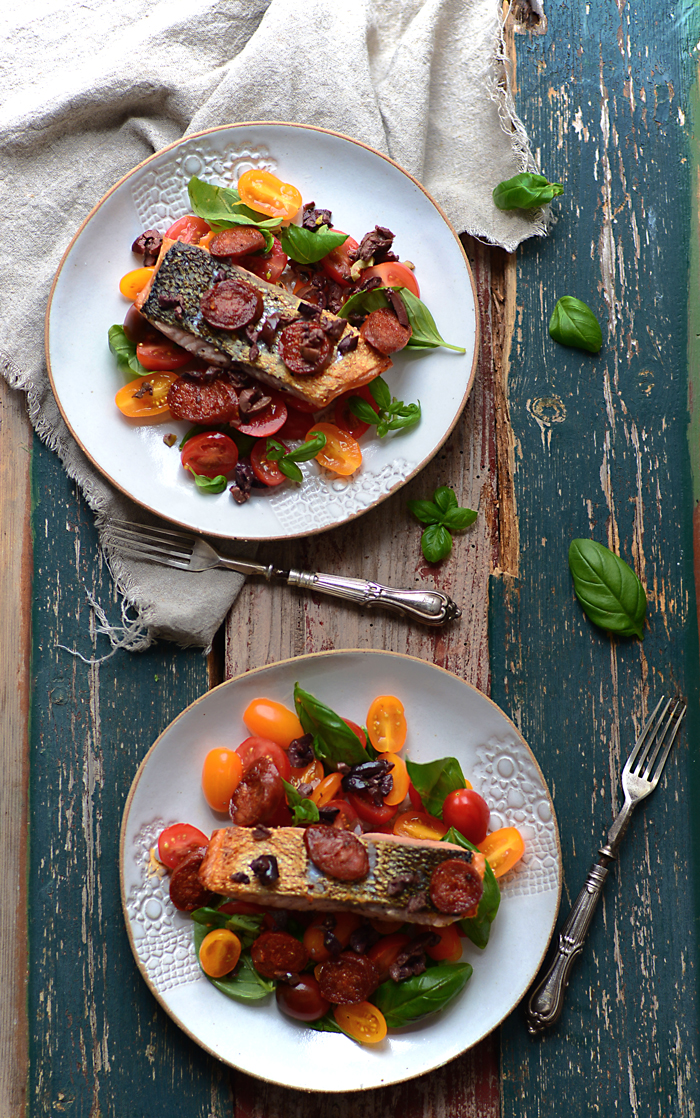
Smoky Chorizo Salmon / Salmão com Chouriço e Tomates.


So, Summer is officially over and as a good bye to this Summer homegrown sweet tomatoes, here is another recipe from Jamie Oliver "5 ingredients - Quick & Easy Food".
In this recipe, the tomatoes are combined with crispy skin salmon, smoky chorizo and olives. A fantastic combination, full of Mediterranean flavours.
If you still have some nice and sweet tomatoes left, give this recipe a try because it's truly delicious.

29 June 2017

Samphire and Prawns with butter and mace / Salicornia e camarão, com manteiga e macis.


The first time I came across Chef Gill Meller was on the River Cottage TV programs (a program that I have to say, I truly adore), alongside and in collaboration with Hugh Fearnley-Whittingstall .
I confess that I always loved Gill Meller way of talking about food, his innovative ideas about what and how to cook different and sometimes strange ingredients and, above all, the love and care he was always putting into every dish he created or the way he was taking about the ingredients. Always with lots of love, care and respect.
Actually, is that love, care and respect for produce, seasonality, foraging, local ingredients and cooking, that Chef Gill Meller share in his book and you can feel it in every page you flick through.
The whole book is a delight and you can breathe the love, care and attention to detail that went into every single page of that book.
From caption to recipe, to photos, every single page is a joy to read and to look at.
Gill Meller "Gather" is the book! A book that I truly adore and treasure and that is, in my honest opinion, the book of the year 2017!
The first recipe I cooked from this marvelous book is this one.
Samphire and prawns perfumed with fragrant mace and I'm not going to rave about how much we loved this meal because, truly?!! It was licking fingers delicious and... just wait until I post the Focaccia I made a few days ago and, you'll be amazed. Just by thinking of it, my mouth is watering already...

22 June 2017

Fish Soup Basquaise / Sopa de Peixe Basca.


This month we are cooking from Paula Wolfert cook books for the Rainydaybites Cookbook Club.
The book Deborah chose was the "Unforgettable" but as it is a very difficult book to find, Deborah allowed us to cook from any of Paula's books.
I'm cooking from Paula Wolfert "The Cooking of South West France" book and this recipe is actually my first one for this month's cookbook club.
I can only compare Paula Wolfert book with Julia Child or Elizabeth David books, which, in my opinion, should be mandatory books for anyone that claims their love for cooking.
More than cooking books, they are reading books that show us their passion and deep knowledge for the cuisine and ingredients of the regions they're writing and cooking from.
To write this book, Paula Wolfert spent five years researching, investigating ingredients, origins of recipes and variations in techniques.
This recipe, a fish soup, not just is easy to make, but it's also fabulous and full of flavour.
According to the author, this soup is a modern interpretation of the classic onion and pepper fish soup of Bayonne.

10 February 2017

Scallops, Chorizo and Rocket / Vieiras, Chouriço e Rúcula.


Scallops, chorizo and rocket!
A fabulous combination of flavours and textures, easy to put together and so, so delicious!!
A combination that one day, I put together by accident and that turned out being amazing and a staple in our household.
I'm sharing this suggestion with you all today (with a more refined presentation than the one we use to have at home), just because I think it's a very special combination and "THE" perfect Valentine's Day starter to share with your person.

12 May 2016

Grilled baby squid with chorizo / Lulas grelhadas com chouriço.


To be truthful, this recipe was made a few months ago but, somehow, it was forgotten in the middle of other recipes, which was a big mistake because it is truly a fabulous and delicious combination.
Another recipe from Luke Nguyen amazing book. This one is from the Basque region.
According to Chef Luke, Basque cuisine is influenced by the abundance of produce from the sea on one side, and the fertile Spanish Ebro Vally on the other.
The combination of ingredients is something that we all know as a treat!
ingredients (serves 4):
125g chorizo in one piece
12 baby squid, cleaned
generous pinch of espelette pepper
1 tbsp extra virgin olive oil
1 tbsp chopped flat leaf parsley
lime wedges, to serve
method:
Heat a chargrill pan to medium high. Grill the chorizo sausage for 4 minutes, turning every now and then to brown all over.
Meanwhile, season the squid with a generous pinch of sea salt and espelette pepper and coat with the olive oil.
Remove the sausages from the grill, then chargrill the squid for 1 minute on each side.
Slice the chorizo and transfer to a serving plate, along with the squid.
Sprinkle with the parsley and serve with lime wedges.
__________________


Para dizer a verdade, esta receita já foi feita há uns mesitos atrás e, não sei como, ficou perdida na pasta dos rascunhos do blogue.
Facto imperdoável, pois é tão deliciosa que seria um desperdício não a publicar.
Mais uma receita fantástica e simples de se fazer, do livro lindo do Chef Luke Nguyen.
Uma receita inspirada na região Basca e que combina sabores simples e ingredientes absolutamente magníficos.
De acordo com o Chef Luke, a cozinha Basca é influenciada, por um lado, pela riqueza e abundância dos produtos do mar e por outro, pelos produtos encontrados na fértil região espanhola do Vale do Ebro.
Lulas e chouriço, mar e terra, numa combinação harmoniosa que todos bem conhecemos e que funciona sempre.
ingredientes (para 4 pessoas):
125g chouriço
12 lulas pequenas, limpas
uma boa pitada de pimenta de espelette
1 colher sopa de azeite extra virgem
1 colher sopa de salsa picada
gomos de lima, para servir
preparação:
Aquecer um grelhador sobre lume média a alto.
Grelhar o chouriço por cerca de 4 minutos, virando de vez em quando, a fim de que fique bem grelhado em todos os lados.
Entretanto, temperar as lulas com sal, a pimenta de espelette e o azeite.
Retirar o chouriço do grelhador e grelhar as lulas por cerca de 1 minuto de cada lado, ou até estarem cozidas.
Cortar o chouriço em rodelas e colocá-las num prato de serviço.
Juntar-lhe as lulas, polvilhar com a salsa picada e servir acompanhado com gomos de lima.

Recipe / Receita:

1 February 2016

Seafood stew / Peixe estufado com mexilhões.


This stew is so easy to make and so hearty and delicious that you'll not believe until you try it.
Just serve it with nice homemade crusty bread (like I did) to mop up the juices and you're in for a real and delightful meal.
The recipe is from Natalie Boog "Courtyard Kitchen" book and the book itself is absolutely gorgeous. This was the first recipe I made from from the book and meanwhile, I already made another recipe that will be published soon.
ingredients (serves 4):
2 tbsp olive oil
1 small onion, finely chopped
2 garlic cloves, finely chopped
1 tbsp chilli flakes
185ml dry white wine
1 x 400g tin diced tomatoes
1 handful of basil leaves, coarsely chopped
400g firm white fish (I used fresh cod), cut into large chunks
500g mussels, scrubbed and beards removed
sea salt and freshly ground black pepper
1 handful of parsley leaves, coarsely chopped
crusty bread, to serve
method:
Heat the olive oil in a heavy based saucepan over medium heat.
Add the onion, garlic and chilli flakes and cook for 5 to 6 minutes, or until the onion is soft.
Stir in the wine, tomatoes and basil and bring to the boil.
Put the fish into the saucepan, making sure it is covered as much as possible.
Add the mussels on top of the fish, reduce the heat, cover the pan with a lid and cook for 8 minutes.
Shake the pan from time to time, without taking the lid off.
Remove the lid, discard any unopened mussels, season to taste with salt and pepper, scatter over the parsley and serve.

__________________

Esta é uma refeição fabulosa que, não dando trabalho nenhum, faz um figurão à mesa, pois é tão deliciosa que parece que estivemos horas a fio na cozinha!
Um estufado simples, servido com um bom pão rústico para molhar no molho (eu fiz um pão caseiro dos fáceis. Um "no knead bread" que resulta sempre fantasticamente) e, sem sair da mesa, somos  de imediato transportados para o Paraíso.
A receita é do livro "Courtyard Kitchen" da Natalie Boog.
Um livro lindíssimo, o qual, mais uma vez, está carregadíssimo de post its.
Esta foi a primeira receita que fiz do livro, mas entretanto já fiz uma outra, também maravilhosa e que aqui publicarei brevemente.


ingredientes (para 4 pessoas):
2 colheres sopa de azeite
1 cebola pequena, picada finamente
2 dentes de alho, picados finamente
1 colher sopa de flocos de malagueta seca (chilli)
185ml vinho branco seco
1  lata de 400g de tomate picado
1 punhado de folhas de manjericão, picadas grosseiramente
400g peixe branco firme (eu usei lombos de bacalhau fresco), cortados em pedaços grandes.
500g mexilhão, lavado e barbas removidas
Flor de sal e pimenta preta moída na altura
1 punhado de folhas de salsa, picadas grosseiramente
pão rústico, para servir
preparação:
Sobre lume médio, aquecer o azeite num tacho de fundo espesso (daqueles de ferro ou parecidos).
Adicionar a cebola, os alhos e os flocos de malagueta e cozinhar por cerca de 5 a 6 minutos, ou até a cebola estar macia.
Adicionar o vinho branco, os tomates e o manjericão e deixar levantar fervura.
Colocar o peixe no molho, tentando que fique bem coberto.
Colocar os mexilhões sobre o peixe, baixar o lume, tapar o tacho e cozinhar por cerca de 8 minutos, abanando o tacho de vez em quando, mas sem nunca retirar a tampa.
Findo esse tempo, retirar a tampa, descartar os mexilhões que não tiverem aberto, temperar de sal e pimenta a gosto, polvilhar com a salsa e servir.

Recipe / Receita:

4 December 2015

Greek squid and orzo / Lulas com orzo à grega.


Squid and Orzo!
Although I love both, I never thought of putting them together, specially with such a great amount of dill but, saying that, we all were delighted and positively surprised with the amount of flavour in this one pot, slow cooked dish.
Easy to prepare, this recipe from Nigella's new cook book "Simply Nigella" got lots of compliments and was truly appreciated around the table.


ingredients (serves 4 to 6):
1 small red onion, peeled and cut into chunky half moons
1/2 bulb fennel, sliced, core discarded, fronds reserved
2 cloves garlic, peeled and crushed
1/4 cup extra virgin olive oil
600g small squid (cleaned weight), kept whole and tentacles reserved
300g orzo pasta
400g can of chopped tomatoes
1 tbsp tomato purée
2 tbsp Ouzo or Vermouth
100g fresh dill, finely chopped
250ml boiling water
salt and freshly ground black pepper, to taste
method:
Preheat the oven to 160ºC.
Put the olive oil in a large ovenproof shallow casserole over a low heat.
Add the onion, fennel, garlic, squid and squid tentacles and cook for 10 minutes, stirring from time to time.
Stir in the orzo pasta and the chopped tomatoes.
Add the tomato purée to the empty tomato tin, then fill with cold water and give it a good stir, before pouring this into the pan.
Pour in the Ouzo and give everything another stir.
Turn up the heat, and once it comes to a bubble, clamp on the lid and transfer the pan to the oven.
Cook for 1 hour and 20 minutes.
After that time, take the pan of the oven, remove the lid, add the boiling water and stir well to scrape up any bits stuck to the bottom of the pan.
Add salt and pepper to taste and most of the chopped dill.
Stir and put the pan back in the oven, without the lid, for 10 minutes.
Remove the pan from the oven, sprinkle with the remaining dill and serve.

__________________

Lulas e orzo!!
Embora ame ambos de paixão, nunca me lembraria de os juntar no mesmo tacho, mas o certo é que a combinação resulta na perfeição e ambos, em conjunto com a enorme quantidade de aneto que leva, fizeram de um almoço de Sábado, uma refeição memorável e a repetir!
A receita é do novo livro da Nigella "Simply Nigella" e embora não me tenha chamado a atenção quando folheei o livro, captou-a de facto e de imediato, quando vi a Nigella cozinhar este prato no programa de apresentação do livro.


ingredientes (para 4 a 6 pessoas):
1 cebola roxa pequena, descascada e cortada em meias luas
1/2 bolbo de funcho, cortado ao meio, coração retirado e descartado e fatiado grosseiramente
2 dentes de alho, descascados e esmagados com a faca
1/4 chávena (cup) de azeite extra virgem
600g lulas pequenas (peso depois de limpas), inteiras e tentáculos reservados
300g massa orzo 
1 lata de 400g tomate picado
1 colher sopa de concentrado de tomate
2 colheres sopa de Ouzo, caso não encontrem, podem usar Vermute
100g aneto fresco, picado finamente
250ml água a ferver
sal e pimenta preta moída na altura, a gosto
preparação:
Aquecer o forno a 160ºC.
Colocar o azeite num tacho baixo mas grande o suficiente para lá caberem todos os ingredientes e que tenha tampa e possa ser usado tanto no fogão, como no forno.
Adicionar a cebola, os alhos, as lulas e seus tentáculos e o funcho e cozinhar por cerca de 10 minutos, sobre lume baixo, mexendo de vez em quando.
Adicionar a massa e o tomate picado e mexer tudo muito bem.
Colocar o concentrado de tomate na lata vazia, encher a lata de água fria, mexer bem e despejar o seu conteúdo para dentro do tacho.
Adicioanr o Ouzo ou Vermute e voltar a mexer.
Aumentar o lume e quando a mistura levantar fervura, tapar o tacho e colocá-lo no forno pré aquecido.
Cozer por cerca de 1 hora e 20 minutos.
Passado esse tempo, retirar o tacho do forno, juntar a água a ferver e mexer bem, raspando todos os bocadinhos que estejam agarrados ao fundo do tacho.
Temperar de sal e pimenta a gosto e adicionar a maior parte do aneto picado, mexendo tudo muito bem.
Voltar a colocar o tacho no forno, desta vez sem tampa e cozinhar por cerca de 10 minutos.
Passado esse tempo, retirar o tacho do forno, polvilhar com o aneto restante e servir.


Recipe / Receita:

27 November 2015

Fish soup and cauliflower couscous / Sopa de peixe e couscous de couve flor.


In his new book "Everyday Super food", Jamie calls this soup "moreish fish soup" and it is simple but, yes, a very moreish soup!
Although the recipe calls for wholewheat couscous, I decided to serve mine with cauliflower couscous and to prepare them, I simply whizzed the cauliflower in a food processor, cooked it for 2 minutes in boiling vegetable stock and drained it.
ingredients (serves 2):
2 x 120g mackerel fillets, skin on, scaled, scored and pin boned (ask for the head and bones too) - I used sea bass instead of mackerel.
cayenne pepper
1 heaped tsp fennel seeds
1 heaped tsp coriander seeds
2 cloves of garlic
1 sprig of fresh rosemary
1 lemon
500ml really good vegetable stock
1 x 400g tin of plum tomatoes
100g wholewheat couscous (I made cauliflower couscous)
2 small potatoes
2 carrots
200g mussels, scrubbed and debearded
1/2 bunch (15g) of fresh flat-leaf parsley or basil
method:
Put a large pan on medium high heat, place the mackerel head (gills removed) and bones in the pan and brown for 5 minutes.
Add a good pinch of cayenne and the fennel and coriander seeds.
Using a speed peeler, strip the zest from the lemon and add them to the pan.
Crush the garlic and add it to the pan, along with the rosemary leaves.
Stir and fry for 3 minutes in order to release all the flavours. Cover with the stock and add the tomatoes. Bring to the boil and then simmer for 15 minutes.
In a bowl, just cover the couscous with boiling water, pop a plate on top an d leave to fluff up.
Wash the potatoes and carrots, cut into 1cm dice and place in a casserole.
Sit a coarse sieve on top and pour the broth through it into the pan, using the back of a ladle to squash and push everything through, discarding what remains.
Cook the potatoes and carrots in the broth for 15 minutes, or until tender.
Add 300ml of boiling water and the mussels. Cover and cook for 5 minutes, or until the mussels open.
At the same time, place the mackerel fillets skin side down in a dry non stick frying pan on a medium heat with a sprinkle of cayenne. Cook for 4 minutes, or until crispy. Flip over for 30 seconds more, then serve on top of your couscous in large warm soup bowls.
Finely chop the parsley or basil and stir through the soup with the lemon juice, then season to taste and divide between the bowls.

__________________

No livro novo do Jamie - "Everyday Super food", esta sopa é chamada de Sopa de peixe moreish.
Moreish é uma palavra criada por foodies, a partir da palavra "more" e é utilizada para descrever algo que é tão bom, que é impossível parar de comer e só apetece comer mais e mais... o que é o caso desta sopa.
Na receita original, o Jamie utiliza filetes de cavala e serve a sopa e o peixe, com couscous de trigo integral.
Eu utilizei filetes de robalo e fiz couscous de couve flor.
Simplesmente piquei a couve flor no copo do robot de cozinha, cozendo depois os couscous ligeiramente por cerca de 2 minutos em caldo de legumes a ferver e escorrendo-os de seguida.
Deixo-vos no entanto, a receita original e se quiserem podem dar-lhe o vosso próprio twist.


ingredientes (para 2 pessoas):
2 filetes de cavala com cerca de 120g cada, com pele, sem escamas e sem espinhas - Pedir as espinhas e a cabeça ao peixeiro, para fazer o caldo.
pimenta de Caiena
1 colher chá bem cheia de sementes de funcho
1 colher chá bem cheia de sementes de coentros
2 dentes de alho, com pele e esmagados
1 haste pequena de alecrim, folhas separadas
1 limão, casca removida com um descascador de cenouras e reservada
500ml de um bom caldo de legumes
1 lata de 400g de tomate pelado
100g couscous de trigo integral
2 batatas pequenas, lavadas e cortadas em cubos de 1cm
2 cenouras, lavadas e cortadas em cubos de 1cm
200g mexilhão, limpo e arranjado
1/2 ramo (15g) de salsa ou manjericão
preparação:
Colocar um tacho sobre lume médio a alto.
Colocar as espinhas e a cabeça do peixe (guelras removidas) no tacho e alourar por cerca de 5 minutos.
Adicionar uma boa pitada de pimenta de Caiena e as sementes de funcho e de coentros.
Em seguida, adicionar as cascas do limão, os alhos e as folhas do alecrim.
Fritar tudo, mexendo, por cerca de 3 minutos, ou até a mistura estar bem aromática.
Adicionar o caldo de legumes e os tomates. Deixar levantar fervura e cozinhar por cerca de 15 minutos.
Entretanto, colocar os couscous numa taça e cobri-los com água a ferver. Tapar com um prato e deixar repousar até a água ter sido absorvida.
Colocar as batatas e as cenouras numa panela e colocar um coador sobre esta.
Coar o caldo de peixe para cima das batatas e das cenouras, espremendo bem com as costas da concha, a fim de extrair o máximo de sabor do caldo.
Descartar as espinhas e restantes sólidos.
Cozer as batatas e as cenouras no caldo, por cerca de 15 minutos, ou até estarem macias.
Adicionar 300ml de água a ferver e o mexilhão e cozinhar por cerca de 5 minutos, ou até o mexilhão abrir.
Entretanto, colocar uma frigideira anti aderente sobre lume médio.
Polvilhar os filetes com uma pitada de pimenta de Caiena e fritá-los, com a pele virada para baixo, por cerca de 3 minutos, ou até a pele estar estaladiça.
Virar os filetes e fritar do outro lado, por cerca de 30 segundos.
Juntar o sumo do limão e a salsa ou manjericão picados à sopa e servir acompanhada com os couscous e o peixe frito.

Recipe / Receita:

23 October 2015

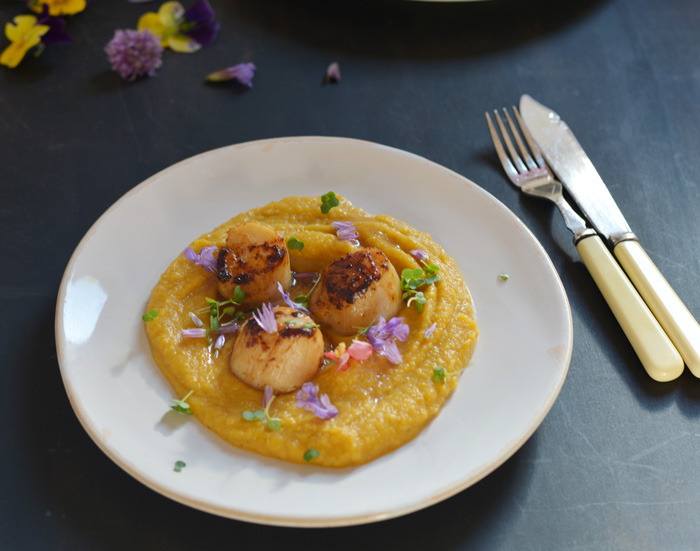
Seared scallops with pumpkin purée & Yuzu dressing / Vieiras com puré de abóbora e molho de yuzu.


Luke Neguyen's new book is out and it is a truly delight.
A book that I was waiting for many months and that I finally got.
I watched the series many months ago on TV and I was so excited about the dishes I saw this amazing Chef cooking on TV, that, straightaway, I was sure that it would end up being a great book.
Well, my expectations were highly exceeded as the book is absolutely amazing.
Gorgeous pictures, descriptions of the different french regions and mouthwatering recipes.
The recipes, most of them french classics, cooked with an asian twist, are an absolute stunner and a pleasure for any foodie palate.
I would say that It is, indeed, a truly gastronomic adventure!!
This recipe, the first I cooked from this amazing book, is from the Île D'Oléron region that is also known as the "Island of Oysters" and the combination of ingredients, although is not a combination that pops straightaway onto our minds, is absolutely mind blowing and that is one of the big reasons that I love to rely on professional Chefs to challenge mine and my family and friends taste buds!
ingredients (serves 4):
pumpkin purée:
1 tbsp extra virgin olive oil
2 French shallots. thinly sliced
1 tsp Chinese five-spice
1 garlic clove, diced
1 butternut pumpkin (squash), peeled, seeded and diced
25g butter
method:
Heat a pan over medium low heat.
Add the olive oil and the shallots and sauté for a few minutes or until the shallots are soft.
Add the five spice and the garlic and sauté for 2 minutes.
Add the pumpkin and butter, cover the pan, reduce the heat to low and cook for 12 to 15 minutes or until the pumpkin is tender.
Blitz the pumpkin until puréed with a hand held stick blender. Season to taste with sea salt and freshly ground black pepper and set aside, keeping it warm.


yuzu dressing:
2 tbsp yuzu juice
1 tbsp light soy sauce
dash of sesame oil
1 tbsp grapeseed oil
method:
Put all the ingredients in a bowl and mix well to combine.
for the scallops and to finish:
2 tbsp olive oil
16 scallops, roe removed
6 chives, thinly sliced
edible flowers, to garnish
sea salt, for sprinkling
method:
Heat a frying pan over high heat.
Add the olive oil and wait until it is really hot.
Sear the scallops for 1 minute on each side and drain over kitchen paper. Don't over crowed the pan or the scallops will sweat instead of frying, so cook them in batches.
Spoon the pumpkin purée onto serving plates, smoothing it out with the back of a spoon.
Arrange the scallops over the purée and drizzle with the yuzu dressing.
Garnish with the chives, edible flowers and a sprinkling of sea salt.
Serve straightaway.

__________________

Acabadinho de sair, o novo livro do fantástico Chef Luke Neguyen e que maravilha de livro!!
Um livro que, confesso, ansiava há muito tempo, pois vi, há já bastantes meses atrás, uma série na televisão, onde ele cozinhava pratos fabulosos na sua aventura gastronómica por terras de França.
Posso garantir apenas que o livro superou as minhas expectativas, pois é lindo graficamente, as fotos são fantásticas, as descrições gastronómicas de cada uma das regiões francesas por onde passa são um deleite para os leitores e as receitas..., bom, as receitas são algo de extraordinário, pois a maior parte delas são clássicos franceses cozinhados com um toque asiático, o que, para o palato de qualquer foodie ou gourmet, é uma verdadeira explosão de sabores e aromas.
Deixo-vos hoje a primeira receita que fiz deste livro. Uma combinação improvável e que não me passaria pela cabeça, mas que nos deixou a todos com as papilas gustativas aos saltos de tão deliciosa que é.
Esta é uma das principais razões pela qual eu gosto de confiar em Chefs profissionais para me surpreenderem com combinações que à partida são pouco prováveis e que acabam por ser verdadeiras maravilhas!!
Caso para dizer: Quem sabe, sabe e contra factos não se argumenta!!
Esta receita é inspirada na gastronomia da região da Ilha de Oléron que, de acordo com o autor, é também conhecida como a "Ilha das Ostras".


ingredientes (para 4 pessoas):
puré de abóbora:
1 colher sopa de azeite extra virgem
2 chalotas, picadas muito finamente
1 colher chá de Chinese five-spice (5 especiarias chinesa)
1 dente de alho, picado
1 abóbora (butternut squash), descascada, sem sementes e cortada em cubos pequenos
25g manteiga
preparação:
Aquecer o azeite num tacho sobre lume médio a brando.
Adicionar as chalotas e saltear até estas estarem macias.
Adicionar a especiaria e o alho e saltear por mais 2 minutos.
Adicionar a abóbora e a manteiga, tapar o tacho, baixar o lume e cozinhar por cerca de 12 a 15 minutos, ou até a abóbora estar macia.
Depois de cozida, reduzir a abóbora a puré, com a ajuda da varinha mágica.
Temperar de sal e pimenta preta moída na altura e reservar, mantendo o puré quente.


para o molho de yuzu:
2 colheres sopa de sumo de yuzu (vende-se nas lojas de produtos asiáticos)
1 colher sopa de molho de soja light
um bocadinho de óleo de sésamo
1 colher sopa de óleo de semente de uva (se não arranjarem, podem usar azeite)
preparação:
Colocar todos os ingredientes numa taça e misturar muito bem.
para as vieiras e para terminar o prato:
2 colheres sopa de azeite
16 vieiras, sem a parte laranja
6 hastes de cebolinho, finamente picado
flores comestíveis, para decorar (eu usei flores de salva e de cebolinho)
flor de sal, para polvilhar
preparação:
Aquecer uma frigideira sobre lume alto.
Adicionar o azeite e deixar que aqueça muito, muito bem.
Tendo o cuidado de não colocar muitas vieiras na frigideira ao mesmo tempo, selar as vieiras por cerca de 1 minuto de cada lado, escorrendo-as depois sobre papel absorvente de cozinha.
Se colocarem muitas vieiras ao mesmo tempo na frigideira, elas vão cozer e não fritar, por isso é preciso ter muita atenção a este factor.
Para servir, dividir o puré de abóbora pelos pratos, espalhando-o com as costas de uma colher.
Colocar as vieiras em cima do puré, regar com o molho de yuzu, decorar com as flores e salpicar com flor de sal.
Servir de imediato.

Recipe / Receita:

7 August 2015

Gravlax with mustard and dill sauce / Gravlax com molho de mostarda e aneto.


As promised in this post, here it is, the recipe for the traditional gravlax.

This recipe was tested and approved last February for my son birthday lunch and now here it is, retested and totally reaproved!
Even if I have lots of cookery books, when I'm in a hurry, I use the internet for a quicker search and that's on one of those searches that I found this recipe.
This gravlax recipe is really delicious and the sauce is second to none.

__________________

Tal como prometido neste post, aqui vos deixo a receita para o gravlax tradicional e o mais comum.
Embora, como já é do vosso conhecimento, tenha carradas de livros, quando estou em aflição e à procura de uma receita num livro, nunca a encontro e então recorro muitas vezes à internet e foi o que aconteceu com esta receita que já foi testada em Fevereiro último, aquando do aniversário do meu filho, e que foi agora, novamente provada e aprovada!
Bom, mas vamos lá à receita...


ingredientes:
100g sal grosso
75g açúcar refinado branco
1 colher sopa pimenta branca em grão, ligeiramente esmagada no almofariz
2 molhos de aneto,  finamente picados
2 lombos de salmão, o mais fresco possível, com 900g cada, com pele mas sem espinhas nenhumas.
ingredientes para o molho:
2 colheres sopa de mostarda de Dijon
1 colher sopa de açúcar refinado branco
1 colher sopa de vinagre de vinho branco
1 gema de ovo
150ml óleo vegetal
1 colher sopa de aneto, picado
sal e pimenta preta, moída na altura
preparação do salmão:
Para curar o salmão. numa taça, misturar o sal, o açúcar e a pimenta esmagada. Adicionar metade do anelo picado misturar bem.
Forrar um tabuleiro com película aderente.
Polvilhar 1/4 da mistura de sal no fundo do tabuleiro (em cima da película) e colocar um lombo de salmão (com o lado da pele virado para baixo) em cima da mistura.
Polvilhar o salmão com metade da mistura do sal e colocar o segundo lombo de salmão em cima desta, com a pele virada para cima.
Polvilhar com a mistura restante e enrolar os lombos de salmão em várias camadas de película aderente, incluindo a que está a forrar o tabuleiro, por forma a que fique bem enroladinho e apertadinho.
Colocar o tabuleiro no frigorífico e curar o salmão por 2 ou 3 dias, virando a cada 6 horas.
Passado esse tempo, desembrulhar o salmão e lavar muito bem os lombos com água fria, a fim de retirar toda a mistura da cura. Secar com papel absorvente.
Colocar uma folha grande de película aderente sobre a bancada da cozinha e colocar um dos lombos sobre a película, com a pele virada para baixo.
Cobrir com o aneto picado restante (dos 2 molhos que picaram) e colocar o segundo lombo de salmão em cima do anelo, com a pele virada para cima.
Voltar a enrolar muito bem, em várias camadas de película aderente e refrigerar por cerca de 6 horas.
Para fazer o molho:
Numa taça, colocar a mostarda, o açúcar, o vinagre e a gema de ovo e mexer muito bem para combinar.
Adicionar o óleo, um bocadinho de cada vez (como se de uma maionese se tratasse), até a mistura ganhar uma consistência cremosa.
Adicionar o aneto picado e temperar de sal e pimenta a gosto.


Para servir:
Desembrulhar o salmão, separar os lombos e cortar cada lombo de salmão na diagonal em fatias muito fininhas, deixando a pele para trás e servir com o molho, pão de centeio ou com panquecas de batata ou blinis.

Recipe / Receita: BBC Food.