Showing posts with label Mushrooms / Cogumelos.. Show all posts

17 April 2017

Wild Mushroom Claypot Rice / Arroz de Cogumelos.


This dish is a fantastic one pot meal. A fabulous recipe from a book that I have for ages but never used before.
"Chicken and Rice" is the name of the book and the author is Shu Han Lee. It's a book full of fresh and easy Southeast Asian recipes and, you know, I love Asian flavours.
As Marta wants rice recipes for this month and for her "ingredient of the month", as soon as I saw this recipe, I couldn't help but make it.
Not just I love the combination of ingredients, but also because I bought a fabulous box of mixed fresh mushrooms at the Edinburgh Stockbridge Farmer's Market that I thought, should shine in this recipe.
The flavour is amazing and I truly recommend it!

5 March 2017

Kale and Quinoa with Savoury Granola / Kale e Quinoa com Granola Salgada.


Breakfast food that you know, for me is a perfect lunch!
As I promised here, today I'm sharing this super delicious savoury granola.
Actually, I made this recipe a while ago and if you're following my instagram, you can see it here, as I shared it the day I made it. Although I'm only sharing it today, this was the very first recipe that I made from Nina Olsson gorgeous "Bowls of Goodness" cook book. A book that I truly adore and from which I talked about in this same post.
This savoury granola is perfect, not just for this recipe but also to sprinkle over salads, soups, or whatever you fancy.

4 July 2016

Samphire, mushrooms and duck egg on toast / Tosta com salicornia, cogumelos e ovo de pato(a).


Whenever possible, I always try to publish a vegetarian suggestion on Mondays.
As you all know by now, none of us are vegetarians here at home but we like vegetarian meals whenever we fancy them.
Now that the samphire is back in season and I'm a truly assumed mushroom lover, when I saw this Rosie Birkett suggestion in the July issue of BBC Good Food magazine, I couldn't resist it and I can tell you that is truly divine.
I guess you can use good organic hen eggs if you don't want to use or don't like duck eggs but the creaminess that you get from the duck egg yolk is second to none and it really ties together the all combination.
ingredients (serves 2):
50g samphire, washed and trimmed of woody stalks
2 tbsp butter
150g mixed mushrooms, cleaned (I used a mix of Portobello, Oyster and Shiitake)
2 tbsp rapeseed oil (I used olive oil)
2 duck eggs
2 large slices sourdough (I used rye bread)
1 garlic clove, crushed
squeeze of lemon
method:
Blanch the samphire in boiling water for about 30 seconds, then drain.
Melt 1 tbsp of the butter in a frying pan.
Add the mushrooms and season.
Fry for 8 to 10 minutes or until golden crusted and reduced in size.
Heat the oil in another frying pan and fry the eggs gently for a couple of minutes.
Toast the bread until golden.
Transfer the bread to plates and keep warm.
Add the rest of the butter to the mushroom pan along with the garlic and cook for a further minute.
Toss in the samphire to warm through briefly. Season and add the lemon juice.
Top the bread with the eggs and scatter over the mushroom and samphire mixture.
Spoon over any butter from the pan and season the egg yolks.
Serve immediately.
__________________

Como já vos disse várias vezes, não somos vegetarianos, mas gostamos de refeições vegetarianas sempre que, a mim me apetece cozinhá-las e à família, apetece comê-las.
Sempre que possível e, especialmente à segunda-feira, gosto de publicar sugestões vegetarianas e hoje não é excepção.
Estando a salicornia de volta e no seu melhor e sendo eu uma amante, tanto da salicornia (podem encontrar várias sugestões com este ingrediente nos arquivos do blogue), como de cogumelos, claro que não consegui resistir a esta deliciosa sugestão da Rosie Birkett que vem na revista de Julho da revista BBC Good Food.
Costumo dizer que tudo o que seja servido em cima, ou entre fatias de pão, é comida dos Deuses e a corroborar esta minha teoria, fica esta sugestão que, mais uma vez, não decepcionou em nada.
A sugestão é feita com ovos de pato(a) mas caso não gostem ou não encontrem, acredito que com uns bons ovos de galinha caseiros, poderão obter bons resultados.
Contudo, e caso encontrem os ovos de pato, aconselho-vos a experimentar com estes ovos, pois a cremosidade das gemas de ovos de pato é extraordinária. Absolutamente fenomenal. Acreditem!


ingredientes (para 2 pessoas):
50g salicornia, lavada e talos mais grossos descartados
2 colheres sopa de manteiga
150g mistura de cogumelos, limpos (eu usei Portobello, Oyster e Shiitake)
2 colheres sopa de azeite ou óleo de canola
2 ovos de pato(a)
2 fatias grandes de sourdough ou pão tipo alentejano (eu usei um bom pão de centeio)
1 dente de alho, esmagado
umas gotas de limão
preparação:
Escaldar a salicornia em água a ferver por 30 segundos. Escorrer e reservar.
Numa frigideira larga, derreter 1 colher de sopa da manteiga.
Adicioanr os cogumelos e temperar com sal e pimenta preta a gosto.
Fritar os cogumelos por 8 a 10 minutos, ou até estes estarem caramelizados e terem reduzido de tamanho.
Numa frigideira à parte, aquecer o azeite e estrelar os ovos.
Entretanto, torrar as fatias de pão e colocá-las em pratos, mantendo-as quentes.
Adicionar o resto da manteiga aos cogumelos, juntamente com o alho e fritar por mais 1 minuto.
Adicionar a salicornia e envolver tudo muito bem, por forma a aquecer ligeiramente a salicornia, juntamente com os cogumelos.
Rectificar de sal e pimenta e adicionar umas gotas de sumo de limão.
Para servir, colocar os ovos em cima das fatias de pão e polvilhar com a mistura dos cogumelos e salicornia.
Regar com a manteiga que tenha ficado no fundo da frigideira e polvilhar as gemas de ovo com flor de sal.
Servir imediatamente.


Recipe / Receita: BBC Good Food magazine - July 2016.

30 May 2016

Vegetable curry and naan bread / Caril de legumes e pão naan.


Finally I got the time to write down this delicious recipe.
A fabulous and simple vegetable curry, that was published by the gorgeous and kind Filipa Gomes, here, on instagram and that I made the same week she posted it.
For some odd reason, it was not published here straightway, which is unforgibale as it was so tasty and delicious, but now, here it is.
The naan bread recipe is already here and I have to say that, until I find a better one, this one is my favourite recipe so far.


ingredients (serves 4):
2 tbsp olive oil
1 onion, finely chopped
250g white mushrooms, thickly sliced
2 garlic cloves, finely chopped
1 tbsp curry powder
1 tbsp turmeric
1 tsp ground cumin
1/4 tsp ground cinnamon
salt and freshly ground black pepper, to taste
1 cauliflower, cut into florets (I used 1/2 cauliflower and 1/2 broccoli)
1 large carrot, cut into matchsticks
1 x can (240ml) coconut milk
roasted peanuts (Filipa used caju nuts)
1 handful of coriander, chopped + extra to garnish
toasted coconut flakes, to sprinkle
method:
Heat the oil in a saucepan.
Cook the onion for 10 minutes or until soft, then add the sliced mushrooms and cook until golden brown, stirring frequently.
Add the garlic and cook until fragrant.
Add all the spices, stir to combine and cook for 1 minute more.
Add the cauliflower, broccoli and carrot and stir to combine.
When the vegetables are cooked but still al dente, add the coconut milk.
Bring to the boil and allow the mixture to thicken slightly.
Add the chopped coriander and season with salt and pepper to taste.
Serve scattered with the extra chopped coriander, the peanuts, the coconut flakes and with your choice of Indian bread.

__________________

Deixo-vos hoje com esta sugestão vegetariana que a nossa querida e muito, muito simpática Filipa Gomes, publicou há umas semanas atrás no instagram.
Embora tenha feito a receita, na mesma semana que a Filipa a publicou, por alguma razão estranha, ainda não a tinha aqui publicado. Facto inaceitável, pois é super deliciosa e foi muito apreciada cá em casa, mesmo pelos menos vegetarianos, como é o caso do meu filho.
Fiz algumas alterações à receita original e o resultado final ficou estupendo.
Têm o link do instagram onde está a receita, caso queiram seguir à risca a sugestão da Filipa.
Aqui, deixo-vo-la descrita da forma como a preparei.
Servi com pão naan, cuja receita já aqui publiquei e que, aqui em casa, enquanto não aparecer outra receita de pão naan que a supere, esta é a escolhida e a mais apreciada!


ingredientes (para 4 pessoas):
2 colheres sopa de azeite
1cebola, picada
250g cogumelos brancos, cortados em fatias grossas
2 dentes de alho, bem picados
1 colher sopa de pó de caril
1 colher sopa de curcuma em pó (açafrão das Índias)
1colher chá de cominhos em pó
1/4 colher chá de canela em pó
sal e pimenta preta moída na altura, a gosto
1 couve flor, separada em floretes (eu usei 1/2 cabeça de couve flor e 1/2 cabeça de brócolos)
1 cenoura grande, descascada e cortada em palitos
1 lata pequena de leite de coco (240ml)
amendoins torrados (a Filipa usou caju)
coentros picados + extra para polvilhar
flocos de coco tostados, para polvilhar
preparação:
Aquecer o azeite num tacho.
Adicionar a cebola e cozinhar por 10 minutos, ou até esta estar macia.
Adicionar os cogumelos e cozinhar até estes perderem toda a água e estarem douradinhos, mexendo com frequência.
Adicionar o alho picado e cozinhar até este estar aromático.
Adicionar as especiarias, mexer e cozinhar por mais 1 minuto.
Adicionar a couve flor, os brócolos e a cenoura e cozinhar, mexendo de vez em quando, até estes estarem macios, mas al dente.
Adicionar o leite de coco e envolver tudo muito bem. Deixar levantar fervura e cozinhar, mexendo de vez em quando, até o molho estar ligeiramente espesso.
Desligar o lume, adicionar os coentros picados e temperar de sal e pimenta preta a gosto.
Polvilhar o caril com os coentros extra picados, os amendoins e os flocos de coco.
Servir acompanhado do pão naan, ou outro pão indiano da sua preferência.


Recipe / Receita (adapted/adaptada): Filipa Gomes on/no instagram.

16 March 2016

Regula's Book "Pride and Pudding" and a Steamed Beef Pudding / Um pudim de carne muito britânico e o novo livro "Pride and Pudding" da Regula.


As you all might well know, Regula Ysewijn is the creator of the gorgeous blog Miss Foodwise.

A blog that I truly adore. It is so much more than an ordinary food blog.

Regula's blog conveys a profound passion for British food and everything related to it.

It's about searching for local producers, local ingredients and organic produce wherever possible.

And it's that passion for British food culture that she has magnificently translated from her blog into her debut cookbook "Pride and Pudding".

A book I received in advance of its public release, "Pride and Pudding" publishes on the 7th of April with Murdoch Books and is available for pre-order.

I had the great privilege of testing four recipes from the book during its gestation.

(the recipes I tested)


I already consider myself a recipe tester as I cook and test, almost on a daily basis recipes from new books. However, testing for Regula's book was a huge responsibility and I wanted to do it full justice, giving proper and truthful feedback.

It was such a pleasure to test recipes that were completely new to me and to invite family and friends to taste them and to give me their feedback too for Regula.

It has been an experience that I would love to repeat. Who know's I could even making a career out of recipe testing.

If you love British food in general and puddings in particular, "Pride and Pudding" is a book that you should definitely have in your collection.

Don't expect it to be just another recipe book. "Pride and Pudding" is an authoritative study of the history of British Puddings.
It's about knowledge, it's about history and many interesting facts about the beginnings and evolution of the British Pudding.

It is a book full of fabulous illustrations, alluring photos, delicious pudding recipes, sweet and savoury, as well as much scholarly research.

"Pride and Pudding" is a book to treasure and for me, to have contributed a little, has been a privilege.

Thank you so much for this great opportunity Regula and Murdoch Books.

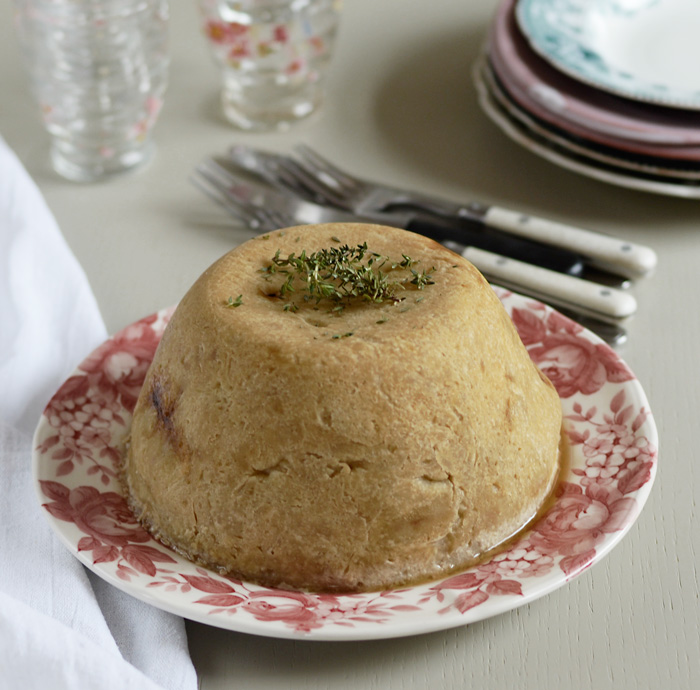
To celebrate "Pride and Pudding", I'm sharing with you the recipe for this delicious steamed Beef Pudding.


ingredients for the suet pastry (makes 1 pudding in a 17cm basin):
300g plain flour
130g shredded suet
1 tsp baking powder
2 tbsp lemon juice
200ml water
a pinch of salt


ingredients for the filling:
500g stewing beef
plain flour, enough for dusting the meat
1 large onion, sliced
5 small mushrooms, halved
1 thyme stalk
1 bay leaf
a generous grinding of black pepper
125ml Stout or beef stock
to finish:
1 tsp thyme leaves or finely chopped parsley


method:
Generously grease the pudding basin (mould) with butter and cut a circle of baking paper the same size as the base of the pudding basin.
Place the paper in the basin.
Preheat the oven to 160ºC.
To make the pastry, put the flour, suet and baking powder in a bowl and combine very well.
Add the lemon juice to the water and start adding it to the four mixture in small amounts, stirring constantly.
Keep adding water until you can bring the mixture together with your hands into a stiff dough.
Add more water if the pastry is too dry. The dough should not be sticky.
Keep 1/3 of the dough aside for the lid of the pudding.
Pad both pieces of dough into balls and lay them on a generously floured surface.
Roll each ball of dough out gently to 1cm thickness.
Carefully place the dough for the base of the pudding over the basin and let it slide in.
Mould the dough to the basin sides, pressing down so the edges are all the same thickness.
Trim off the excess dough around the sides.
Dust the meat with flour.
Start to arrange a row of meat, vegetables and herbs in the pudding basin and season with pepper.
When the basin is nearly full, pour in the beer or stock.
Add the lid, arranging the pastry over the trim of the basin and carefully squeezing the dough together.
If needed, lightly wet the edges of the pastry to make it stick.
Cut 2 circles of baking paper with a diameter about 8 to 10cm larger than the top of the basin. Make a narrow fold across the middle to leave room for the paper cover to expand slightly (in doubt, watch this video).
Tie securely around the top of the basin with kitchen string, then cover with foil and tie kitchen string to create a handle so it will be easy to lift the basin out of the pan after steaming.
Get yourself a pan large enough to hold the pudding.
Stand the pudding basin on an inverted heatproof saucer or trivet in the base of a deep ovenproof pot or saucepan (watch video here).
Pour enough boiling water in order to come halfway up the side of the basin.
Cover the pan with its own lid or with foil.
Place in the preheated oven and steam for 2 to 4 hours, depending on your meat.
Carefully remove the pudding from the pot while it still in the oven.
Leave the pudding to rest for a couple of minutes, so it will cool off a bit.
Remove the foil, string and baking paper lid and turn the pudding out by carefully loosening it around the edges with a blunt knife.
Unmould the pudding over a serving plate, scatter with the thyme leaves or chopped parsley and serve.


Note: You can use leftover cooked meats and if so, steam your pudding for no more than 1 hour.
__________________


Imagino que já conheçam e saibam quem é a Regula Ysewijn.

A Regula é a proprietária do lindíssimo blogue Miss Foodwise.

Um blog que adoro visitar, não tanto ou só, pelas receitas que partilha, mas mais, e sobretudo, pelo entusiasmo com que a Regula partilha a sua paixão pela comida britânica e a sua busca constante por produtos locais e biológicos, indo directamente e privando com agricultores e produtores, por forma a adquirir sempre o melhor produto.

Da mesma forma com que relata e partilha conhecimentos no blogue, a Regula conseguiu passar essa paixão por comida britânica para o seu primeiro livro cujo título é "Pride and Pudding".

Um livro para o qual eu tive o privilégio de contribuir um bocadinho, pois, enquanto o livro ainda estava a ser escrito, tive a honra de testar 4 receitas do mesmo.

Testar receitas é algo que já faço quase que diariamente, pois ao cozinhar receitas dos livros que tenho, estou no fundo a testar essas receitas, mas testar receitas para um livro que ainda nem foi publicado para o público em geral, é uma responsabilidade acrescida, pois o feedback tem de ser detalhado, há que conferir a lista dos ingredientes, acertar quantidades, tempos de cozedura, verificar se há falhas na descrição detalhada da receita, pedir opinião sincera de amigos e familiares (cobaias que provaram as receitas para além de mim), enfim, um sem número de pequenos detalhes que vão depois ser importantes para que a receita seja fidedigna e resulte.

Foi uma experiência fantástica e que adoraria voltar a repetir ou, até, fazer disso profissão!

(Receitas que eu testei para o livro)


Embora eu tenha recebido uma cópia oferecida pela Autora e pela editora, o livro só será publicado no próximo dia 7 de Abril, estando no entanto disponível para pré reserva, caso queiram encomendá-lo.

Não estejam à espera que este seja "mais" um livro de receitas, pois é muito mais que isso. É um livro de profundo estudo histórico sobre os pudins britânicos (doces e salgados) e a sua evolução através dos tempos.
Um livro que relata factos super interessantes sobre o tema e sobre a tradição britânica nesta área gastronómica, o Pudim!

Um livro escrito e fotografado pela própria Regula, cujas fotos são lindas e sedutoras, recheado de ilustrações magníficas (feitas pelo marido da Regula), relatos, descrições detalhadas e, claro, receitas.

Para celebrar "Pride and Pudding" e como agradecimento à Regula e à Murdoch Books pela fantástica oportunidade que me proporcionaram, partilho convosco esta receita deliciosa e tipicamente britânica.
Um pudim de carne envolto em massa e cozido em banho Maria.


ingredientes para a massa (para um recipiente com cerca de 17cm de diâmetro):
300g farinha de trigo branca
130g banha, fria e cortada em cubos (podem usar manteiga se quiserem)
1 colher chá de fermento em pó
2 colheres sopa de sumo de limão
200ml água fria
uma pitada de sal
ingredientes para o recheio:
500g carne para guisar, cortada em pedaços
farinha para envolver a carne
1 cebola grande, cortada em rodelas finas
5 cogumelos castanhos, cortados ao meio
1 haste de tomilho
1 folha de louro
pimenta preta moída na altura
125ml cerveja preta Stout ou caldo de carne
para finalizar:
1 colher chá de folhas de tomilho, ou salsa muito picadinha


preparação:
Untar muito bem com manteiga, o recipiente onde vai fazer o pudim.
Cortar um círculo de papel vegetal do tamanho da base do recipiente e colocá-lo no fundo do mesmo. Este passo vai ajudar a que o pudim desenforme sem percalços.
Aquecer o forno a 160ºC.
Para fazer a massa, colocar a farinha, a banha e o fermento numa taça e misturar tudo muito bem com os dedos, até obter uma consistência de pão ralado.
Adicionar o sumo do limão à água e, aos poucos, começar a adicionar a água á mistura da farinha, mexendo sempre bem, por forma a obter uma bola de massa.
Se necessário, adicionar mais água, mas atenção que a massa final não é suposto ficar pegajosa.
Reservar 1/3 da massa para a parte de cima do pudim "tampa".
Colocar as duas bolas de massa em cima de uma superfície enfarinhada e esticar ambas em círculos, com uma espessura de 1cm cada.
Reservar a parte da massa que será a "tampa" (como se de uma empada se tratasse) e colocar a outra dentro do recipiente onde vai fazer o pudim.
Posicionar a massa dentro do recipiente, forrando a base e as paredes do recipiente com a mesma e cortando o excesso de massa à volta da bordadura do diâmetro do recipiente.
Envolver a carne em farinha e sacudir o excesso.
Numa taça, combinar todos os ingredientes do recheio, excepto a cerveja e temperar com pimenta a gosto.
Colocar a mistura da carne no recipiente forrado com a massa e deitar a cerveja sobre este.
Colocar a "tampa" de massa sobre o recheio, unindo-o à massa da base.
Caso seja necessário, humedecer a bordadura da massa, por forma a que ambas colem bem e fiquem bem seladas.
Cortar 2 círculos de papel vegetal com um diâmetro cerca de 8 a 10cm maior que o diâmetro do recipiente.
Fazer uma dobra no meio (ver este video caso tenham dúvidas) a fim de que o papel possa expandir durante a cozedura.
Atar o papel à volta do recipiente com fio de cozinha.
Cobrir com papel de alumínio e voltar a apertar à volta do recipiente, usando o excesso de fio para fazer uma espécie de pega, que irá ser util no momento de tirar o recipiente do tacho.
Os recipientes que aqui se usam para este tipo de pudins, são os que vêm no video que vos indiquei umas linhas acima.
Entretanto, colocar um pires virado ao contrário dentro de uma panela ou tacho, suficientemente grande para lá meter o recipiente do pudim ou, como no video, colocar papel de alumínio amarrotado no fundo da panela, para que o recipiente com o pudim fique assente em cima do mesmo e a base não esteja em contacto directo com a panela (ver este vídeo em caso de dúvida).
Colocar o recipiente do pudim dentro da panela e encher a panela com água a ferver, por forma a que esta não ultrapasse o meio da altura do recipiente com o pudim.
Tapar a panela com a própria tampa, ou com papel de alumínio, a fim de que não escape vapor da panela durante a cozedura.
Colocar a panela no forno e cozinhar por cerca de 2 a 4 horas, dependendo do corte de carne que utilizarem.
Depois de cozido, retirar o recipiente de dentro da panela da água e deixar repousar por uns minutos.
Retirar o papel de alumínio da superfície, assim como os discos de papel vegetal.
Passar uma faca à volta do pudim, a fim de o soltar do recipiente.
Desenformar o pudim sobre um prato de serviço, polvilhar com folhas de tomilho ou salsa picada e servir.


Nota: Em vez de carne crua, e se quiserem, podem utilizar restos de carne já cozinhada, mas caso o façam, cozer o pudim no forno, por, não mais que 1 hora.


Recipe / Receita:

21 September 2015

Spicy baked eggs with spinach, mushroom and oregano / Ovos no forno com especiarias, espinafres, cogumelos e oregãos.


Here it is, the first recipe from Lorraine Pascale new cook book.
A book full of healthy and delightful recipes that, like all her books, is a stunner.
ingredients (serves 6):
2 tsp ground cumin
2 tsp paprika
1 tsp cayenne
1 tbsp extra virgin olive oil
1 red onion, halved and finely sliced
2 tsp dried oregano
2 red peppers, deseeded and cut into thin strips
2 orange peppers, deseeded and cut into thin strips
125g chestnut mushrooms, finely sliced
1 large clove of garlic, finely chopped
2 x 400g tins of chopped tomatoes
1 red chilli, deseeded and finely chopped (optional)
80g baby spinach, roughly chopped
6 eggs, preferably free range
2 tbsp fresh parsley leaves, roughly chopped
sea salt and freshly ground black pepper
method:
Put the cumin, paprika and cayenne in a ovenproof frying pan over a gentle heat and cook until fragrant.
Tip them onto a plate and return the pan to a medium heat.
Add the oil to the pan, along with the onion and oregano and cook for about 10 minutes until softened, stirring from time to time.
Preheat the oven to 180ºC.
Once the onions are ready, add the peppers and mushrooms and cook for another 10 minutes or until soften.
Add the garlic and cook for 1 minute.
Stir in the tomatoes and the chilli.
Stir in the spices, salt and freshly ground black pepper. Bring to the boil and reduce the heat to simmer for 5 minutes or until the sauce has slightly thickened.
Stir in the spinach for a minute or so until wilted. Remove the pan from the heat and carefully break in the eggs in separate spots around the top of the sauce.
Place the pan in the oven and bake for 10 to 12 minutes or until the egg whites are set but the yolks are still runny.
Sprinkle with the chopped parsley and serve.

__________________

Deixo-vos hoje a primeira receita tirada do novo livro da lorraine Pascale.
Um livro lindo, como todos os livros que tenho desta Senhora e que está recheado de receitas saudáveis, mas cheias de cor e sabor.


ingredientes (para 6 pessoas):
2 colheres chá de cominhos em pó
2 colheres chá de paprika
1 colher chá de pimenta de Caiena
1 colher sopa de azeite extra virgem
1 cebola roxa, descascada e cortada em rodelas bem fininhas
2 colheres chá de oregãos secos
2 pimentos vermelhos, sem sementes e cortados em tiras fininhas
2 pimentos cor de laranja, sem sementes e cortados em tiras fininhas
125g cogumelos frescos castanhos, fatiados finamente
1 dente de alho grande, picadinho
2 latas de 400g (cada) de tomate picado
1 malagueta vermelha, sem sementes e bem picadinha (opcional)
80g de folhas de espinafres bebé, picados grosseiramente
6 ovos, de preferência biológicos
2 colheres sopa de folhas de salsa, picada
sal e pimenta preta moída na altura
preparação:
Numa caçarola ou frigideira grande que possam ir ao forno, colocar, sobre lume brando, a paprika, os cominhos e a pimenta de Caiena. Assim que as especiarias começarem a libertar os seus aromas, retirá-las do lume e reservá-las num prato.
Voltar a colocar a frigideira sobre lume médio e adicionar o azeite, a cebola e os oregãos.
Cozinhar por cerca de 10 minutos, mexendo com frequência, até a cebola estar macia.
Aquecer o forno a 180ºC.
Assim que a cebola estiver macia, adicionar os pimentos e os cogumelos e cozinhar por 10 minutos ou até estes estarem macios.
Adicionar o alho e cozinhar por 1 minuto.
Adicionar o tomate e a malagueta, assim como as especiarias reservadas anteriormente, sal e pimenta. Mexer tudo muito bem e quando a mistura levantar fervura, baixar um bocadinho o lume e cozinhar por mais 5 minutos ou até o molho ter engrossado ligeiramente.
Adicionar os espinafres e cozinhar por 1 minuto ou até estes terem murchado.
Retirar a frigideira do lume e partir os ovos sobre o molho, espaçando-os.
Levar a frigideira ao forno pré aquecido e cozinhar por 10 a 12 minutos, ou até as claras estarem cozidas, mas de forma a que as gemas ainda fiquem moles.
Polvilhar com a salsa picada e servir.


Recipe / Receita: