Showing posts with label Walnuts / Nozes.. Show all posts

13 December 2017

Fladen or, the best version of a Beigli / Fladen ou, a versão melhorada e mais sofisticada do Beigli.

Beigli! Its name comes from the German word beugen ("bend" in English).
Beigli originates from Germany and in Hungary it became a custom to bake Beigli for Christmas in the 19th century during the Austro-Hungarian Monarchy. Beigli (or sometimes spelled bejgli) is a real Hungarian Christmas treat.
The beigli’s predecessor was probably the Silesian filled challach that was already known in the 16th century. Though it’s more likely that it emerged from the famous Bratislava horseshoe. The first Bratislava horseshoes filled with ground walnuts and poppy seeds were baked in 1559 and became very popular.
This pastry is ubiquitous around Christmas time and you can buy it in any shop or bakery. It is basically a rolled up crust with lots of filling. Walnut and poppy seed are traditional, but nowadays, you can find them filled with chestnut puree or even Nutella.
The two kinds of filling fit in the symbolism of Christmas perfectly because poppy seeds symbolize wealth and fertility, while walnuts protect against bewitching. Today there are many different fillings like chestnuts, marzipan, and even apple, coconut and hazelnut fillings can be found.
Beigli is the theme of the 23rd edition of the Sweet World and if there's something that really annoys me a lot, is the fact of having more than 600 cooking books and, when I need a recipe, that I'm pretty sure to have in one of them,... I can't find it!!
Anyway!! After flicking throughout a few books and not finding any recipe, I did some research on the Internet and I found Beigli recipes with yeasted dough, others with a kind of pastry dough. I found fillings of poppy seeds, walnuts and I also found fillings that called for applesauce and I couldn't decide between any of them.
As I know that Inês has a fantastic "photographic memory", I asked her if she could remember seeing a Beigli recipe in any of our books (yes! Inês is as mad as myself about cooking books and we have, pretty much, the same amount of books...).
Of course, Inês was able to remind me of a few books where I would find a Beigli recipe or something similar and!!! BINGO!!
I found two recipes that pleased me but, when I opened the "
It's Always About the Food" book by the fabulous Monday Morning Cooking Club, I couldn't resist this recipe!!
It's not called Beigli! It's called Fladen and, it's made with a fabulous pastry, and it features not one, but three of the fillings that you'd find in the most traditional or more modern versions of the Beigli and I thought: Why making a rouldade filled only with one of the fillings, when I can have something much more interesting?
A Fladen filled with a poppy seed filling, a walnut filling and a fabulous apple compote filling!
It might not be the most traditional Beigli recipe but, let me tell you: It's for sure the most delicious Fladen you'll ever try!


3 April 2017

Micro Steamed Asparagus with Poached Egg and Walnut Vinaigrette / Espargos no microondas com Ovo Escalfado e Vinagrete de Noz.


"The Food Lab" by J. Kenji Lopez-Alt is the book Deborah chose for April's Rainydaybites Cook Book Club.
As you can guess by the name, The Food Lab is more than a recipe book. Its's a book about cooking through science, meaning, cooking techniques that should be adopted instead of others, depending on the ingredients, tips, tricks, explanations about how things happen and why, etc.
It is a very interesting book and I'm loving exploring it.
The first recipe that I tried was this one. Not just because I was very curious about the method used to cook the asparagus, but also because of the walnut vinaigrette that caught my attention straightaway.
I confess that I never cooked asparagus in the microwave and I have to say, this method really works!!


26 January 2015

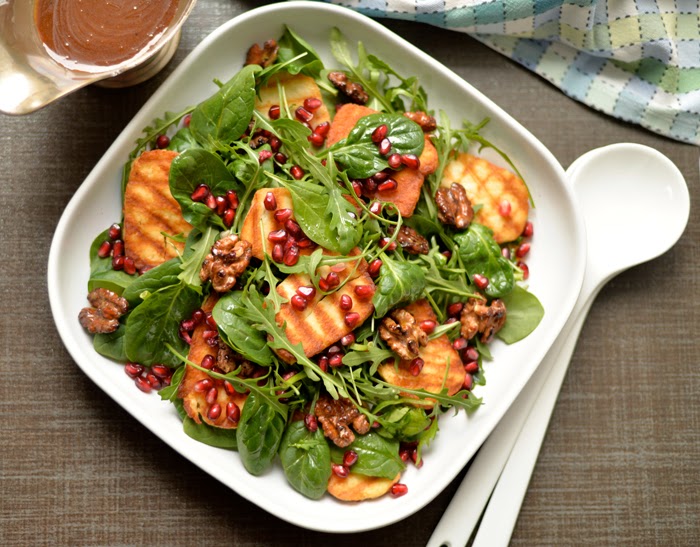
Haloumi, pomegranate and rocket salad / Salada de queijo Haloumi, romã e rúcula.


This is a very delicious salad and a very beautiful way to brighten up the winter meals as it is full of gorgeous and vibrant colours and now, that the pomegranates are at its best, I couldn't help but try it.
ingredients (serves 4):
50g walnuts
1 tbsp honey
2 tbsp pomegranate molasses
1 tbsp lemon juice
2 tsp Dijon mustard
60ml extra virgin olive oil
180g Haloumi cheese, thinly sliced
1 bunch rocket, leaves coarsely torn
50g baby spinach leaves
1 pomegranate, seeds removed
method:
Preheat the oven to 180ºC.
Line a baking tray with baking paper and scatter the walnuts over it. Drizzle with the honey and bake for 5 to 7 minutes or until caramelised. Remove from the oven and set aside.
In a screw top jar, combine the pomegranate molasses, lemon juice, mustard and 2 tbsp of the olive oil. Season with salt and pepper and shake until well combined.
Heat the remaining oil in a frying pan or grill pan and cook the Haloumi for 2 minutes or until golden.
Remove from the heat and set aside.
Combine the rocket and spinach in a bowl and drizzle with the dressing. Toss to combine and arrange it on plates.
Top the leaves with the Haloumi and walnuts and sprinkle with the pomegranate seeds.
__________________


Esta é uma salada deliciosa e linda para comer nestes dias cinzentos e de frio, pois a conjugação do queijo grelhado, a par com as cores magníficas que a compõem, são uma combinação perfeita para alegrar estes dias invernosos.
E agora que as romãs estão no seu melhor, não podia deixar de a experimentar.
ingredientes (para 4 pessoas):
50g nozes, metades
1 colher sopa de mel
2 colheres sopa de melaço de romã (se não encontrarem à venda, podem ver aqui como fazer em casa).
1 colher sopa de sumo de limão
2 colheres chá de mostarda de Dijon
60ml azeite extra virgem
180g queijo Haloumi, finamente fatiado
1 molho de rúcula, folhas esfarripadas
50g folhas de espinafres bebé
1 romã, sementes separadas
preparação:
Aquecer o forno a 180ºC.
Forrar um tabuleiro com papel vegetal e sobre este, colocar as nozes. Regar com o mel e levar ao forno por 5 a 7 minutos, ou até estarem caramelizadas. Retirar as nozes do forno e deixar arrefecer no tabuleiro.
Num frasco de tampa de enroscar, misturar muito bem o melaço de romã, o sumo do limão  a mostarda e 2 colheres sopa do azeite. temperar de sal e pimenta e tapar e abanar muito bem o frasco.
Aquecer o restante azeite numa frigideira ou grelhador, adicionar o queijo fatiado e fritar ou grelhar por cerca de 2 minutos, ou até estar douradinho. retirar do lume e reservar.
Combinar a rúcula e os espinafres numa taça e regar com o molho. Misturar bem e dividir a salada por 4 pratos.
Cobrir a salada com as fatias de queijo, as nozes caramelizadas e as sementes de romã e servir.

Recipe / Receita: Donna hay magazine (Dec. - Jan. 2015).

15 December 2014

Chocolate and cinnamon babka / Babka de chocolate e canela.


As this month is a special month because of the Christmas holidays, I'll be publishing some recipes and ideas for Christmas.
Everybody is around, in holidays, having a relaxing time and nibbling all the time, so it's good to have always something nice and homemade at hand.
This delicious babka that is utterly delicious is my first Christmas baking suggestion as it keeps very well for a few days and it's really good.
Although I made my Babka in a loaf tin Im writing down the original version.
My friend Mena published this morning this same recipe, but in a bundt cake form and you should go and have a look at it as it looks really terrific.
ingredients for the dough (serves 8):
80g sultanas
80ml coffee flavoured liqueur
180ml lukewarm milk
14g dried yeast
110g caster sugar
2 eggs, lightly beaten
1 egg yolk
450g white bread flour
3 tsp sea salt flakes
150g butter, softened and cubed
40g butter, softened and cubed
for the chocolate sauce:
200g dark chocolate, chopped
1/2 cup pouring cream
for the filling:
70g walnuts, lightly roasted and coarsely chopped (I didn't use)
75g brown sugar
2 tsp ground cinnamon
150g dark chocolate, coarsely chopped


method:
Combine the sultanas and liqueur in a bowl and set aside.
In another bowl, combine the yeast, milk and 1 tbsp of the sugar. Cover the bowl and set aside in a warm place for 10 minutes or until foamy.
Stir in the eggs and the egg yolk.
Place the flour, salt, remaining sugar and yeast mixture in the bowl of an electric mixer fitted with the dough hook attachment.
Mix on low speed until just combined and then on medium speed for 5 minutes, or until the dough is soft and elastic.
Add in the butter, a cube at a time, making sure the butter is well incorporated before adding the next cube. Mix until the dough is very smooth and elastic.
Place the dough in a large oiled bowl, cover the bowl with clingfilm and let it rest in a warm place for 1 hour or until doubled in size.
to make the filling: combine all the ingredients in a small bowl.
Preheat the oven to 200ºC and grease a 21cm cake pan with butter.
Drain the sultanas and reserve 2 tbsp of the liqueur.
Punch down the dough and knead lightly until smooth.
Roll the dough on a floured surface until you have a 30 x 45cm rectangle that is about 1cm thick.
Spread the dough with the extra 40g of butter and sprinkle evenly with the sultanas and with the filling mixture.
Starting from one long side, roll the dough firmly into a log.
Cut the log into 12 equal pieces.
Place 7 pieces, cut side out, around the outer side of the pan and place the remaining 5 pieces around the ring of the tin, overlapping slightly.
Cover with clingfilm and rest for 45 minutes or until almost doubled in size.
Bake on the lowest oven shelf for 40 minutes or until cooked through. Rest for 5 minutes before turning up side down, onto a wire rack to cool completely.
for the chocolate sauce: Place the dark chocolate, cream and reserved liqueur in a small pan over low heat and melt, stirring, until smooth. Cool for 10 minutes and serve warm drizzled over the babka slices.

Note 1: I didn't make the chocolate sauce as I think the babka is very good on its own and don't need the sauce.
Note 2: The recipe calls for the microwave to melt the ingredients for the chocolate sauce but I find it less risky to melt it in a pan, over a low heat.
__________________


Dezembro é um mês especial, pois é o mês do Natal.
As crianças e muitos adultos estão de férias, há sempre gente em casa, sejam familiares ou amigos, casa sempre cheia e com gente a entrar e a sair, ou seja, do Natal ao Ano Novo, praticamente é uma semana de ficar em casa a comer e a... comer...
Já que é um período para comer, o melhor é que sejam coisinhas boas e, de preferência, caseiras, ora assim sendo, este mês, as receitas aqui no blogue, serão já a pensar em deixar-vos sugestões para a mesa natalícia, ou simplesmente para ter à mão sempre que apetece petiscar ou tomar um chá quente com algo doce.
Esta babka é uma excelente sugestão para acompanhar uma chávena de chá quente ou café e é deliciosa e mantém-se fresca (desde que bem acondicionada), durante vários dias.
Eu fiz a minha babka numa forma de pão, mas deixo-vos a receita original, que é feita numa forma de buraco.
A Mena publicou esta manhã esta mesma receita, mas em forma de bundt cake.
Vão lá espreitar, a babka da Mena, pois tem um aspecto absolutamente divino e é caso para dizer #amenaealiasofazemcoisasboas :)))!

ingredientes para a massa (para 8 pessoas):
80g sultanas
80ml licor de café
180ml leite morno
14g fermento de padeiro seco
110g açúcar refinado branco
2 ovos, batidos ligeiramente
1 gema de ovo
450g farinha de trigo para pão
3 colheres chá de flocos ou flor de sal
150g manteiga, amolecida e cortada em cubos
40g manteiga, amolecida e cortada em cubos
para o molho de chocolate:
200g chocolate preto, picado
1/2 chávena de natas líquidas
para o recheio:
70g nozes, tostadas ligeiramente e picadas grosseiramente (eu não usei)
75g açúcar moreno
2 colheres chá de canela em pó
150g chocolate preto, picado grosseiramente
preparação:
Numa taça, misturar as sultanas com o licor e reservar.
Numa outra taça, misturar o fermento com o leite e uma colher de sopa do açúcar. Tapara com película aderente e reservar em local quente, por cerca de 10 minutos, ou até que a mistura esteja espumosa.
Adicionar os ovos e a gema de ovo à mistura do fermento e mexer.
Na taça de uma batedeira eléctrica equipada com o gancho para massas, colocar a farinha, o sal, o açúcar restante e a mistura do fermento.
Bater em velocidade mínima, só até tudo estar incorporado. De seguida, com a batedeira a velocidade média, bater por 5 minutos, ou até que a massa esteja macia e elástica.
Com a batedeira ligada, adicionar a manteiga, um cubo de cada vez, tendo o cuidado de verificar se o cubo adicionado está bem incorporado na massa, antes de adicionar o cubo seguinte. Bater até, mais uma vez, a massa estar bem macia e elástica.
Colocar a massa numa taça untada com óleo, cobrir com película aderente e deixar repousar num local quente, por cerca de 1 hora, ou até que esta tenha duplicado de tamanho.
para fazer o recheio: combinar todos os ingredientes numa taça.
Aquecer o forno a 200ºC e untar uma forma com buraco, com cerca de 21cm de diâmetro.
Coar as sultanas e reservar 2 colheres de sopa do licor utilizado.
"Espancar" a massa para lhe retirar o ar e amassá-la ligeiramente para ficar macia. Esticá-la, sobre uma superfície ligeiramente enfarinhada, até obter um rectângulo com cerca de 30 x 45cm e uma espessura de cerca de 1cm.
Espalhar os 40g de manteiga restantes sobre toda a superfície da massa e polvilhar com as sultanas e os ingredientes do recheio.
Enrolar a massa como se fosse uma torta, bem apertadinha, começando por um dos lados mais longos.
Cortar a "torta" em 12 rodelas de igual tamanho.
Colocar 7 rodelas, lado do corte virado para fora, à volta de toda a forma e colocar os restantes 5 rodelas em cima destas, mas junto ao buraco da forma. Esta parte é complicada de perceber, mas se forem a este post da Mena, verão lá uma foto que exemplifica perfeitamente o processo acima descrito.
Tapar a forma com película aderente e deixar levedar por mais 45 minutos, ou até ter quase duplicado de tamanho.
Colocar a forma na grelha mais baixa do forno e cozer por 45 minutos ou até estar completamente cozido.
Deixar repousar na forma por 5 minutos, antes de desenformar sobre uma grelha para completo arrefecimento.


para o molho de chocolate: Colocar o chocolate  as natas e o licor reservado num tachinho e aquecer em lume brando, mexendo sempre, até o chocolate estar derretido e a mistura cremosa. Deixar arrefecer por 10 minutos e servir ainda morno, em cima das fatias de babka.

Nota 1: Eu não fiz o molho de chocolate porque não achei necessário. A babka é fantástica sem o molho e assim evitam-se mais calorias :))).
Nota 2: A receita original diz para derreter os ingredientes do molho no microondas por 1 minuto em potência máxima. Eu não gosto de derreter chocolate no microondas e acho mais seguro derretê-lo em lume brando num tachinho como acima descrevi, mas quem quiser fazer o molho e utilizar o microondas, aqui fica o processo explicado.

Recipe / Receita:

16 October 2014

Povitica for the World Bread Day / Povitica para o Dia Mundial do Pão.


When it comes to bread, two words come up onto my mind and they are: Paul Hollywood. My favourite baker of all times and a most respected and professional bread baker.
And if last year, I participated in the world bread day with this delicious savoury couronne, this year I decided to participate with this totally delicious sweet bread from Eastern Europe.
The first time I came across this bread was on this year's edition of the Great British Bake Off. It was one of the technical challenges for the contenders and it proved to be a piece of work.
As I'm always up for a challenge, this is the bread I chose straight away to be the one to make for this special occasion - The World Bread Day!.
I found that the most difficult steps are the stretching of the dough, as it as to be paper thin and the spreading of the filling, as the dough is so thin that it can easily ripe apart and although my Povitica is not perfect as it should be, I can guarantee you that it is a stunningly delicious bread and it worth's to be given a go.
The original Paul Hollywood recipe can be found here.


__________________

Povitica é um pão doce da Europa de Leste.
Quando se fala de pão, o nome Paul Hollywood é o primeiro a vir-me de imediato à cabeça, pois é o meu "padeiro" de eleição e um profissional conceituadíssimo nesta arte.
No ano passado participei no dia mundial do pão, com esta fabulosa coroa salgada e este ano, decidi participar com este fabuloso pão doce, a Povitica.
A primeira vez que vi, ou ouvi falar neste pão doce, foi na edição deste ano do Great British Bake Off. Este foi um dos desafios técnicos para um dos episódios deste fenomenal programa e todos os concorrentes o acharam difícil, até porque não estavam em posse da receita completa.
Assim que o vi, decidi que seria o pão a fazer para este dia mundial do pão e não sendo uma receita fácil, decididamente vale a pena experimentar, pois é fantástico em termos de sabor.
As partes que achei mais difíceis na confecção deste pão, foram o esticar da massa, pois tem de ficar mais fina que uma folha de papel e o espalhar do recheio, porque como a massa é super fina, é difícil espalhá-lo sem rasgar a massa.
Como podem ver, o meu pão não ficou perfeito, mas valeu pela experiência e pelo sabor!!
Aqui fica então a receita traduzida.


ingredientes para a massa:
300g de farinha de trigo branca
40g de açúcar refinado branco
7g de sal
10g de fermento biológico seco
30g de manteiga sem sal, derretida
1 ovo grande (L), batido
1/2 vagem de baunilha, sementes raspadas do interior
150ml de leite gordo, morno
para o recheio:
60g de manteiga sem sal
4 colheres sopa de leite gordo
280g de miolo de noz
1/2 vagem de baunilha, sementes raspadas do interior
100g de açúcar refinado branco
2 colheres sopa de cacau em pó
1 gema de ovo, batida
para terminar:
15g manteiga, derretida
1 clara de ovo, batida
100g açúcar em pó


preparação do pão:
Colocar a farinha e o açúcar na taça da batedeira eléctrica equipada com o gancho para pão.
Colocar o sal num lado da taça e o fermento do outro lado.
Adicionar a manteiga derretida, o ovo, a baunilha e o leite morno e misturar em velocidade baixa.
Quando a massa começar a juntar-se, misturar por mais 5 a 8 minutos, a velocidade média, até obter uma massa macia, fofa e elástica.
Colocar a massa numa taça untada com óleo, cobrir com película aderente e deixar levedar por cerca de 1 hora, ou até ter duplicado de tamanho.
Untar uma forma rectangular com capacidade para 1kg.


preparação do recheio:
Colocar a manteiga e o leite num tachinho e aquecer em lume brando, até a manteiga derreter. Retirar do lume imediatamente.
Colocar as nozes, a baunilha, o açúcar e o cacau em pó no copo do robot de cozinha e processar até obter uma mistura areada.
Adicionar a gema do ovo e a mistura do leite e manteiga e pulsar para combinar bem. Reservar.
Entretanto, colocar uma toalha ou lençol limpo em cima da mesa e polvilhar com farinha.
Colocar a massa levedada em cima da toalha e estender a massa até obter um rectângulo com cerca de 50 x 30cm.
Pincelar toda a superfície da massa com 15g de manteiga derretida.
Enfarinhar as mãos e, começando no meio da massa, começar a esticá-la suavemente com as costas das mãos, por forma a que a massa  fique o mais fina possível. No final, a massa deveria ter 1m x 60cm. A minha não ficou tão extensa, pois começou a rasgar e eu optei por não esticar mais.
Com muito cuidado, para que a massa não rasgue, espalhar o recheio sobre a massa, o mais uniformemente possível, de forma a que toda a massa fique coberta ( a minha não ficou totalmente coberta, como podem verificar no resultado final...).
Caso o recheio esteja espesso e difícil de espalhar, adicionar um pouco de leite morno, por forma a ficar mais manejável.
Começando por um dos lados mais longos da massa, começar a enrolar a massa em forma de "torta longa", o mais apertadinho possível. Usar o lençol ou toalha para ajudar a este processo.
Com muito cuidado, pegar numa das pontas da "torta" e colocá-la numa das extremidades da base da forma, continuando a colocá-la no fundo da forma em forma de U. Voltar a massa para cima e criar um segundo U em cima do primeiro.
Colocar a forma dentro de um saco plástico limpo e deixar repousar por mais uma hora.
Aquecer o forno a 180ºC.
Pincelar o pão com a clara de ovo e levar ao forno por 15 minutos. Findo esse tempo, baixar a temperatura do forno para os 150ºC e cozer por mais 45 minutos, ou até o topo do pão estar douradinho.
Caso o topo comece a ficar muito escuro, antes de terminado o tempo de cozedura, cobrir com folha de alumínio.
Retirar a forma do forno e deixar o pão arrefecer na forma por cerca de 3 0 minutos.
Arrefecer completamente em cima de uma grelha.
Entretanto, misturar bem o açúcar em pó com umas gotas de água, até obter um icing líquido o suficiente, para ser espalhado por cima dom pão.
Acreditem que dá trabalho, mas é fenomenal e um bom desafio para quem gosta de fazer pão e afins.


Recipe / Receita: Paul Hollywood.

13 August 2014

Figs, Roquefort, walnuts and rosemary salad / Salada de figos, queijo Roquefort, nozes e alecrim.


Figs are the kind of fruit that I truly love and I can't resist.
Eaten on their own, fresh and simply washed or in tarts (sweet or savoury) and salads, I love them either or on both ways and this salad, with the contrasting flavours of sweet and salty and all the different textures is really up to my taste.
ingredients (serves 4):
big handful of chopped walnuts
1 tbsp red wine vinegar
3 tbsp runny honey
salt and pepper
2 tbsp olive oil
4 big or 8 small ripe purple figs
4 small handfuls of rocket
200g Roquefort cheese
leaves from 1 spring of rosemary, finely chopped


method:
Toast the walnuts in a dry frying pan until gold. Turn off the heat and set aside.
In a small bowl, mix the vinegar and 2 tbsp of the honey.
Season with salt and pepper and whisk in the olive oil.
Quarter or halve the figs and arrange them on a serving plate.
Drizzle with the remaining honey over the top.
Toss the rocket leaves with 1 tbsp of the dressing and arrange them casually around the figs.
Top the figs with knobs of the cheese and scatter the walnuts over the plate.
Splash with some of the remaining dressing and sprinkle with the rosemary.
__________________


Figos são uma das frutas que mais adoro e à qual não não consigo resistir.
Simplesmente lavados e comidos à dentada e ao natural, ou em tartes doces e salgadas ou saladas, não há forma de os comer que não me agrade e esta saladinha, com o contraste do doce e salgado, a par com as diferentes texturas que a compõem, é realmente algo de extraordinariamente delicioso.
ingredientes (para 4 pessoas):
um bom punhado de nozes
1 colher sopa de vinagre de vinho tinto
3 colheres sopa de mel líquido
sal e pimenta
2 colheres sopa de azeite
4 figos grandes ou 8 pequenos
4 punhados de rucula
200g queijo Roquefort
agulhas de uma haste de alecrim, picadas finamente


preparação:
Tostar as nozes numa frigideira seca, até estarem douradas. Desligar o lume e reservar.
Numa taça pequena, misturar o vinagre com 2 colheres de sopa do mel.
Temperar de sal e pimenta e adicionar o azeite, batendo para emulsionar.
Cortar os figos ao meio ou em quartos e dispô-los num prato de serviço.
Regar os figos com o restante mel.
Misturar a rucula com 1 colher de sopa do molho e dispô-la no prato, por entre os figos.
Colocar pedaços de queijo por cima dos figos e espalhar as nozes sobre o todo.
Regar (a gosto) com mais molho e salpicar com o alecrim picado.

Recipe / Receita: