Showing posts with label Blood orange / Laranja sanguínea.. Show all posts

1 February 2018

Lemon Coconut Panna Cotta with Blood Orange / Panna Cotta de Limão e Coco, com Laranja Sanguínea.


Here it is, another absolute stunner recipe, from Rita Serano FABULOUS, FABULOUS book "Vegan in 7", from which I've already shared this soup and this salad and a book from! honestly? I can't stop cooking. I might be turning vegan and not assuming it yet (lol)...
I love lemon as you all know and coconut is another ingredient that I totally adore so, this panna cotta couldn't go unnoticed!
And!!!
Let me tell you...
This Panna Cotta is Masterchef worthy!
It has just the perfect wobble and its texture and flavours are amazing!!
I added a few grinds of vanilla powder to my panna cotta just because, as you know, "vanilla" is my first surname and, as blood oranges are now in season, I've topped my panna cotta with segmented blood orange but, feel free to top it with any oranges variety you like or even with any other seasonal fruit.
As oranges are Marta's "ingredient of the month", this is my last post for Marta and her January table.


3 March 2017

Chicken with Marsala, Olives and Blood Oranges / Frango com Marsala, Azeitonas e Laranjas Sanguíneas.


Chicken and blood oranges, a fabulous combination of flavours and ingredients that works heavenly and I know (and told you) it works and it is absolutely delicious because of this Eva Flores recipe that I published a few weeks ago.
Today's suggestion is from Diana Henry "A Bird in the Hand" book.
I love Diana Henry books and this one is all about chicken recipes and all of them incredibly interesting and super appetizing.
Last here I posted the very delicious recipe of Chicken with Morcilla and Sherry that was absolutely to die for and although I made this blood orange recipe last year too, I didn't have the opportunity to take pictures of it so, now that the blood oranges are in season again, I had to make it again and post the recipe here because it's so, so delicious!!
Give it a try and you'll be impressed with such a clever combination and even if you can't find blood oranges, try it with regular Navel oranges because I'm sure, it will be as good.

17 February 2017

Poached rhubarb with vanilla and blood orange / Ruibarbo com baunilha e laranja sanguínea.


A simple suggestion with the best that February has to offer.
For Marta and her ingredient of the month, which is precisely the vanilla, I prepared this very easy and simple suggestion.
I don't even call it a recipe because it really is only a suggestion! A simple but delicious suggestion!

8 February 2017

Blood Orange Roast Chicken / Frango Assado com Laranja Sanguínea.


Today I'm sharing this fabulous recipe with you all.
Blood oranges are in season now and at its best so, we have to use them as much as we can and you know, I love blood oranges and here on the blog, under the "blood orange" label, you can find a fair amount of blood orange suggestions.
As for this recipe, If you can't find blood oranges, you can use Navel oranges.
Remember that in this post I wrote that I would tell you more about Eva Flores "Adventures in Chicken" book in another post? Well, this is the post!
Everybody knows Eva Flores and her fabulous work and blog Adventures in Cooking right? So, no need for introductions!
Eva Flores book is, as I expected, an absolute delight. Recipes and photos that are to die for!! Actually, I can't ever think about Eva Flores without thinking and relating Eva and Mónica Pinto, as I find their work so similar, great and gorgeous...
Anyway...
Eva Flores first book is all about chicken. Chicken in many ways and with many flavours...
I've already made a lot of recipes from the book and some are in the queue to be published and others, I'll have to repeat them because (as I told you here, I lost the photos in the PC that broke).
Of course you might be thinking that there's nothing special about a book full of chicken recipes, but actually there is! and what makes Eva's chicken recipes different from another dozen of chicken recipe books?
I tell you what! What makes them different is that all the chicken recipes are delicious and specially the roast chicken ones! The chicken is always flavourful, moist and super delicious!! Chicken breasts, that were something that were always leftover here at home, are now being battled to be the first to be eaten. Why? Because as I said, they're moist and delicious and they're not dry and boring!
Now, you might be wondering what's the secret for those juicy and tasteful chicken breasts but for me, there's no secret!
Remember this post? This Donna Hay recipe? Well, the secret is the same, which is: Brining the chicken and, of course, a good free range bird...!
I knew that already, because in his book "In Search of Perfection" and about brining a chicken, Heston Blumenthal wrote: "Brining is a great way of tenderising the flesh and helping it to stay moist at the same time. The salt alters the proteins in such a way that they old on to moisture more effectively. The result is a much juicier chicken".
Actually and as I also wrote here, before I read this Donna Hay recipe and all the Eva Flores chicken recipes that I tried,  the best roasted turkey I ever made or tasted, was precisely a Donna Hay brined turkey and that's the only one I now make every Christmas!
Just try brining your bird before you roast it and you'll see. There's no coming back! Let's go for the recipe then!

24 March 2016

Vanilla cheesecake with blood oranges, caramel and a Hobnob and hazelnut crust / Cheesecake de baunilha com laranjas sanguíneas, caramelo e uma crosta de bolachas Hobnob e avelãs.


Cheesecake!!
Who doesn't love cheesecake?
The last of my blood oranges were used in this amazing cheesecake that pleased everyone that tried it.
The crust is absolutely divine and the filling, well, sublime!!
Although the recipe calls for 8 to 10 oranges for the topping, I only had 5 of them left and to tell you the truth, they were enough.
The recipe is from Delicious magazine and, although I only made half of the recipe, I'm leaving you the complete version.


ingredients (12 to 16):
vegetable oil, for greasing
200g Hobnob biscuits
50g roasted chopped hazelnuts
110g unsalted butter, melted
for the filling:
360g full-fat cream cheese
250g mascarpone
175g soured cream
1 tsp vanilla bean paste
175g caster sugar
3 large free-range eggs
50g plain flour
for the topping:
8 to 10 blood oranges, peeled and segmented, juices reserved
100g caster sugar
30g unsalted butter
splash rum, Cointreau or brandy (I didn't use)
pinch sea salt flakes
75ml double cream


method:
Lightly oil a 20cm loose-bottomed deep cake tin.
Whizz the biscuits and hazelnuts in a food processor until very finely ground.
With the motor running, pour in the melted butter and a pinch of salt, then whizz until the mixture looks like wet sand.
Tip the mixture into the tin and using your fingers and a metal spoon, flatten the mixture onto the base. Then start to build up the sides, working it up the tin to form thin walls.
Chill the tase in the fridge.
Heat the oven to 160ºC.
To make the filling, put the cream cheese, mascarpone, soured cream, vanilla and sugar in a mixing bowl and whisk with an electric mixer until smooth and runny.
Whisk in the eggs, then sift over the plain flour and whisk that in.
Pour the mixture into the chilled biscuit case, then transfer to the oven, on a baking sheet, and bake for 50 to 60 minutes, until set around the edges with a good wobble in the middle.
Remove from the oven, cool and chill overnight.
For the topping, put the sugar in a heavy based pan and heat very gently until the sugar has dissolved (don't stir it).
Once the sugar's melted, turn up the heat slightly and cook to a rich golden/red caramel.
Remove from the heat and stir in the butter and liqueur (if using). It will spit, so be careful.
Add the salt, then stir in the cream.
Transfer the caramel to a bowl, add 3 tbsp of the reserved orange juice and then leave to cool. Add more orange juice if the caramel sets to firmly.
Tip the orange wedges onto a few layers at kitchen paper, then pat gently with more kitchen paper to dry them slightly.
Remove the cheesecake from the fridge 30 minutes before serving and transfer it to a serving plate.
Pile the orange segments on top and drizzle with the caramel.

__________________

Cheesecake!!
Quem não gosta de cheesecake? Nós por cá adoramos e devo dizer-vos que este é especialmente delicioso!!
Decidi publicá-lo agora, numa semana que já vai sendo muito doce aqui pelo blogue, mas achei que seria uma sobremesa fantástica para o almoço de Domingo de Páscoa.
Fica a sugestão...
Volto a repetir, caso não encontrem laranjas sanguíneas, façam-no com laranjas normais, pois o resultado será o mesmo, ou seja, MARAVILHOSO!!
Esta crosta, feita com bolachas Hobnob e avelãs, é a melhor de sempre e o recheio, bom..., recheio típico de cheesecake, calórico, nada saudável nem aconselhável a quem aderiu à "moda" do saudável.
As laranjas dão-lhe a frescura necessária e são a parte saudável desta sobremesa. O molho de caramelo..., é o golpe de misericórdia para arruinar com a dieta...
A receita pede 8 a 10 laranjas, mas eu já só tinha 5 e foi as que utilizei e para vos ser sincera, não achei que precisasse de mais.
A receita é da Delicious magazine e embora eu só tenha feito metade da receita, deixo-vos a versão original e completa, que poderão adaptar caso queiram experimentar este exemplar típico do pecado da gula.


ingredientes (para 12 a 16 fatias):
óleo vegetal, para untar a forma
200g bolachas Hobnob
50g avelãs, tostadas e picadas
110g manteiga sem sal, derretida
para o recheio:
360g queijo creme, tipo Philadelphia
250g mascarpone
175g soured cream ou natas azedas
1 colher chá de pasta ou extracto de baunilha
175g açúcar refinado branco
3 ovos grandes (L), de preferência biológicos
50g farinha de trigo branca
para o topping:
8 a 10 laranjas sanguíneas, descascadas e segmentadas, sumo reservado
100g açúcar refinado branco
30g manteiga sem sal
um bocadinho de rum, Cointreau ou brandy (eu não usei)
uma pitada de lâminas ou flor de sal
75ml natas para culinária


preparação:
Untar com o óleo, uma forma de 20cm de diâmetro profunda e com fundo amovível.
No copo do robot de cozinha, reduzir as bolachas e as avelãs a migalhas finas.
Com o motor do robot ligado, adicionar a manteiga derretida e uma pitada de sal e processar até obter uma mistura tipo areia molhada.
Despejar a mistura na forma e com as mãos e uma colher metálica, forrar bem a forma com esta mistura, começando pelo fundo, erguendo depois paredes finas da mistura, em toda a volta da forma.
Colocar a forma no frigorífico e aquecer o forno a 160ºC.
Para fazer o recheio, colcoar o queijo creme, o mascarpone, as natas azedas, o açúcar e a baunilha, na taça da batedeira eléctrica e bater até a mistura estar bem cremosa e macia.
Adicionar os ovos e voltar a bater até tudo estar bem incorporado.
Peneirar a farinha sobre a mistura anterior e envolver ou bater, tudo muito bem.
Deitar a mistura sobre a base de bolacha, colocar a forma sobre um tabuleiro e levar ao forno por 50 a 60 minutos, ou até o recheio estar firme a toda a volta, mas mole no centro quando se abana a forma.
Retirar o cheesecake do forno, deixar arrefecer e depois colocá-lo no frigorífico de um dia para o outro.
Para o topping, colocar o açúcar num tacho e aquecer sobre lume brando, sem mexer, até o açúcar derreter.
Quando o açúcar estiver derretido, aumentar o lume e deixar cozer até o açúcar atingir um caramelo castanho/avermelhado.
Retirar do lume e misturar a manteiga e o licor (caso usem), mexendo rapidamente. Atenção para não se queimarem, pois a mistura vai ferver.
Adicionar as natas e o sal e mexer tudo muito bem.
Transferir o caramelo para uma taça, adicionar-lhe 3 colheres sopa do sumo de laranja reservado e deixar arrefecer.
Caso o caramelo comece a solidificar muito enquanto arrefece, adicionar mais sumo de laranja, até obterem a consistência desejada.
Entretanto, colocar os segmentos da laranja entre folhas de papel absorvente de cozinha, a fim de secá-las bem, para que depois não escorram sumo em cima do cheesecake.
Retirar o cheesecake do frigorífico cerca de 30 minutos antes de servir.
Desenformar o cheesecake sobre um prato de serviço, decorá-lo com os segmentos da laranja e regá-lo com o caramelo.


Recipe / Receita: Delicious magazine (March 2016).

18 March 2016

Blood orange, rosemary, brown sugar and caramel marble cake / Bolo marmoreado de laranja sanguínea, alecrim, açúcar mascavado e caramelo.


Just when I thought that I couldn't get more blood oranges, there's a little fruit and vegetable shop that opens in town.
Amongst lots of nice and fresh fruit and vegetables, there they are, a whole box of blood oranges!!
Of course I couldn't resist to bring home a bagful of them which were just enough for this cake and for another great dessert that I'll show you soon.
The recipe is from lovely Aimee "Twigg Studios" blog and, like all her recipes, it's a stunner.


ingredients for the orange and rosemary sponge:
120g golden caster sugar
120g butter
2 eggs
zest from 2 blood oranges
1 tsp very finely chopped rosemary leaves
120g self raising flour
4 tbsp of fresh blood orange juice
method:
Pre heat the oven to 180ºC and  grease a 2 pound bundt tin.
In a stand mixer (or by hand), cream together the butter and sugar until creamy and pale.
Add the eggs, one at a time, beating well between additions.
Add the zest and orange juice and mix.
Mix in the flour and finely chopped rosemary and then, set the mixture aside while you make the other batter.
for the brown sugar and caramel sponge:
50g dark soft brown sugar
70g soft light brown sugar
120g butter
2 eggs
4 tbsp caramel (dulce de leche - cooked condensed milk)
120g self raising flour
1 tbsp cocoa
method:
In a stand mixer, cream together the butter and sugars until creamy and soft.
Mix in the eggs, one at a time, beating well between additions.
Mix in the caramel.
Add the flour and cocoa and combine everything together.
Add one spoonful of each mixture to the tin, alternating between the two batters, in order to get a marbled effect.
Bake for about 45 to 50 minutes.
Let the cake cool for 5 minutes in the tin and then gently turn it out onto a cooling rack.
for the sauce:
4 tbsp caramel (dulce de leche - cooked condensed milk)
juice from 1 blood orange
5 tbsp icing sugar (I just used 4tbsp)
1 sprig of rosemary
method:
Put the orange juice, caramel and rosemary sprig in a pan over medium high heat.
Heat until it reaches a rolling boil then remove from the heat and discard the rosemary spring.
Add the icing sugar and stir very well until the sugar as dissolved.
Leave to cool and serve drizzled over the cake or in a jar or jug.

__________________

Quando as laranjas sanguíneas das receitas que vos apresentei anteriormente (e ainda falta uma de frango) acabaram, achei que este ano já não iria conseguir arranjar mais laranjinhas "vampiras".
Felicidade total quando abre aqui perto de mim uma lojinha de fruta e legumes onde, entre caixas e caixas de legumes e frutas frescos, lá estava uma caixa cheia de laranjas sanguíneas.
Claro que não vim para casa sem um saco delas e que foram suficientes para este bolo que aqui vos deixo e para mais uma sobremesa deliciosa que vos mostrarei num outro post.
Este bolo é mais uma receita do blogue lindo da Aimee, o Twigg Studios, e, tal como todas as receitas que de lá vêm, é uma delícia!
Claro e já sabem, caso não encontrem esta variedade de laranja, poderão sempre experimentar o bolo com as laranjas normais.


ingredientes para o bolo de laranja e alecrim:
120g açúcar refinado amarelo
120g manteiga, amolecida
2 ovos
raspa de 2 laranjas sanguíneas
1 colher chá de folhas de alecrim, muito finamente picadas
120g farinha de trigo branca com fermento
4 colheres sopa de sumo de laranja sanguínea
preparação:
Aquecer o forno a 180ºC e untar uma forma de Bundt com capacidade para 1l.
Na taça da batedeira eléctrica, bater a manteiga e o açúcar, até a mistura estar cremosa e pálida.
Adicionar os ovos, um de cada vez, batendo bem entre cada adição.
Adicionar a raspa e o sumo da laranja e voltar a bater.
Adicionar a farinha e o alecrim e envolver bem, até tudo estar bem combinado.
Reservar a mistura enquanto se faz o segundo bolo.
para o bolo de açúcar mascavado e caramelo:
50g açúcar mascavado escuro
70g açúcar mascavado claro
120g manteiga
2 ovos
4 colheres sopa de caramelo (leite condensado cozido)
120g farinha de trigo branca com fermento
1 colher sopa de cacau em pó
preparação:
Na taça da batedeira eléctrica, bater a manteiga com os dois açúcares, até a mistura estar cremosa e macia.
Adicionar os ovos, um de cada vez, batendo bem entre cada adição.
Adicionar o caramelo e bater novamente.
Adicionar a farinha e o cacau e envolver bem, até tudo estar bem combinado.
Colocar colheradas alternadas de ambas as misturas na forma, por forma a dar um efeito marmoreado ao bolo final.
Levar ao forno por cerca de 45 a 50 minutos, pua té um palito inserido no meio do bolo, sair limpo.
Deixar o bolo arrefecer na forma por cerca de 5 minutos e depois desenformá-lo sobre uma grelha para completo arrefecimento.
para o molho:
4 colheres sopa de caramelo (leite condensado cozido)
sumo de 1 laranja sanguínea
5 colheres sopa de açúcar em pó (eu só pus 4)
1 haste pequena de alecrim fresco
preparação:
Num tachinho sobre lume médio a alto, colocar o sumo da laranja, o caramelo e o alecrim.
Aquecer e quando a mistura estiver a ferver ferozmente, retirar o tacho do lume.
Descartar o alecrim, adicionar o açúcar em pó e mexer bem até o açúcar estar bem dissolvido. Deixar arrefecer bem.
Servir o bolo regado com o molho, ou servir o molho num jarro à parte.


Recipe / Receita: Aimee - Twigg Studios.

23 February 2016

Blood orange curd / Curd de laranja sanguínea.


Just made these 2 jars of blood orange curd with the last of the blood oranges that I could get and this year was not bad, as I could get a fair amount of them.They were enough to enjoy a few glasses of freshly squeezed blood orange juice, to make this brownie, this salad and a Diana Henry blood orange chicken dish that I'll show you in a few days.
Although this last lot of oranges was not as "bloody" as the ones used in the previous recipes, I actually prefer them like that for the curd because I like my curd more orangy in colour than pinkish...
If you want more ideas on how to use your blood oranges, there's this tart here and this one here, that are very delicious and pretty.
Now, for the curd...
ingredients (for 2 small jars):
4 tsp finely grated blood orange zest
125ml blood orange juice, strained
1/2 tsp finely grated lemon zest
juice of 1/2 lemon, strained
150g caster sugar
100g butter, chopped
4 egg yolks, lightly whisked
method:
Put all the ingredients in a saucepan over low heat.
Cook, stirring all the time with a wooden spoon, for 10 to 15 minutes, or until the mixture thickens and coats the back of the spoon.
Pour the mixture into sterilised jars and seal.
Set aside to cool and then store in the fridge.
You can use it as a spread over scones or toasted bran and in lots of puddings and ice creams.

__________________

Como já constataram, adoro estas laranjas sanguíneas ("vampiras" como gosto de as chamar).
Não só porque têm um interior lindo, mas também porque são doces, sumarentas e deliciosas.
Como já vos disse, a época delas é muito curta e nos dois últimos anos, não consegui encontrar muitas, mas encontrei o suficiente para fazer estas duas tartes (esta e esta).
Este ano foi bom, pois arranjei bastantes e não só foram suficientes para apreciar e beber uns bons copos de sumo de laranja "vampira" natural, como ainda consegui fazer um frango assado com laranja sanguínea (que vos mostrarei brevemente), este brownie maravilhoso e esta salada e com as que sobraram, fiz estes frasquinhos de curd que, como sabem, é excelente para usar em sobremesas, gelados, ou simplesmente barrado sobre scones ou torradas.
Esta última remessa de laranjas, não tinha um interior tão dramático em cor, como as usadas nas receitas anteriores, mas sinceramente, para o curd, prefiro-as assim, pois não gosto da cor "rosada" e "radioactiva" de alguns curds que vejo por aí. Prefiro-o assim, com um cor de laranja mais intenso, mas natural.
ingredientes (para 2 frascos pequenos):
4 colheres chá de raspa de laranja sanguínea
125ml sumo de laranja sanguínea, coado
1/2 colher chá de raspa de limão
sumo de 1/2 limão, coado
150g açúcar refinado branco
100g manteiga, cortada em cubos
4gemas de ovo, ligeiramente batidas
preparação:
Colocar todos os ingredientes num tacho sobre lume brando.
Cozinhar por cerca de 10 a 15 minutos, mexendo sempre com uma colher de pau, até a mistura estar espessa e ao passar o dedo nas costas da colher, consigam desenhar e manter uma linha bem defenida.
Colocar a mistura em frascos esterilizados (aqui disse-vos como esterilizo os frascos), fechar os frascos, deixar arrefecer e depois de frio, guardar no frigorífico.


Recipe / Receita: Lia - Lemon & Vanilla.

15 February 2016

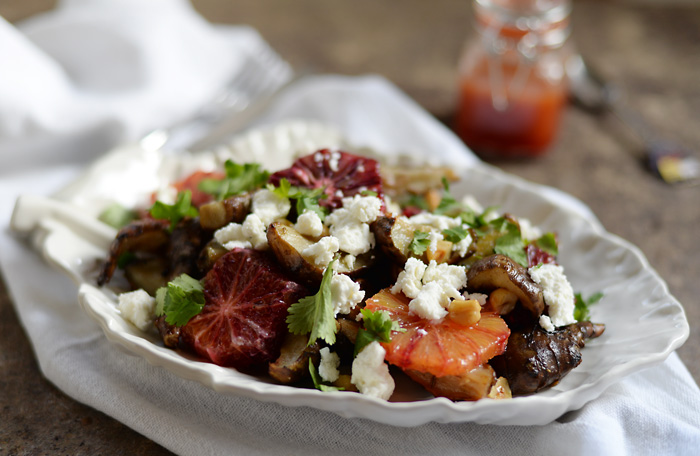
Warm jerusalem artichoke, blood orange and feta salad / Salada morna de girassol batateiro, laranja sanguínea e queijo feta.


After so many parties, celebrations and sweets, a simple salad really goes down a treat!
This delicious wintery salad combines two of my favourite ingredients and as soon as I saw this fabulous suggestion I didn't think twice to make it.
The combination is fantastic and the sweet and sour flavours alongside all the different textures, are truly amazing.
I served it as a mail meal and it was more than enough for 3 adults.
ingredients (serves 4 to 6 as a side dish):
750g of jerusalem artichokes, scrubbed and quartered
2 tbsp olive oil
4 blood oranges, plus juice of 1 (about 2 1/2 tbsp)
2 tsp Sherry vinegar
1 tbsp extra virgin olive oil
1/2 tsp clear honey
50g blanched hazelnuts, very roughly chopped
1 tsp cumin seeds, lightly crushed
100g feta, crumbled
25g pack flat leaf parsley, roughly chopped
method:
Heat the oven to 200ºC.
Toss the artichokes, olive oil and half the orange juice in a large roasting tin.
Season well and roast for 45 minutes, turning halfway through, until tender and turning golden.
Meanwhile, peel and segment or slice the remaining oranges.
Put the vinegar, remaining orange juice, extra virgin olive oil and the honey in a jug and whisk to combine. Season to taste.
Scatter the cumin and and the hazelnuts over the artichokes and roast for another 5 minutes.
Remove from the oven and cool slightly.
Gently fold in the oranges, feta, parsley and the dressing and serve.
__________________


Depois de tantos festejos, comemorações e doces, o que sabe mesmo bem é uma saladinha!
Esta salada de Inverno, combina ingredientes que adoro e é uma verdadeira delícia, tanto em termos de sabores como de texturas.
Eu servi-a como refeição principal e foi mais que suficiente para 3 adultos.
ingredientes (para 4 a 6 pessoas, como acompanhamento):
750g girassol batateiro, lavado, esfregado e cortado em quartos
2 colheres sopa de azeite
4 laranjas sanguíneas + o sumo de 1 (cerca de 2 1/2 colheres sopa de sumo)
2 colheres chá de vinagre de xerez
1 colher sopa de azeite extra virgem
1/2 colher chá de mel claro
50g avelãs sem pele, picadas grosseiramente
1 colher chá de sementes de cominho, esmagadas ligeiramente
100g queijo feta, desfeito
25g salsa, picada grosseiramente
preparação:
Aquecer o forno a 200ºC.
Num tabuleiro de ir ao forno, combinar o girassol batateiro com as duas colheres de sopa de azeite  e metade do sumo da laranja.
Temperar de sal e pimenta preta moída na altura e levar ao forno por cerca de 45 minutos, mexendo ao fim de 20 a 25 minutos.
Entretanto, descascar as 4 laranjas e segmentá-las, ou cortá-las em rodelas.
Num frasquinho, colocar o vinagre, o restante sumo de laranja, o azeite extra virgem e o mel. Temperar de sal e pimenta a gosto e misturar tudo muito bem.
Quando o girassol batateiro estiver macio, colocar as sementes de cominho e as avelãs no tabuleiro e cozinhar por mais 5 minutos.
Retirar o tabuleiro do forno e deixar arrefecer ligeiramente.
Muito delicadamente, juntar as laranjas, o queijo feta, a salsa e o molho, ao girassol batateiro. Envolver tudo muito bem e servir.


Recipe / Receita: BBC GoodFood magazine - February 2016.

3 February 2016

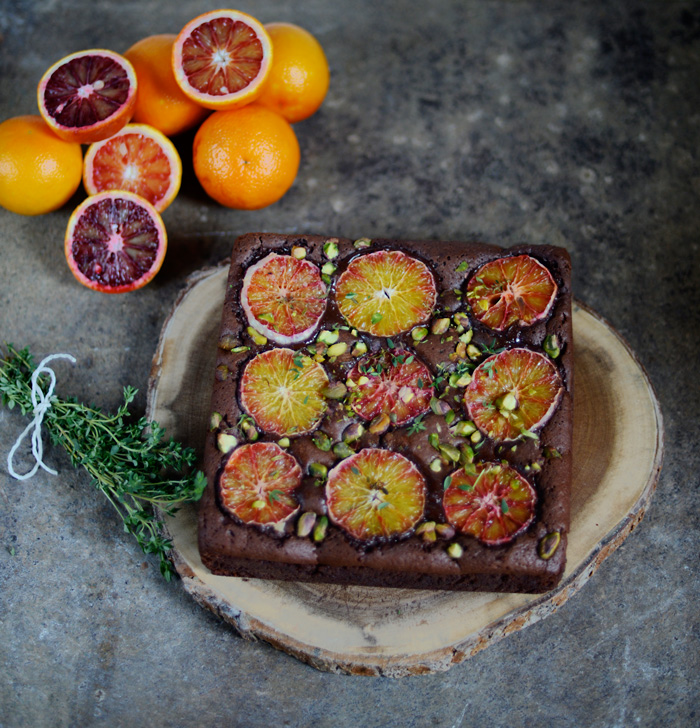
Salty blood orange brownies with pistachios and thyme / Brownies de chocolate, laranja sanguínea, flor de sal, pistachios e tomilho.


Blood oranges are in season now and they are so gorgeous!!
Not just delicious to eat on their own and to juice, but also fabulous to make beautiful desserts and even savoury dishes.
This recipe is from Aimee, "Twigg Studios" gorgeous blog and as soon as I saw it on instagram I had to make it of course.
ingredients:
5 medium eggs
300g dark chocolate (70% cocoa)
300g unsalted butter
400g caster sugar
80g cocoa powder
130g self raising flour
70g plain flour
50g nuts, chopped (I only used pistachio nuts)
1 tsp vanilla extract
sprinkling sea salt flakes
zest of one blood orange
3 tbsp blood orange juice
slices of one blood orange, skin removed
sprigs of thyme


method:
Preheat the oven to 180ºC.
Line a rectangle or square brownie tin with baking paper.
Chop the chocolate as finely as you can.
Put the butter, sugar, orange zest and juice and a sprig of thyme in a pan over medium heat and stir gently until melted.
Whisk the eggs in a stand mixer until smooth then add the chopped chocolate.
Remove the sprig of thyme from the buttery mixture and slowly pour the hot butter mixture onto the eggs, while mixing on a medium speed.
Turn the speed up and mix for 3 to 4 minutes, or until the chocolate has melted.
Sift the flours with the cocoa powder together and.
Once the chocolate and melted, add the vanilla extract and then fold in the dry ingredients.
Pour the mixture into the prepared tin.
Place the orange slices on top of the chocolaty mixture.
Sprinkle the nuts over the top, followed by a sprinkle of the sea salt flakes and a few thyme leaves.
Bake for about 20 minutes until the brownie is just a slight wobble in the centre.

__________________

As laranjas sanguíneas estão agora na estação. A estação é curta e há que tirar o máximo partido delas assim que aparecem.
Adoro-as, não só porque são lindas mas também porque são fabulosas para comer ao natural, espremer (fazem um sumo lindo e delicioso) e usar tanto em receitas doces como salgadas.
Como consegui arranjar uma boa quantidade delas, esta foi a primeira receita que fiz este ano (procurem por "laranja sanguínea" aqui no blogue e encontrarão receitas de outros anos).
A receita é do blog lindo da Aimee, o "Twigg Studios" e assim que ela colocou a foto deste brownie no instagram, pronto, estava decidida a primeira utilização a dar ás laranjas "vampiras" como gosto de lhes chamar.
Caso achem que não conseguem arranjar laranjas sanguíneas em Portugal (e por isso adoro o instagram, pois é uma fonte de informação), sei que podem encontrá-las em Campo de Ourique, na Horta do Bairro e sei também que, caso vivam longe, eles enviam encomendas para todo o País (esta informação foi a Inês que passou a mim e ao Célio). Passo a publicidade, pois não recebi nem vou receber nada em troca, mas gosto que saibam que podem encontrar as laranjas.


ingredientes:
5 ovos médios
300g chocolate preto (70% cacau)
300g manteiga sem sal
400g açúcar refinado branco
80g cacau em pó
130g farinha de trigo branca com fermento
70g farinha de trigo branca
50g frutos secos, picados (eu só usei pistachios)
1 colher chá de extracto de baunilha
uma pitada de flor ou flocos de sal, para polvilhar
raspa de 1 laranja sanguínea
3 colheres sopa de sumo de laranja sanguínea
rodelas de laranja sanguínea, descascadas
hastes de tomilho


preparação:
Aquecer o forno a 180ºC.
Forrar com papel vegetal uma forma quadrada ou rectangular.
Picar o chocolate o mais finamente possível.
Num tacho sobre lume médio, colocar a manteiga, o açúcar, a raspa e o sumo da laranja e uma haste de tomilho. Aquecer, mexendo, até a manteiga estar derretida e o açúcar dissolvido.
Bater os ovos na taça da batedeira eléctrica até estes estarem com uma textura fofa.
Adicionar o chocolate picado aos ovos batidos.
Retirar a haste de tomilho da mistura da manteiga e descartá-la.
Com a batedeira em velocidade média, adicionar a mistura da manteiga quente em fio, à mistura dos ovos e do chocolate.
Aumentar a velocidade da batedeira e continuar a bater por mais 3 ou 4 minutos, ou até o chocolate estar completamente derretido.
Entretanto, peneirar as farinhas e o cacau em pó.
Quando vir que o chocolate está completamente derretido, adicionar o extracto de baunilha à mistura, logo seguido pela mistura das farinhas e cacau e envolver tudo muito bem até estar completamente incorporado.
Colocar a mistura na forma e cobri-la com as rodelas da laranja.
Polvilhar com os frutos secos, a flor de sal e umas folhinhas de tomilho.
Levar ao forno por 20 minutos, ou até, quando abanar a forma, o brownie estar ligeiramente mole no centro.


Recipe / Receita: Aimee - Twigg Studios blog.